 Save
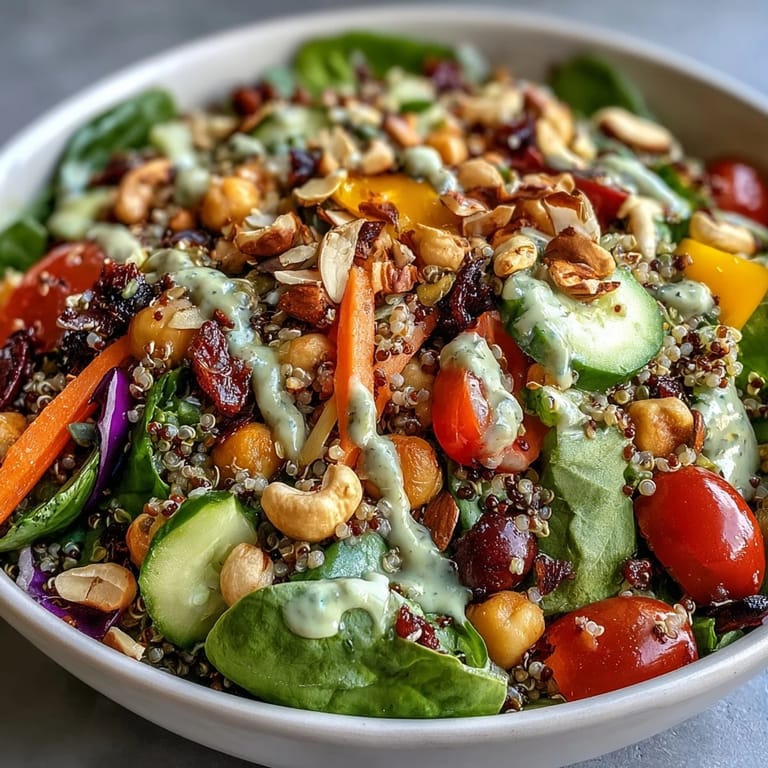
Save My kitchen counter was a mess of bowls and cutting boards, each one holding a different vegetable in a different brilliant color. I'd bought way too much at the farmers market that morning, seduced by the purple cabbage and those tiny orange carrots still dusted with dirt. Instead of letting anything wilt in the crisper drawer, I decided to throw it all together in one enormous bowl. What emerged was less a planned recipe and more a happy accident that's become my go-to whenever I need to feel virtuous and satisfied at the same time.
I brought this to a potluck once where everyone else had made casseroles and pasta bakes. People kept circling back to the salad bowl, surprised that something so colorful could also be filling. One friend asked if I'd bought it from a fancy lunch spot downtown. I just laughed and admitted I'd made it because my vegetable drawer was overflowing and I was too lazy to plan separate side dishes.
Ingredients
- Cooked quinoa or brown rice: The foundation that makes this salad substantial enough to be a real meal, and it soaks up the dressing beautifully if you let it cool completely first.
- Cherry tomatoes: I always halve these so their juice mingles with the dressing, adding little bursts of sweetness throughout the bowl.
- Purple cabbage: Shred it thin so it's not too crunchy, and it adds this gorgeous violet streak that makes the whole dish look like a painting.
- Grated carrots: Fresh grated is worlds better than the bagged stuff, taking just two minutes and adding a natural sweetness you can actually taste.
- Yellow bell pepper: Any color works, but yellow feels sunny and mild, never bitter like green sometimes gets.
- Baby spinach leaves: These wilt just slightly when the dressing hits them, becoming silky without losing their bright green color.
- Cucumber: I slice these thin and leave the skin on for extra color and a little more bite.
- Chickpeas and black beans: Rinse them well or they taste tinny, and together they give you that protein boost that keeps you full for hours.
- Roasted cashews or almonds: Chop them roughly so you get some whole pieces and some smaller bits for varied crunch.
- Pumpkin seeds and sunflower seeds: These add nutty depth and a satisfying snap that makes each forkful interesting.
- Extra-virgin olive oil: Use the good stuff here since it's not being cooked, just drizzled over everything to carry the other flavors.
- Fresh lemon juice: Bottled lemon juice tastes flat and sad compared to a freshly squeezed lemon, which brightens the entire bowl.
- Maple syrup or honey: Just enough sweetness to balance the acidity without making the dressing taste like dessert.
- Dijon mustard: This is the secret that makes the dressing cling to everything instead of pooling at the bottom of the bowl.
- Garlic clove: Mince it fine so you get flavor without biting into a chunk of raw garlic mid-lunch.
- Fresh parsley or cilantro: A handful of herbs at the end makes the whole thing taste garden-fresh and alive.
Tired of Takeout? 🥡
Get 10 meals you can make faster than delivery arrives. Seriously.
One email. No spam. Unsubscribe anytime.
Instructions
- Cook your base grain:
- Make the quinoa or rice following the package directions, then spread it on a plate to cool while you prep everything else. Warm grains will wilt your greens and make the whole salad sad and limp.
- Prep all your rainbow vegetables:
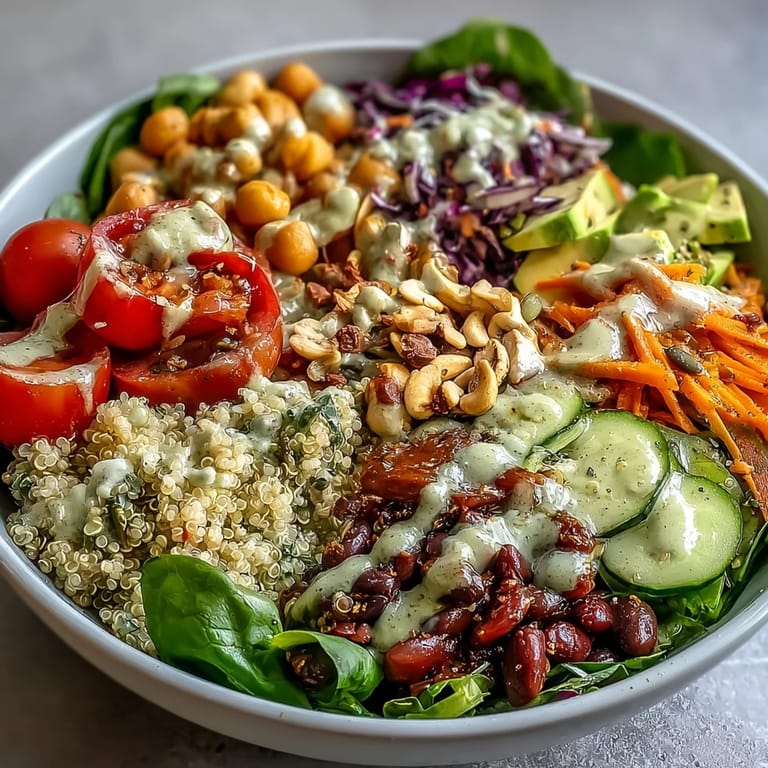
- Halve the tomatoes, shred the cabbage, grate the carrots, dice the pepper, and slice the cucumber into thin rounds. I like to arrange them in separate piles on my cutting board just to admire the colors before they go into the bowl.
- Assemble the bowl in sections:
- In a large wide bowl or on a platter, lay out the cooled grains, then arrange all your vegetables, beans, nuts, and seeds in colorful wedges or stripes. It looks almost too pretty to toss, but trust me, you will.
- Whisk the dressing together:
- Combine the olive oil, lemon juice, maple syrup, mustard, minced garlic, salt, and pepper in a small bowl, whisking hard until it turns creamy and thick. Taste it and adjust the balance, adding more lemon if you like tang or a pinch more sweetness if it's too sharp.
- Dress and toss gently:
- Drizzle the dressing over everything just before serving, then use your hands or salad tongs to toss it all together until every ingredient is lightly coated. Finish with a generous scatter of chopped parsley or cilantro on top.
 Save
Save The first time I packed this for lunch at work, a coworker peeked into my container and said it looked like a kaleidoscope. She wasn't wrong. I realized then that food doesn't have to be complicated to feel special, it just has to be made with a little attention and maybe more colors than you think you need.
Making It Your Own
This salad is more of a template than a strict recipe. Swap the chickpeas for white beans, toss in roasted sweet potato cubes, or add avocado slices if you want creaminess. Sometimes I throw in leftover grilled chicken or crumbled feta when I'm feeding someone who claims salad isn't a real meal. The dressing works on almost anything, so make extra and keep it in a jar for quick weeknight dinners.
Storing and Serving Tips
If you're making this ahead, keep the components separate in containers and build individual bowls as you go. The grains and beans stay fresh for up to four days, and the chopped vegetables keep their crunch if stored in airtight containers lined with a paper towel. I've even brought this to picnics in a big glass jar, layering everything so it looks like edible art, then dumping it into a bowl and tossing it right before everyone digs in.
What to Serve Alongside
Honestly, this bowl is filling enough to stand alone, but it pairs beautifully with warm pita bread, a cup of chilled cucumber soup, or even a glass of crisp white wine if you're feeling fancy. On hot summer nights, I'll serve it with iced herbal tea and call it dinner.
- Add a slice of crusty sourdough for scooping up any dressing left at the bottom.
- Serve with hummus on the side for extra creaminess and protein.
- Pair with a light sparkling water infused with lemon or mint to keep the meal refreshing.
 Save
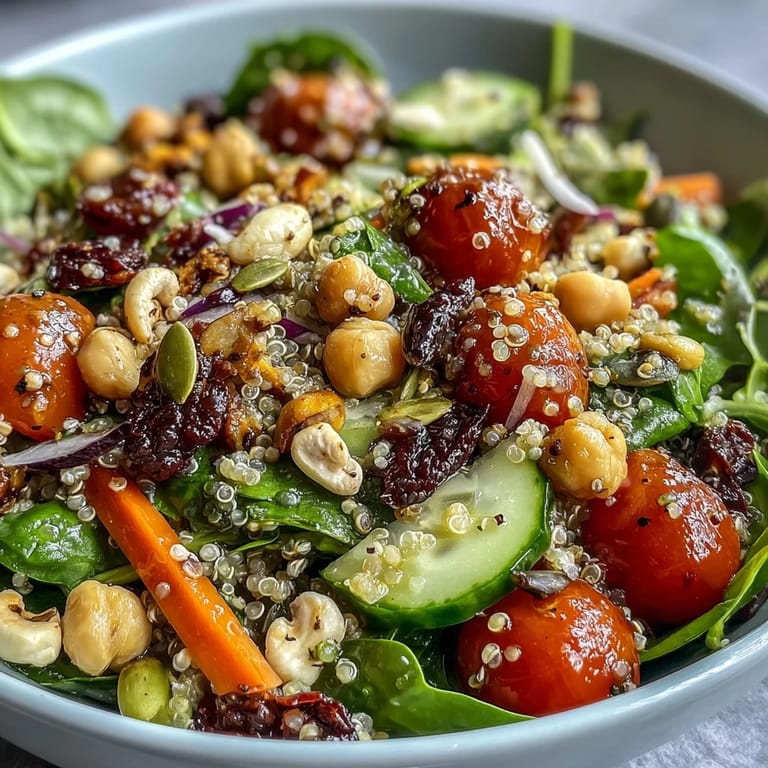
Save Every time I make this, I'm reminded that the best meals don't need fancy techniques or rare ingredients, just good produce and a willingness to let color lead the way. I hope your bowl turns out as bright and satisfying as mine always does.
Recipe FAQ
- → Can I make this ahead of time?
Yes, prepare ingredients up to 3 days in advance. Store vegetables, grains, and dressing separately, then combine when ready to serve. The sturdy vegetables hold texture beautifully.
- → What other grains work well?
Brown rice, farro, bulgur, millet, or wheat berries all make excellent substitutions. Choose gluten-free grains if needed and cook according to package directions.
- → How can I add more protein?
Top with grilled tofu, tempeh, roasted chickpeas, or feta cheese. Adding hemp seeds or chopped walnuts also boosts protein content while maintaining the vibrant presentation.
- → Is the dressing customizable?
Absolutely. Try balsamic vinegar instead of lemon, add fresh herbs like basil or dill, or substitute tahini for part of the olive oil to create creamier variations.
- → What vegetables can I substitute?
Use any colorful fresh vegetables you enjoy. Roasted beets, shredded Brussels sprouts, radishes, corn, blanched green beans, or roasted sweet potatoes all work wonderfully.
- → How should I store leftovers?
Keep dressed portions refrigerated for up to 2 days. For longer storage, keep components separate and assemble fresh bowls throughout the week. The dressed version remains tasty though textures soften slightly.