 Save
Save The first time I attempted this dish, I was standing in my kitchen on a random Tuesday evening, holding a pristine piece of sushi-grade tuna and wondering if I was about to make the biggest mistake of my week. My partner had challenged me to create something that felt restaurant-worthy but took less than twenty minutes, and somehow black sesame seeds caught my eye in the pantry. What started as nervous improvisation turned into one of those magical cooking moments where everything clicked—the seeds toasted just right, the pan screamed at the perfect temperature, and that first bite proved that sometimes the simplest ideas are the most stunning.
I made this for someone special once, and watching their face when they took that first bite—the moment they realized the center was still perfectly rare and delicate—reminded me why cooking matters beyond just feeding people. The dish became the whole conversation that night, which is really all you can ask for when you're nervous about trying something new in front of someone whose opinion actually counts.
Ingredients
- Sushi-grade tuna steaks: Two six-ounce pieces about an inch thick are the foundation here, and honestly, this is where you can't compromise—ask your fishmonger directly, don't just assume something labeled sushi-grade actually is.
- Soy sauce: Just one tablespoon to season the tuna before it meets the seeds, adding umami without overpowering the delicate fish.
- Sesame oil: A teaspoon goes a long way to bring everything together with that nutty warmth.
- Salt and black pepper: Fresh ground pepper makes a real difference here since you're using so little seasoning.
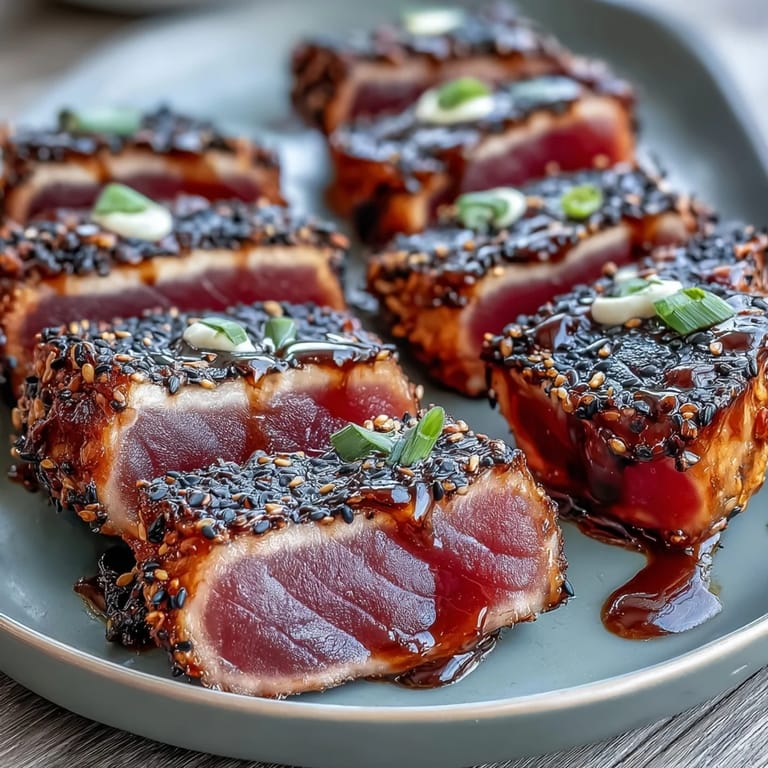
- Black sesame seeds: Half a cup toasted brings that striking color and earthiness that makes this dish look impressive before you even taste it.
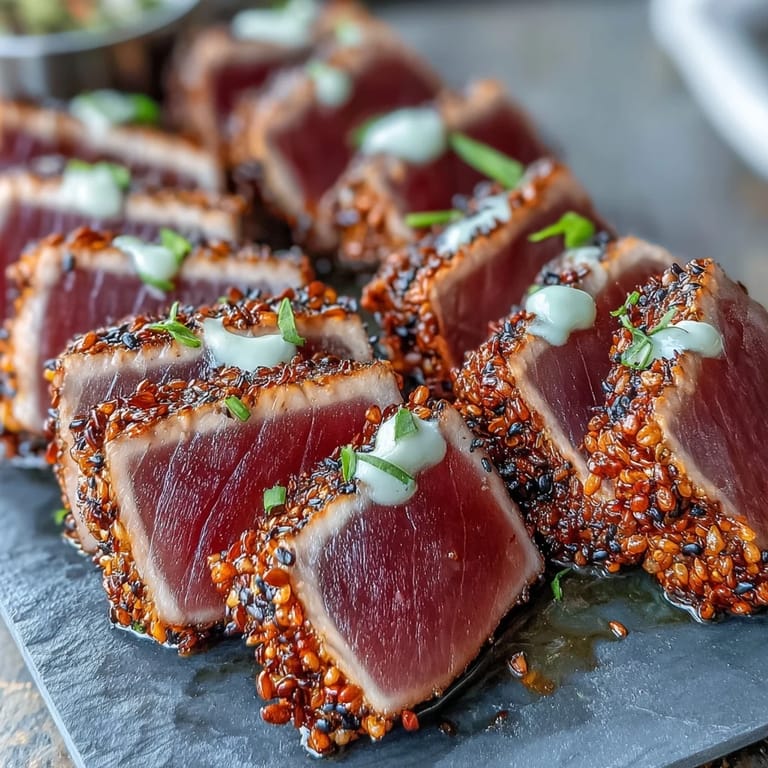
- White sesame seeds: Optional quarter cup, but they create a beautiful contrast if you want the presentation to really pop.
- Mayonnaise: Quarter cup as your base for the wasabi mayo, and yes, the quality matters—use something you'd actually enjoy eating on its own.
- Wasabi paste: One to two teaspoons depending on your heat tolerance, and fresh wasabi is a game-changer if you can find it, though the paste works beautifully.
- Rice vinegar: A teaspoon adds gentle acidity that balances the richness of the mayo.
- Lemon juice: One teaspoon brightens everything and keeps the wasabi mayo from feeling heavy.
- Scallions, pickled ginger, and lemon wedges: These garnishes aren't just decoration—they're the finishing touches that let people customize each bite.
Tired of Takeout? 🥡
Get 10 meals you can make faster than delivery arrives. Seriously.
One email. No spam. Unsubscribe anytime.
Instructions
- Prepare your tuna with intention:
- Pat those steaks completely dry with paper towels—moisture is the enemy of a good crust. Brush both pieces with soy sauce and sesame oil in one smooth motion, then season gently with salt and pepper, remembering that the mayo and other elements will add saltiness later.
- Create the sesame crust:
- Pour your black sesame seeds onto a shallow plate and press each tuna steak into them, rotating slowly to coat every surface evenly. If you're using white seeds too, scatter them over the black ones so they distribute naturally rather than clustering.
- Get your pan ready:
- Heat your skillet over high heat until it's genuinely hot—you want to hear a confident sizzle when that tuna hits the surface. A non-stick or cast-iron pan both work beautifully, though cast-iron holds heat more consistently.
- Sear with speed and confidence:
- Add just a touch of oil to your hot pan, then place both tuna steaks in at once and don't move them—thirty to forty-five seconds per side is all you need. You're looking for that golden-brown crust, not cooking the interior, so resist the urge to peek or flip constantly.
- Make your wasabi mayo magic:
- While the tuna rests for just a minute, whisk together your mayonnaise, wasabi paste, rice vinegar, and lemon juice in a small bowl until everything is smooth and unified. Taste it and adjust the wasabi up if you want more heat—this sauce is supposed to reflect your preference.
- Slice against the grain:
- Once the tuna has rested briefly, slice each steak into half-inch pieces using a sharp knife and smooth, confident strokes that don't drag or saw at the fish.
- Plate like you mean it:
- Arrange your slices on plates, drizzle that wasabi mayo over top or serve it alongside, then scatter the scallions, pickled ginger, and a lemon wedge around each serving so everything looks intentional and inviting.
 Save
Save There's something deeply satisfying about this dish because it forces you to trust your instincts—you sear tuna for less than a minute per side and somehow it becomes restaurant-quality. That's when you realize how much of cooking is about understanding your ingredients rather than following strict timelines, and how empowering that feels.
Understanding Sushi-Grade Fish
Not all tuna labeled sushi-grade is actually safe to eat raw, which is why building a relationship with your fishmonger matters more than you might think. When I finally asked my fish counter directly about their sourcing and freezing process, they explained that true sushi-grade tuna has been flash-frozen to specific temperatures to eliminate parasites, and not every fancy-looking steak meets those standards. That conversation changed how I shop, and suddenly I felt confident enough to make this dish regularly without any second-guessing about food safety.
The Science Behind the Crust
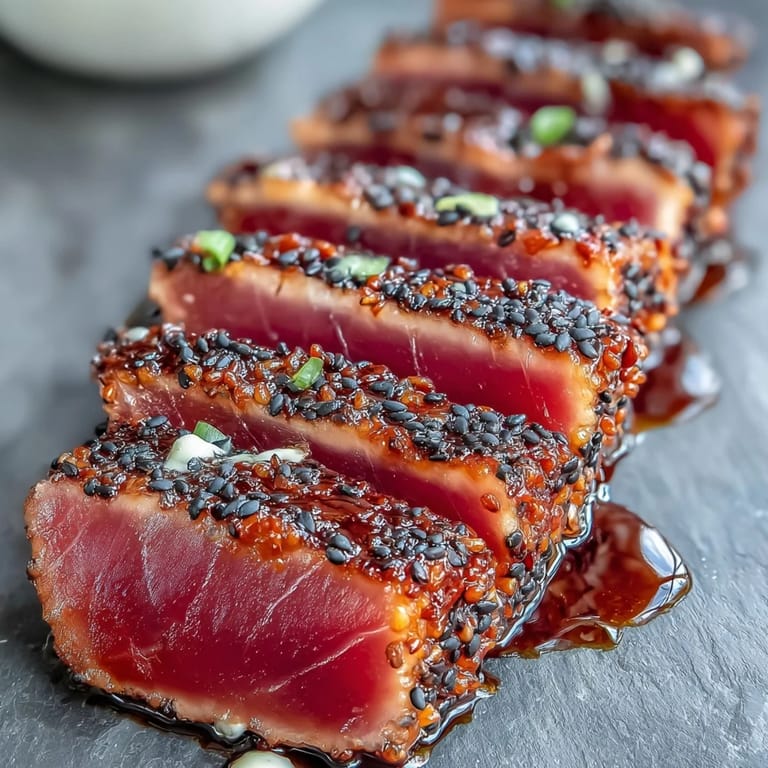
Black sesame seeds create this incredible coating because of their high oil content and nutty compounds that caramelize instantly under high heat, forming a protective shell that locks in moisture while you're searing. The brief contact with the hot pan is long enough to toast the seeds further and set that crust, but not long enough to let heat penetrate to the center—it's a beautiful balance of timing and temperature. Understanding this is what separates anxiously watching the pan from knowing exactly what's happening and why.
Serving and Pairing Ideas
This dish stands powerfully on its own as a plated main course, but it also plays beautifully with simple sides that don't compete for attention. I've served it over steamed sushi rice with lightly dressed cucumber salad, and I've also plated it alongside microgreens and a small bowl of soy reduction for extra umami depth. The pickled ginger and wasabi mayo are really doing the heavy lifting flavor-wise, so your sides should whisper rather than shout, letting the tuna remain the star.
- Pair this with a crisp white wine like Sauvignon Blanc or a light Japanese beer to cut through the richness of the sesame crust.
- If you're building a fuller meal, add steamed rice and a simple green salad dressed with rice vinegar and a touch of sesame oil to echo the flavors already on the plate.
- Leftover wasabi mayo is excellent with roasted vegetables or even spread on sandwiches the next day, so make a little extra if you're feeling generous.
 Save
Save Every time I make this, I'm reminded that some of the most impressive things to cook are actually the simplest—a perfect piece of fish, a bold crust, and a sauce that makes everything taste even better. It's the kind of dish that builds your confidence in the kitchen because you can see and taste exactly what happens when you respect your ingredients and get out of their way.
Recipe FAQ
- → How do I ensure the tuna is properly seared?
Use a hot non-stick or cast-iron pan and sear the crusted tuna steaks for 30–45 seconds per side. This achieves a golden crust while keeping the inside rare.
- → Can I substitute the wasabi paste with another ingredient?
Yes, horseradish can be used for a similar spicy kick, but adjust the amount to match your heat preference.
- → What is the purpose of using black sesame seeds in this dish?
Black sesame seeds add a crunchy texture and nutty flavor that contrasts nicely with the tender tuna.
- → Is it necessary to use sushi-grade tuna for this preparation?
For safety and optimal flavor, sushi-grade tuna is strongly recommended since the fish is served rare.
- → How can I make this dish dairy-free?
Use a dairy-free or vegan mayonnaise in the wasabi mayo to maintain the creamy texture without dairy.