 Save
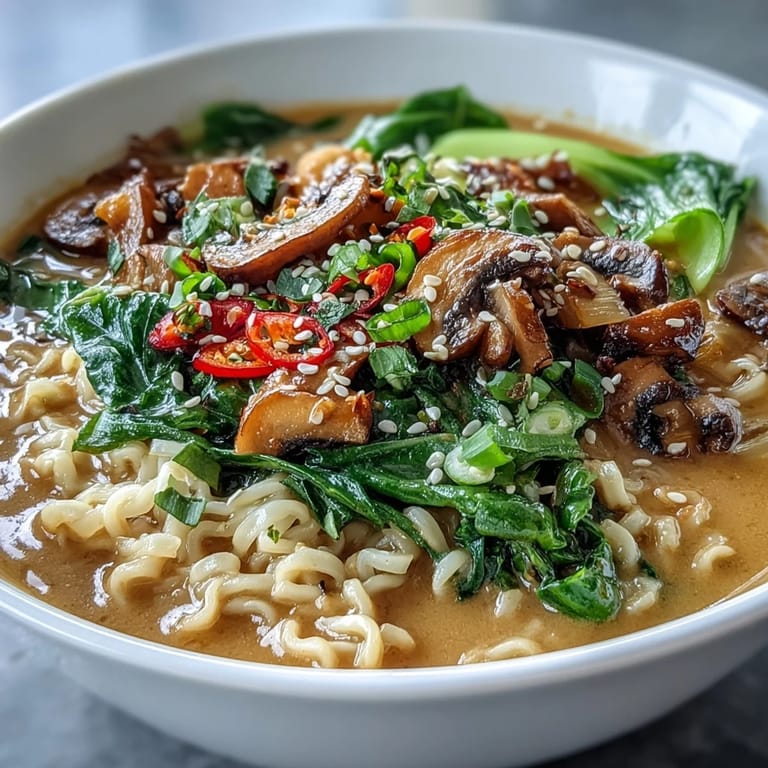
Save My kitchen smelled like a Bangkok street market the first time I stood over a pot of this curry ramen, watching coconut milk swirl into golden broth while garlic and ginger crackled beneath the surface. A friend had mentioned offhandedly that she'd gone vegan, and instead of overthinking it, I grabbed what I had and started building layers of flavor, not recipes. Twenty minutes later, four bowls were steaming on the table, and nobody missed a thing.
I served this to my roommate on a cold November evening when she'd had one of those weeks where everything went sideways, and she sat at the counter just breathing in the steam for a solid minute before saying anything. The curry spices, the bright bok choy, the sesame oil hitting her tongue—it shifted something. That's when I knew this wasn't just lunch; it was the kind of dish people remember when they needed comfort most.
Ingredients
- Coconut oil: Use refined if you don't want it competing with the curry, but unrefined adds a subtle nuttiness that deepens the whole bowl—I learned this by accident and never went back.
- Yellow onion: The base sweetness that balances spice; chopping it finely helps it disappear into the broth rather than sitting as chunks.
- Garlic and fresh ginger: Minced small means they distribute evenly and bloom faster when they hit the hot oil, releasing everything they've got.
- Red curry paste: Check that yours is vegan (some brands sneak fish sauce in), and don't be shy—this is where the soul lives.
- Ground turmeric: A teaspoon might seem small, but it's doing two jobs: adding earthiness and a gentle warmth that doesn't dominate.
- Vegetable broth: Use something you'd actually drink on its own; the broth is your foundation, so homemade or quality store-bought makes all the difference.
- Full-fat coconut milk: Light coconut milk gets thin and one-dimensional; the fat is what makes this rich and velvety.
- Soy sauce or tamari: The umami anchor that makes you forget you're not eating meat—a tablespoon seems small until you taste what happens without it.
- Maple syrup: Just enough to round the edges and let the spices shine instead of turn sharp.
- Sesame oil: Added at the end of the broth keeps its toasty character intact instead of cooking it away.
- Mushrooms: Cremini or shiitake both work; shiitake adds deeper flavor but either one soaks up the broth and becomes meaty in the best way.
- Baby bok choy: Added late so it stays bright and tender; if you quarter them lengthwise, they cook evenly and look more intentional on the plate.
- Ramen noodles: Check labels—some brands use animal products in the seasoning packet, which defeats the purpose; dried or fresh both work, just adjust cooking time slightly.
- Carrot: Julienned thin adds color and a delicate sweetness that peeks through without overwhelming.
- Scallions, sesame seeds, chili, cilantro, and lime: These are the conversation starters; each one hits a different note on the way out, making every spoonful feel complete.
Tired of Takeout? 🥡
Get 10 meals you can make faster than delivery arrives. Seriously.
One email. No spam. Unsubscribe anytime.
Instructions
- Start the foundation:
- Heat coconut oil in a large pot over medium heat and add the chopped onion. Let it soften for three to four minutes, stirring occasionally—you want it golden and fragrant, not brown. The kitchen should smell sweet and inviting by now.
- Build the aromatics:
- Stir in minced garlic and grated ginger, cooking for about a minute until the rawness mellows and the smell hits differently. You'll know it's ready when your eyes water slightly and the aroma fills the entire space around you.
- Toast the spices:
- Add the curry paste and turmeric, stirring constantly for a minute. This step sounds small but it's crucial—dry-toasting spices in fat wakes them up and prevents them from tasting raw or dusty in the finished broth.
- Create the broth:
- Pour in vegetable broth and coconut milk, then add soy sauce, maple syrup, and sesame oil. Stir well and bring everything to a gentle simmer—you want small bubbles, not a rolling boil, so the broth stays silky instead of reducing too quickly.
- Simmer the mushrooms:
- Add sliced mushrooms to the simmering broth and let them cook for eight to ten minutes until they're tender and have absorbed some of that golden color. They'll look almost transformed by the end, softer and deeper in flavor.
- Cook the noodles separately:
- While the mushrooms are going, bring salted water to a boil in a separate pot or saucepan and cook the ramen noodles according to package directions. Drain them and set aside—keeping them separate prevents them from getting mushy from sitting in hot broth while you finish the rest.
- Add the greens:
- Stir bok choy and julienned carrot into the simmering broth and cook for two to three minutes. Watch them—they should turn a brighter green and become tender but not limp, which means they're done at exactly the right moment.
- Season to taste:
- Taste the broth and adjust with salt and black pepper. This is your moment to make it feel like home—some people like it spicier, some more savory, so trust what your palate is telling you.
- Assemble the bowls:
- Divide the cooked noodles among four serving bowls, then carefully ladle the hot broth and vegetables over the top. The heat will soften the noodles just right and distribute all those flavors down to the last spoonful.
- Finish with personality:
- Top each bowl with scallions, sesame seeds, sliced red chili if you like heat, fresh cilantro if you have it, and a squeeze of lime juice right before eating. These garnishes aren't just pretty—they're the final layer that makes every bite feel complete.
 Save
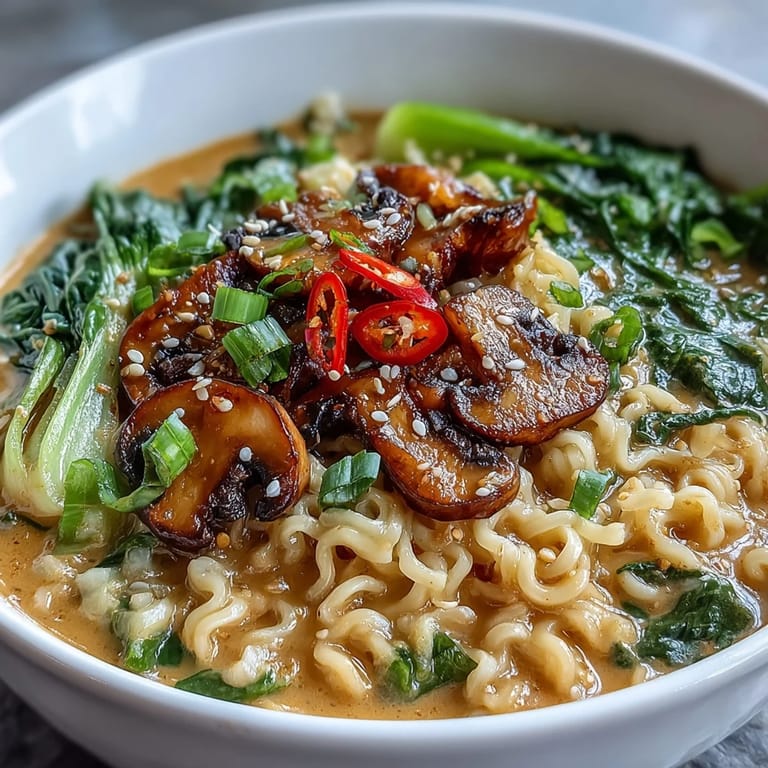
Save There's a moment when you pour that golden broth over the noodles and the whole bowl comes alive—steam rising, colors shifting, the smell making you pause before you even pick up your spoon. That's when this dish stops being dinner and becomes something you'll think about on random Tuesdays.
The Spice Balance
The first time I made this, I went timid with the curry paste, worried about overpowering the coconut, and the result was pleasant but forgettable. The next time, I trusted the recipe and added the full amount—that's when the broth became something with presence and personality. Red curry paste and turmeric together create a warmth that sits in the background until the lime juice wakes it up, and then suddenly everything tastes alive.
Making It Your Own
I've added soft tofu cubes, pressed and tossed in sesame oil, for extra protein and texture. Some evenings I throw in a handful of spinach or use kale instead of bok choy, and it changes the flavor profile enough to feel like a new dish. The framework is sturdy enough to hold variations, which means this recipe grows with your tastes and whatever's actually in your fridge.
Timing and Prep
Chopping everything before you start heat is the difference between a calm evening and feeling rushed. Set up your ingredients in small bowls or on a cutting board, and the actual cooking moves at a rhythm that feels meditative rather than stressful. I do this on nights when I need to slow down, and something about the focused prep and gentle simmering settles my whole mood.
- You can make the broth up to two days ahead and reheat it gently; the flavors actually deepen when they sit.
- Cook noodles fresh each time or keep them in their own container so they don't absorb the broth and turn mushy.
- Fresh garnishes make the difference between a good bowl and one people actually get excited about, so don't skip them even when you're tired.
 Save
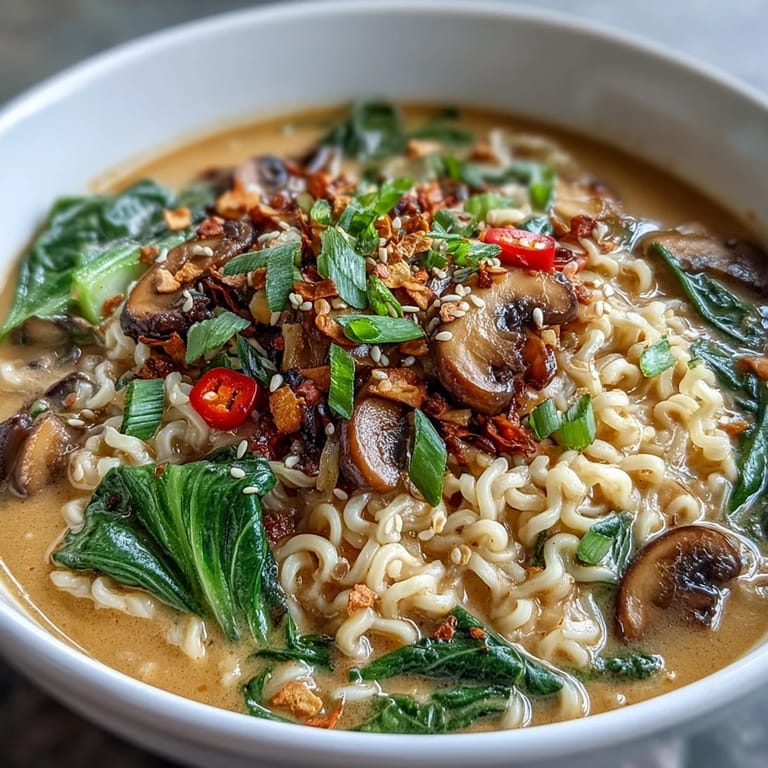
Save This is the kind of ramen that reminds you why cooking matters—not because it's complicated, but because something warm and thoughtful made by your own hands tastes like care. Make it for someone you want to understand you better.
Recipe FAQ
- → Can I make this gluten-free?
Yes, use tamari instead of soy sauce and select gluten-free ramen noodles. Always verify the curry paste is certified gluten-free as well.
- → How can I add more protein?
Cubed firm tofu works wonderfully when added during the last 5 minutes of simmering. Edamame, chickpeas, or seitan also make excellent protein additions.
- → Can I use different vegetables?
Absolutely. Spinach, kale, snap peas, bell peppers, or broccoli all substitute beautifully. Adjust cooking times accordingly for harder vegetables.
- → How spicy is this dish?
The spice level depends on your curry paste choice. Start with one tablespoon, then add more after tasting the broth. Fresh chili garnish lets individuals increase heat.
- → How long do leftovers keep?
Store broth and vegetables separately from noodles for best results. Both portions refrigerate well for up to 3 days. Reheat broth gently and cook fresh noodles when serving.
- → Can I freeze this dish?
The broth freezes beautifully for up to 3 months. Avoid freezing noodles as they become mushy. Prepare fresh ramen when reheating the thawed broth.