 Save
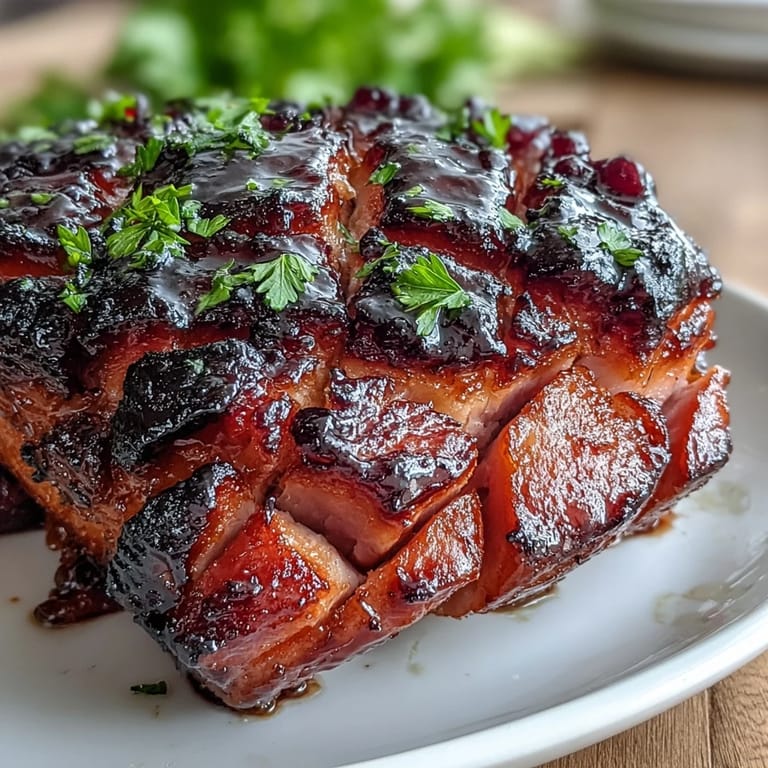
Save My aunt arrived at our holiday dinner carrying nothing but confidence and a jar of black currant jam she'd found at some fancy market upstate. She disappeared into the kitchen, emerged two hours later with a ham so glossy and caramelized it looked almost too beautiful to carve. The kitchen smelled like tangy mustard meeting dark fruit, something between elegant and deeply comforting. That single dish became the star of the table, and honestly, it's been my secret weapon ever since.
The first time I made this without my aunt hovering, I got nervous about the scoring and went too deep, but it turned out perfectly—those diamond cuts just soaked up more glaze. My partner walked in mid-bake and asked if I was running a restaurant, which felt like winning. Sometimes the small mistakes become the best versions of the dish.
Ingredients
- Bone-in, fully cooked ham (6–8 lb / 2.7–3.6 kg): Buy it a day or two ahead so it can come to room temperature slowly; cold ham bakes unevenly and the glaze won't caramelize as beautifully.
- Black currant jam (1 cup / 320 g): This is the soul of the dish—the tartness cuts through the richness of ham in a way regular brown sugar glazes never could, but quality matters, so taste it first.
- Dijon mustard (3 tablespoons): Not the yellow ballpark kind; real Dijon adds sophistication and prevents the glaze from tasting one-note sweet.
- Apple cider vinegar (2 tablespoons): This brightens everything and helps the glaze stick to the ham instead of just sliding off.
- Brown sugar (2 tablespoons): Just enough to balance the tartness without making it cloying.
- Freshly ground black pepper (1 teaspoon): Freshly ground makes all the difference—pre-ground tastes flat by comparison.
- Ground allspice (1/2 teaspoon, optional): Add this if you want a subtle warmth that hints at holiday spices without announcing itself.
Tired of Takeout? 🥡
Get 10 meals you can make faster than delivery arrives. Seriously.
One email. No spam. Unsubscribe anytime.
Instructions
- Get your workspace ready:
- Preheat the oven to 325°F (165°C) and line a roasting pan with foil, setting a rack inside. Having everything prepped means you're not rushing when the ham goes in.
- Prepare the ham:
- Score the fat in a diamond pattern with a sharp knife, cutting just deep enough to mark the surface but not so far you hit the meat underneath. Remove any thick skin but leave that thin fat layer—it protects the meat and helps the glaze cling.
- Build the glaze:
- In a saucepan over medium heat, whisk together the black currant jam, Dijon mustard, apple cider vinegar, brown sugar, black pepper, and allspice, stirring until everything melts into a glossy, pourable consistency. Taste it and adjust—if it's too tart, add a touch more jam; too sweet, add vinegar.
- First glaze coat:
- Brush about one-third of the glaze all over the ham using a pastry brush, working it into those diamond scores. Place the ham cut-side down on the rack and cover loosely with foil.
- Bake the first hour:
- Pop it in the oven for 1 hour covered. You'll start smelling that jammy-mustard aroma about halfway through.
- Second glaze coat:
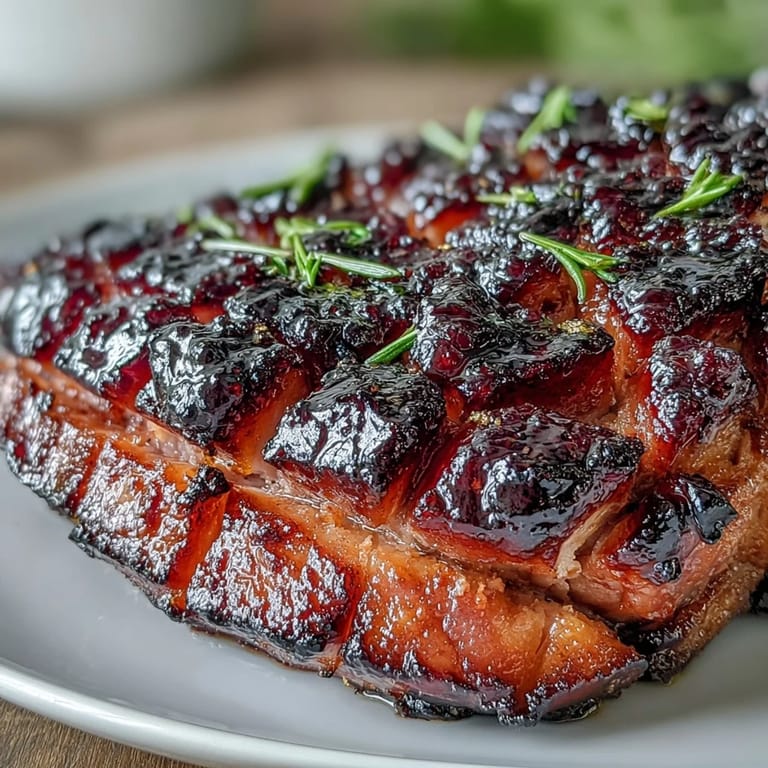
- Remove the foil, brush with half the remaining glaze, and bake uncovered for 30 minutes. This is when it starts getting that mahogany color.
- Final glaze and finish:
- Brush with the last of the glaze and bake for another 30 minutes uncovered, until the surface is glossy and deeply caramelized. Check that the internal temperature hits 140°F (60°C) if you're being thorough.
- Rest and serve:
- Tent loosely with foil and let it rest for 15–20 minutes before slicing—this keeps the meat tender and makes carving easier. Garnish with fresh black currants or thyme sprigs if you're feeling fancy.
 Save
Save There's a moment, maybe halfway through baking, when the kitchen gets so fragrant that everyone stops what they're doing and just breathes. That's when you know this ham is becoming something people will actually remember. It's the kind of dish that turns a regular family dinner into something that feels like an occasion.
Why This Glaze Works
Black currant jam isn't something most home cooks reach for, which makes this recipe feel a bit unexpected. The tartness and slight earthiness of black currants play so well against the saltiness of ham and the sharpness of Dijon that it feels like the combination was always meant to be. The brown sugar and allspice add warmth without overwhelming, and the apple cider vinegar keeps everything balanced instead of cloying.
Timing That Actually Works
The beauty of this recipe is that you do most of the prep while the ham is already in the oven. Mix your glaze while it's baking covered, and you're never standing around doing nothing. The multiple glaze applications aren't extra work—they're built into the baking timeline, so you brush and return to whatever else you're doing. I usually prep sides while the last coat caramelizes.
Variations and Next Steps
Once you've made this ham once, you'll start seeing the glaze everywhere—it works beautifully on pork tenderloin, glazed chicken thighs, or even as a finishing sauce for roasted duck. The leftovers make the best sandwiches, and the bone is perfect for making stock if you're feeling ambitious. This glaze also scales easily, so halve it for a smaller cut of meat or make a double batch if you're feeding a crowd.
- For heat, add a pinch of cayenne or fresh cracked red pepper flakes to the glaze before brushing.
- If black currant jam isn't available, try cherry or raspberry jam as a substitute, adjusting the vinegar slightly to balance sweetness.
- Serve alongside roasted root vegetables or a sharp green salad to cut through the richness.
 Save
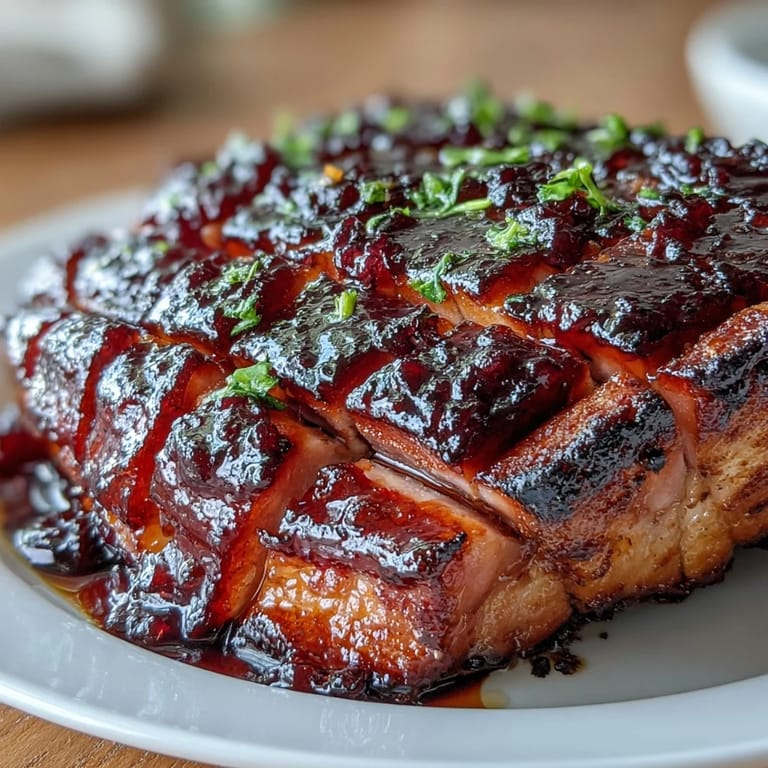
Save This ham has become my go-to for the moments when you need something impressive but don't want to spend all day cooking. It's the kind of dish that shows up, does exactly what it promises, and makes you look effortlessly skilled.
Recipe FAQ
- → What cut of ham is best for glazing?
A bone-in, fully cooked ham around 6 to 8 pounds works well, providing enough meat for glazing and serving multiple guests.
- → How do I achieve a glossy glaze finish?
Applying multiple layers of the black currant jam glaze during baking and baking uncovered at the end creates a shiny, caramelized surface.
- → Can I add spices to the glaze for extra flavor?
Yes, a pinch of cayenne or ground allspice can be added to the glaze for a subtle spicy kick and aromatic depth.
- → How long should the ham rest after baking?
Let the ham rest tented loosely with foil for 15 to 20 minutes to allow juices to redistribute before slicing.
- → What sides complement a ham glazed with black currant jam?
Roasted potatoes, crisp green salads, or herb garnishes pair beautifully, balancing the ham's sweetness and rich flavor.
- → Is this glaze suitable for other meats?
The black currant jam and mustard glaze also works well on pork tenderloin or chicken, adding a sweet and tangy twist.