 Save
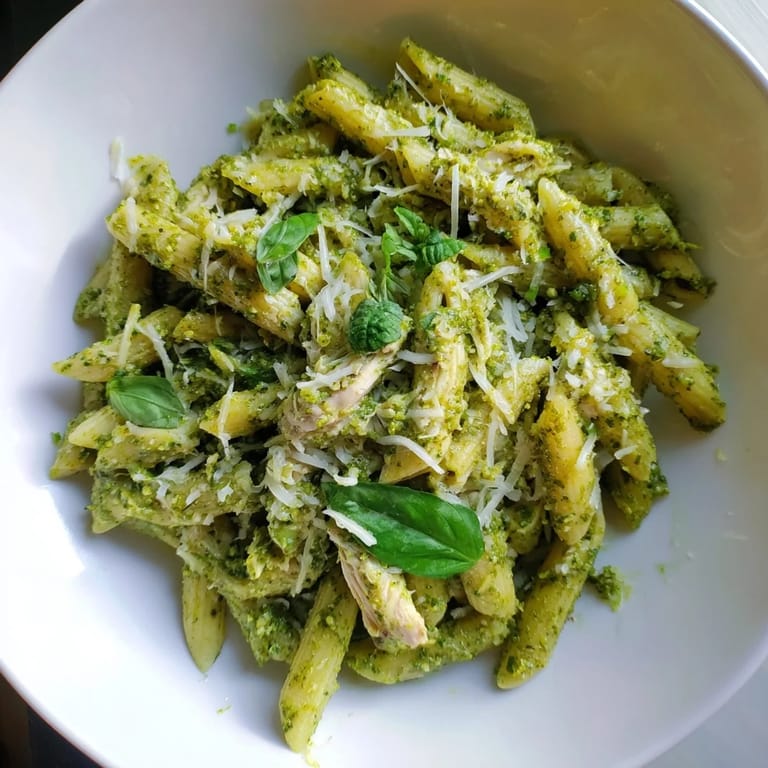
Save There's something magical about those nights when you glance at the clock and realize dinner needs to be on the table in ten minutes, yet somehow you still want it to taste like you actually tried. That's when this pesto pasta saves the day—no complicated techniques, no stress, just the kind of dish that tastes far better than it has any right to be. I discovered this combination one rushed Tuesday evening when I had rotisserie chicken leftover and a jar of pesto staring at me from the pantry shelf. What started as a desperate improvisation became something I now make deliberately, because it proves that the best meals aren't always the ones that take hours.
I remember making this for my sister on a Thursday night when she was exhausted from a long shift, and watching her face light up as she twirled the first forkful was worth every second. She asked if I'd cooked the chicken myself, and I laughed and told her the truth—that the best part of this dish is knowing you didn't have to. Sometimes the most comforting food is the one that doesn't demand anything from you except a few minutes of attention and a willingness to taste what happens.
Ingredients
- Dried short pasta (penne, fusilli, or farfalle): 340 g (12 oz) of any of these shapes work beautifully because their texture catches the pesto instead of letting it slide off—I prefer penne because it feels substantial without being heavy.
- Salt: For the pasta water, which is non-negotiable if you want the pasta to actually taste like something.
- Rotisserie chicken: 2 cups (about 250 g) shredded or chopped, which is the entire reason this works in ten minutes—use the store-bought kind without guilt.
- High-quality store-bought pesto: 120 g (1/2 cup) is the foundation of the sauce, and this is where you shouldn't cheap out because it's literally the main flavor.
- Extra-virgin olive oil: 2 tbsp to loosen the pesto and create that creamy coating that makes people think you know what you're doing.
- Grated Parmesan cheese: 40 g (1/4 cup) plus more for serving, which adds salt and richness without needing anything else.
- Freshly ground black pepper: To taste, for brightness and bite.
- Fresh basil leaves: 1/2 cup (about 12 g) torn if you want it, though honestly the pesto already covers this and it's optional.
- Lemon zest: From 1 lemon if you feel like it, which cuts through the richness and makes the whole dish feel lighter.
Tired of Takeout? 🥡
Get 10 meals you can make faster than delivery arrives. Seriously.
One email. No spam. Unsubscribe anytime.
Instructions
- Get the water boiling:
- Fill a large pot with water, salt it generously—it should taste like the sea—and get it to a rolling boil. This is your only real time commitment, so start here while you gather everything else.
- Cook the pasta:
- Add the pasta and stir it occasionally so nothing sticks together. Set a timer for whatever the package says minus one minute, because you want it just slightly firmer than al dente so it doesn't turn mushy when you toss it with the warm sauce.
- Save your liquid gold:
- Before you drain the pasta, scoop out 1/2 cup of that starchy water with a measuring cup or ladle and set it aside—this is what transforms pesto from a thick paste into a silky sauce that actually coats everything.
- Prep the chicken:
- While the pasta cooks, shred or chop your rotisserie chicken into bite-sized pieces. If it's still warm from the store, great; if it's cold, it'll warm right up when you add it to the hot pasta.
- Bring it all together:
- Return your drained pasta to the pot over low heat, then add the olive oil, pesto, and about 2-3 tablespoons of that reserved pasta water. Stir constantly so the pesto breaks down and coats every piece of pasta evenly.
- Add the chicken and cheese:
- Toss in the shredded chicken and Parmesan, stirring until everything is heated through and the sauce looks creamy and glossy. If it feels too thick, splash in another spoonful of pasta water and stir again.
- Taste and finish:
- Crack some black pepper over everything, taste it, and adjust if needed. If you're using the fresh basil and lemon zest, tear the basil and add it now with the zest for brightness.
- Plate and serve:
- Transfer to bowls immediately and top with extra Parmesan. This is best eaten right away while everything is still warm and the textures are perfect.
 Save
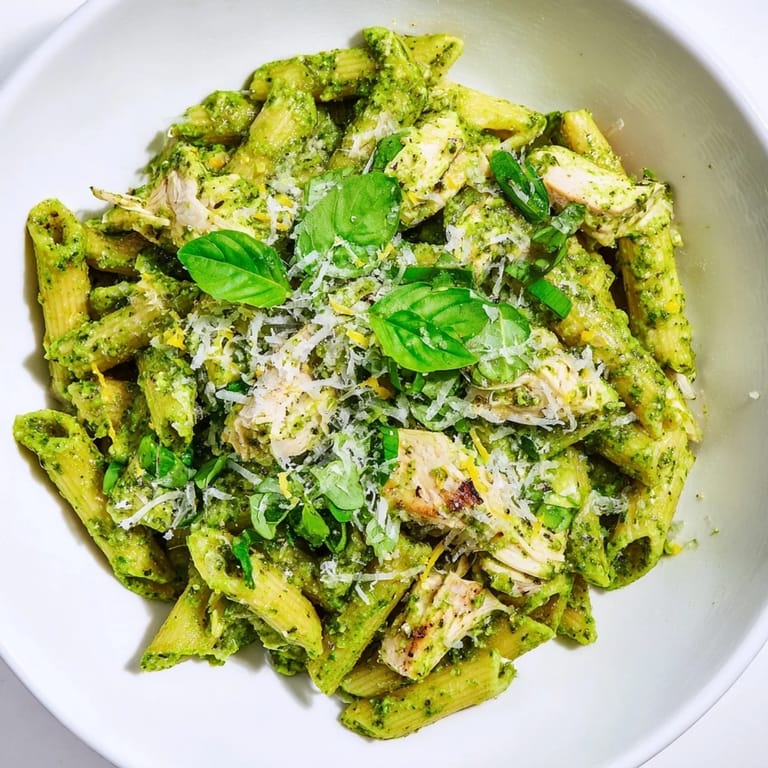
Save There's a moment when you toss everything together and the pesto suddenly transforms into this silky, clingy sauce that makes the pasta actually gleam under the light, and that's when you realize this simple dish is something special. It's the kind of food that reminds you why cooking at all is worth it—not because it's complicated or impressive, but because it tastes genuinely delicious and you made it in the time it took to watch half a TV episode.
Why This Works So Fast
The secret isn't any fancy technique or obscure ingredient—it's that you're using components that are already cooked and already flavorful. The rotisserie chicken arrives ready to eat, the pesto is a finished sauce that just needs to be loosened with oil and pasta water, and the pasta is the only thing that actually requires cooking time. Everything else is assembly, which means you can spend ten minutes chatting or setting the table instead of hovering over the stove. This is what smart cooking looks like when you're not trying to impress anyone—you're just trying to eat something good and move on with your evening.
How to Make It Your Own
One of my favorite things about this dish is how easily it adapts to whatever you have on hand or whatever you're in the mood for. I've made it with sun-dried tomato pesto when that's what was in the fridge, and it was equally delicious in a completely different way. I've added sautéed zucchini or halved cherry tomatoes right at the end for more color and texture, and I've stirred in handfuls of fresh spinach that wilted into the warm pasta without any fuss. The formula stays the same—pesto plus heat plus pasta water—but the flavor can shift depending on your mood.
Serving and Pairing
This pasta is hearty enough to be a complete meal on its own, but it's nice alongside a simple green salad tossed with lemon vinaigrette or crusty bread to soak up any sauce left on the plate. I always pour an extra drizzle of olive oil over the top before serving because it catches the light and makes the dish look more intentional than it actually is. If you want wine, go for something crisp and white like Pinot Grigio or Vermentino that won't overpower the basil but will cut through the richness of the pesto and cheese.
- A squeeze of fresh lemon juice over your bowl at the table brightens everything up and makes it feel more polished.
- Extra Parmesan is never wrong, so keep the grater or microplane nearby and let people add as much as they want.
- If you have any leftovers, they actually taste great cold the next day as a pasta salad, which is a rare gift from a warm dish.
 Save
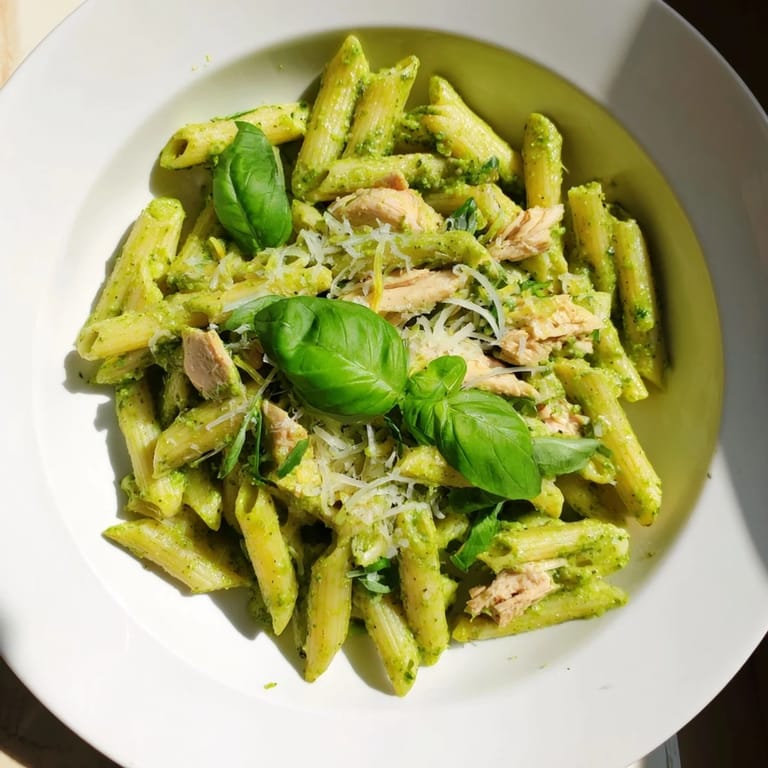
Save This is the kind of recipe that lives in my regular rotation because it proves that delicious food doesn't require hours of effort or a long list of ingredients. It's perfect for those nights when you want something that tastes cared-for but doesn't ask you to care too hard.
Recipe FAQ
- → What type of pasta works best for this dish?
Short pasta shapes like penne, fusilli, or farfalle hold the pesto sauce well and are ideal for this preparation.
- → Can I use fresh chicken instead of rotisserie?
Yes, cooked shredded chicken breast or thigh can be used as a substitute for rotisserie chicken.
- → How do I keep the pesto sauce creamy without it drying out?
Reserve some pasta cooking water and add a splash to the pasta and pesto mixture to maintain smoothness and coat the pasta evenly.
- → Are there alternatives to store-bought pesto for this dish?
Homemade pesto with fresh basil, garlic, pine nuts, Parmesan, and olive oil works wonderfully if you prefer a fresh homemade touch.
- → Can this dish be made vegetarian?
Omitting the chicken and adding sautéed vegetables like zucchini or cherry tomatoes provides a satisfying vegetarian option.