 Save
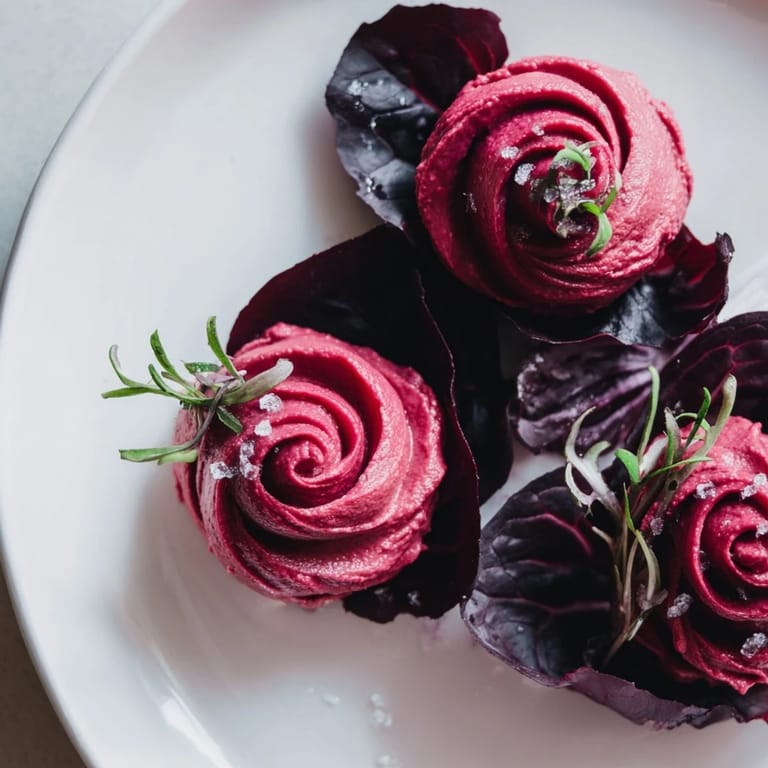
Save I discovered the magic of beet hummus entirely by accident one autumn when I was trying to use up a bunch of wrinkled beets sitting in my crisper drawer. Instead of the usual beige dip, what emerged from my food processor was this jewel-toned creation that seemed almost too beautiful to eat. The moment my partner walked into the kitchen and saw those deep crimson swirls on the plate, I knew I'd stumbled onto something special, something that would become my go-to move whenever I needed to impress without spending hours in the kitchen.
Last spring, I made this for a small dinner party where one guest mentioned she'd recently gone vegan. Instead of scrambling to figure something out, I reached into my memory and pulled out these rose-shaped beet hummus creations. The way her face lit up when she realized she could actually eat everything on the appetizer plate made me realize this dish had become more than just a pretty thing to serve—it was my quiet way of saying everyone at my table matters.
Ingredients
- Beet (1 large, about 200 g): The star of the show—roasting concentrates its sweetness and creates that stunning deep crimson color that makes people stop and stare.
- Chickpeas (1 can, 400 g): They provide creamy body and protein, transforming this from a vegetable side into something substantial enough to stand on its own.
- Tahini (2 tbsp): This is your secret richness, the ingredient that takes hummus from grainy to luxuriously smooth.
- Extra-virgin olive oil (2 tbsp): Use something you'd actually taste on its own—it's not just fat, it's flavor.
- Garlic (1 small clove): Just a whisper, minced fine; too much and you'll drown out the sweet earthiness of the beets.
- Lemon juice (1 lemon): The brightness that wakes everything up and keeps the color from looking dull.
- Ground cumin (1/2 tsp): A warm, grounding spice that reminds you this comes from somewhere with history and tradition.
- Salt and pepper (1/2 tsp salt, freshly ground pepper): Season deliberately—taste as you go, this is where your palate does the real cooking.
- Cold water (2–3 tbsp): Add it gradually; temperature matters here.
- Radicchio (1 small head): Its bitter edges and natural purple streaks become your plating partner, creating visual harmony.
- Flaky sea salt (for finishing): The final textural surprise that makes people notice the thought you put in.
- Microgreens or edible petals (optional): These are purely for people who care about Instagram, but they do complete the rose illusion if you want to go all in.
Tired of Takeout? 🥡
Get 10 meals you can make faster than delivery arrives. Seriously.
One email. No spam. Unsubscribe anytime.
Instructions
- Roast the beet until it surrenders:
- Wrap it in foil, slide it into a 400°F oven, and let it cook for 40–45 minutes until you can pierce it easily with a fork. The kitchen will smell earthy and sweet as it softens.
- Build your hummus base:
- Combine your cooled, peeled beet chunks with chickpeas, tahini, olive oil, minced garlic, lemon juice, cumin, salt, and pepper in the food processor. Pulse and blend until completely smooth, scraping down the sides occasionally—this takes longer than you'd think, but patience pays off.
- Add water to reach creamy perfection:
- Drizzle in cold water one tablespoon at a time, blending between additions until the hummus is luxuriously thick but spoonable. Taste and adjust seasoning—your palate is the real guide here.
- Create your rose shapes:
- Using a spoon or piping bag with a large star tip, swirl the hummus onto your serving plate in loose, petal-like shapes. If you're using the piping bag, work steadily and don't second-guess yourself—hesitation shows.
- Arrange your radicchio petals:
- Place the separated radicchio leaves around the hummus roses so they frame and echo the shape you've created. This is where art happens.
- Finish with intention:
- Drizzle olive oil around the plate, sprinkle flaky sea salt across the hummus, and add microgreens or edible petals if you're feeling that mood. Serve immediately while the textures are distinct.
 Save
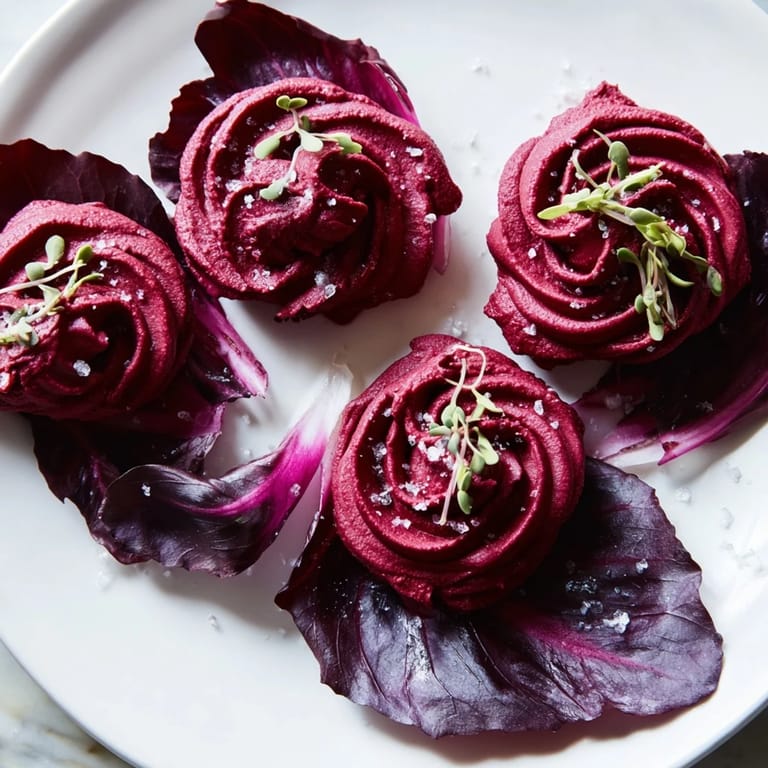
Save There's something almost meditative about watching that deep red hummus transform under the piping bag, creating something that looks like it belongs in a gallery rather than on an appetizer plate. When people finally take that first bite and taste the earthy sweetness beneath the visual drama, something shifts—they realize their eyes weren't deceived.
The Art of the Perfect Swirl
The rose shape isn't about perfection; it's about confidence. I learned this by watching someone who'd never piped before create the most beautiful swirl simply because they committed to the motion without overthinking. The hummus holds its shape beautifully thanks to the tahini, so you're really just guiding it rather than fighting it. Think of it like you're sketching with food, where happy accidents become character.
Why Radicchio Is Your Secret Weapon
Radicchio's bitter edge is exactly what your palate needs after the rich, sweet hummus—it's not just decoration, it's balance on a plate. The leaf structure also naturally curves in a way that makes it look intentional when you arrange it around the hummus, like nature designed it specifically for this dish. I've tried endive and Belgian endive as alternatives, and while they work beautifully, there's something about radicchio's color contrast that makes the red hummus truly pop.
Making It Your Own
This recipe is a foundation, not a law. I've experimented with adding a pinch of smoked paprika for depth, toasted cumin seeds for extra texture, and even a tiny touch of pomegranate molasses to heighten the earthiness. Once you understand how the basic components work together, you can play with them.
- Try adding a quarter teaspoon of smoked paprika if you want a subtle BBQ note without changing the visual.
- Toast your cumin seeds fresh if you want that hummus to smell like someone's grandmother's kitchen.
- Use microgreens as a garnish only if they align with your vibe—this is beautiful without them.
 Save
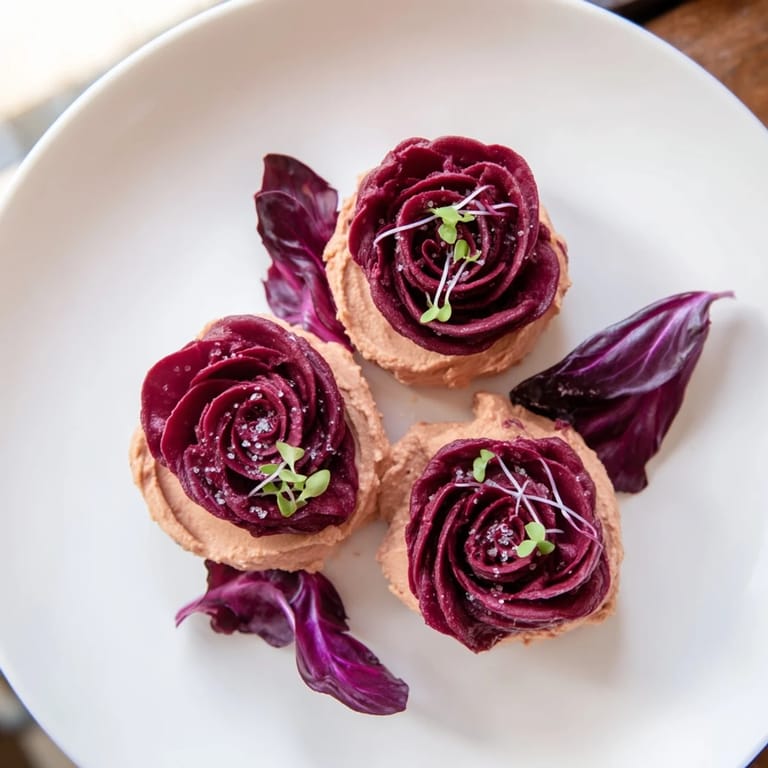
Save This is the kind of dish that reminds you why you cook in the first place—something that looks like it took hours but rewards you with ease, something that makes everyone at your table feel noticed. Serve it, watch the reactions, and keep the secret that you made it look this good.
Recipe FAQ
- → How do I achieve the rose shapes with hummus?
Use a piping bag fitted with a large star tip to swirl the hummus in circular motions, creating realistic rose designs on the serving plate.
- → Can I prepare the beet in advance?
Yes, roast the beet ahead of time, let it cool, then peel and store it in the refrigerator until ready to blend for the hummus.
- → What can I use instead of radicchio leaves?
Belgian endive or sturdy pita chips make excellent alternatives for serving and dipping alongside the hummus roses.
- → How can I intensify the flavor of the hummus?
Add a pinch of smoked paprika when blending for a deeper, smoky undertone that complements the earthiness of the beets.
- → Is this dish suitable for gluten-free diets?
Yes, all ingredients used are naturally gluten-free, and the dish contains no nuts, making it suitable for gluten-free and nut-free diets.