 Save
Save My neighbor Oksana taught me to make borscht one gray November afternoon when I complained my soups always tasted flat. She laughed and said the secret wasn't in the recipe, it was in letting the pot rest after cooking. I didn't believe her until I tasted my own batch the next day, rich and layered in a way it hadn't been fresh off the stove. Now I make it every time the weather turns cold, and I always let it sit.
The first time I brought borscht to a potluck, someone asked if I'd used food coloring because the color was so vivid. I hadn't, just fresh beets and a little vinegar to keep them bright. By the end of the night, the pot was empty and three people had asked for the recipe. I've been making double batches ever since.
Ingredients
- Beef chuck or brisket: This cut turns meltingly tender after simmering and gives the broth a deep, meaty backbone you can't fake with shortcuts.
- Beets: The soul of the soup, they stain everything beautifully and taste earthy-sweet when cooked down with a little sugar and vinegar.
- Carrots and onion: Sautéing them first builds a caramelized base that makes the whole pot taste more complex.
- Potatoes: They soften into the broth and make each spoonful more filling without weighing it down.
- Cabbage: Adds a slight crunch and a gentle sweetness that balances the tang of the beets.
- Tomato paste: Just two tablespoons, but it deepens the color and adds a subtle umami note.
- Garlic: Stirred in at the end so it stays sharp and fragrant, not bitter.
- Sugar and vinegar: This duo keeps the beets bright and adds a gentle sweet-sour hum that makes you reach for another spoonful.
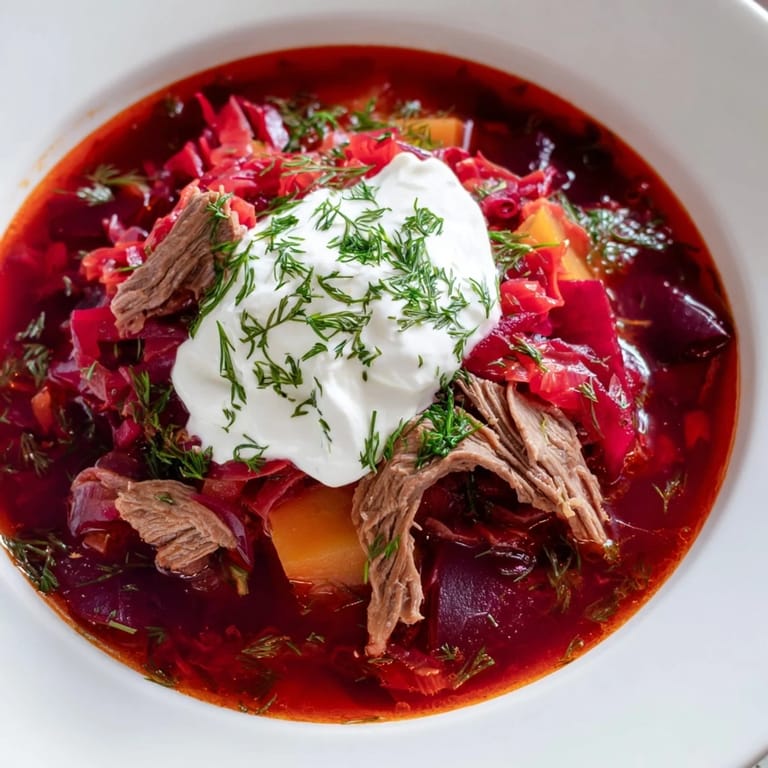
- Sour cream: The creamy swirl that cools each bite and ties everything together.
- Fresh dill or parsley: A handful of green at the end makes the whole bowl feel alive.
Tired of Takeout? 🥡
Get 10 meals you can make faster than delivery arrives. Seriously.
One email. No spam. Unsubscribe anytime.
Instructions
- Simmer the beef:
- Combine beef, water, bay leaves, peppercorns, and salt in a large pot and bring it to a rolling boil, then turn the heat down low and let it bubble gently for 45 minutes, skimming off any foam that rises. The broth should smell rich and savory, not cloudy.
- Sauté the vegetables:
- While the beef cooks, heat oil in a skillet and cook the onions until they turn glassy, then add the carrots and beets and let them soften for 5 minutes before stirring in tomato paste, sugar, and vinegar. Cook another 7 to 8 minutes, stirring now and then, until the mixture smells sweet and tangy and the beets are tender.
- Prepare the broth:
- Pull the beef out of the pot and set it aside to cool, then strain the broth if you want it crystal clear or leave it as is. Bring it back to a gentle simmer.
- Cook the potatoes:
- Drop the diced potatoes into the simmering broth and let them cook for 10 minutes until they're just tender when you poke them with a fork.
- Add cabbage and beet mixture:
- Stir in the shredded cabbage and all of the sautéed beet mixture, then let everything simmer together for another 10 minutes until the cabbage is soft but still has a little bite.
- Finish the soup:
- Shred or cube the cooled beef and return it to the pot, then stir in the minced garlic and adjust the salt and pepper to your taste. Let it simmer for 5 more minutes, then turn off the heat and let the borscht rest for 15 to 20 minutes so the flavors can settle and deepen.
- Serve:
- Ladle the hot soup into bowls and top each one with a generous dollop of sour cream and a sprinkle of chopped dill or parsley.
 Save
Save One winter my friend showed up unannounced, soaked from the rain and looking miserable. I reheated a container of borscht, set it in front of her with a hunk of rye bread, and watched her face change with the first spoonful. She didn't say much, just ate two bowls and fell asleep on my couch. Sometimes soup is the only thing that helps.
Make It Your Own
If you want a vegetarian version, skip the beef and use a good vegetable broth, then add an extra bay leaf and a spoonful of miso at the end for depth. I've also stirred in white beans or chickpeas to make it heartier, and it worked beautifully. Some people add a spoonful of kvass or a squeeze of lemon juice for extra brightness, and I won't argue with that.
Storage and Reheating
Borscht keeps in the fridge for up to five days and actually tastes better on day two or three once everything has mingled. Reheat it gently on the stove, adding a splash of water if it's thickened up. I don't recommend freezing it with the potatoes in, they get mealy, but you can freeze the base and add fresh potatoes when you reheat.
Serving Suggestions
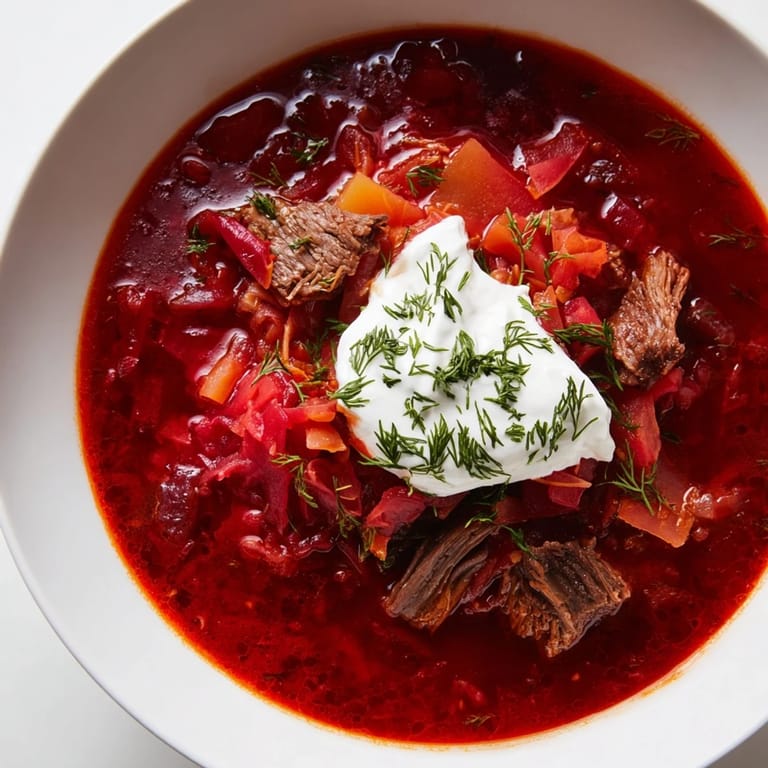
This soup begs to be eaten with thick slices of rye bread or pampushky, those soft Ukrainian garlic rolls that soak up every last drop. I've also served it alongside pickled cucumbers and a simple salad of shredded cabbage and carrots dressed with lemon and oil. The contrast of hot, tangy soup and cold, crunchy pickles is unbeatable.
- Top with extra fresh dill and a drizzle of good olive oil for a fancier presentation.
- Serve with a shot of cold vodka if you're feeling traditional.
- Pack it in a thermos for lunch, it travels beautifully and tastes like a hug in a cup.
 Save
Save Every time I make borscht, I think of Oksana and that gray afternoon when she taught me to trust the resting time. She was right, patience makes all the difference.
Recipe FAQ
- → What type of beef is best for this dish?
Use beef chuck or brisket cut into large pieces to ensure tenderness after slow simmering.
- → Can the soup be made vegetarian?
Yes, omit beef and substitute with vegetable broth; add extra vegetables for depth.
- → Why is vinegar added to the sautéed vegetables?
Vinegar brightens flavors and helps balance the natural sweetness of beets and tomato paste.
- → How long should the soup rest before serving?
Let it rest off heat for 15-20 minutes to allow flavors to fully develop.
- → What are recommended garnishes for the soup?
A dollop of sour cream and fresh dill or parsley enhance the soup’s richness and freshness.