 Save
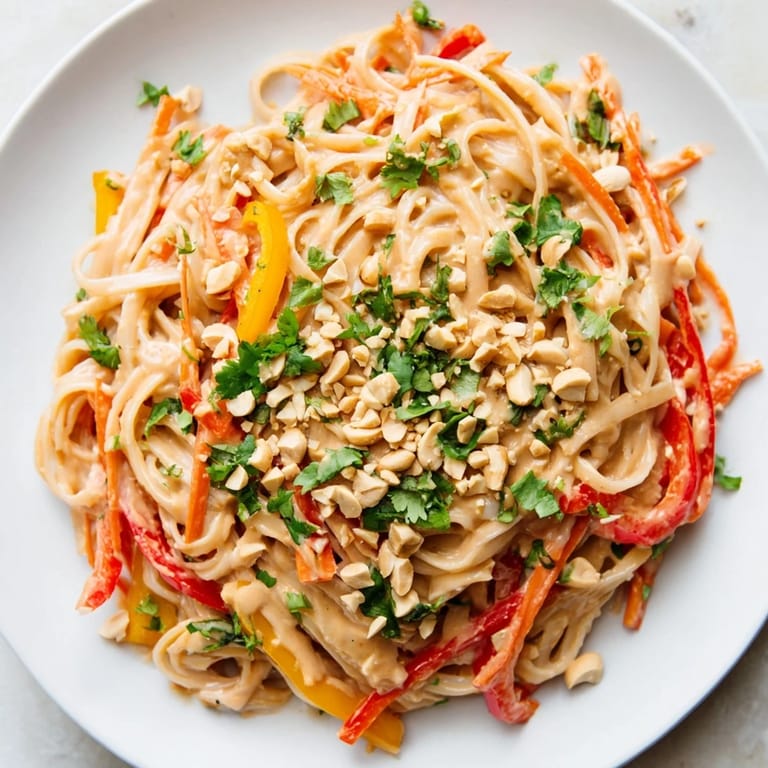
Save I discovered these noodles on a rainy Tuesday when my pantry felt empty but my cravings felt enormous. A jar of peanut butter, some dried noodles, and a bottle of sriracha somehow transformed into something so good I made it again the next night. There's magic in how simple ingredients can come together to create something that tastes like you've been cooking all day, when really you've just spent twenty minutes at the stove.
My roommate came home while I was tossing these noodles and immediately asked what smelled so incredible. Within minutes, she had a bowl in her hands, and we ended up sitting on the kitchen counter talking until the food got cold. That's when I knew this recipe was special—not because it's complicated, but because it brings people together without any fuss.
Ingredients
- Dried rice noodles or spaghetti (12 oz): Rice noodles absorb the sauce beautifully and cook faster, but regular spaghetti works just fine if that's what you have—the key is not overcooking them.
- Creamy peanut butter (1/2 cup): Use the kind without added oils or sugar; it creates a naturally silky sauce without any graininess.
- Soy sauce (1/4 cup): This is your umami backbone, so don't skip it or substitute with something lighter.
- Rice vinegar (2 tbsp): The slight tang cuts through the richness and prevents the sauce from feeling one-note.
- Toasted sesame oil (1 tbsp): A little goes a long way—the toasted kind has more character than the regular variety.
- Honey or maple syrup (2 tbsp): This balances the heat and salt with just enough sweetness to make the sauce addictive.
- Sriracha or chili garlic sauce (2–3 tbsp): Adjust this based on your heat tolerance and honestly, based on your mood that day.
- Garlic and ginger (2 cloves and 1 tbsp): These are non-negotiable—they're what make the sauce taste alive instead of flat.
- Warm water (1/4 cup): Start with less and add more to get the consistency you want; too thick and it won't coat the noodles properly.
- Shredded carrots (1 cup): They add a natural sweetness and stay crisp even when tossed with warm noodles.
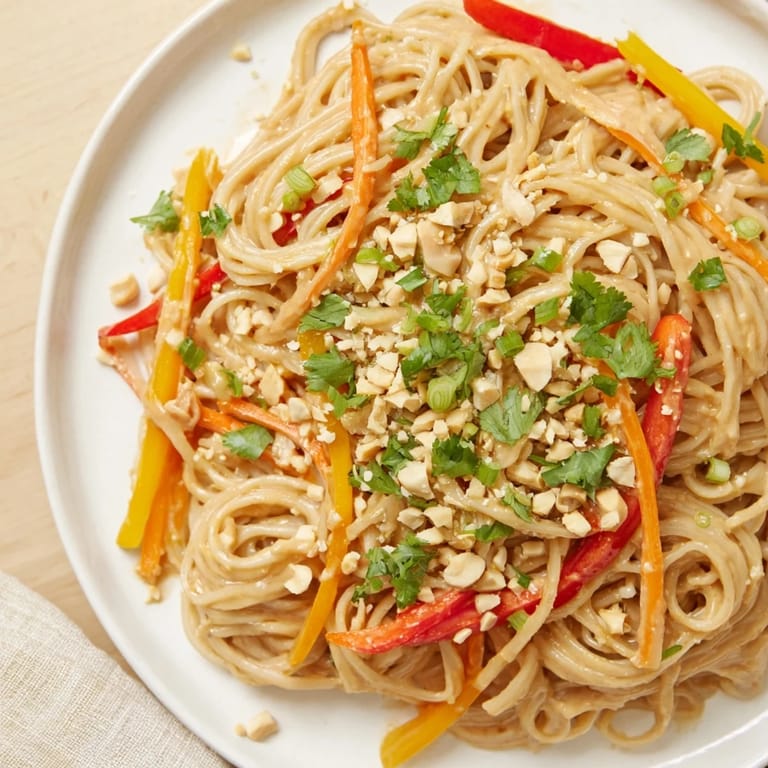
- Bell pepper (1 cup sliced): Any color works, though red and yellow tend to feel more vibrant on the plate.
- Scallions, roasted peanuts, cilantro, and lime: These are what transform the dish from good to memorable—don't treat them as optional.
Tired of Takeout? 🥡
Get 10 meals you can make faster than delivery arrives. Seriously.
One email. No spam. Unsubscribe anytime.
Instructions
- Get the noodles going:
- Bring a large pot of water to a boil and cook the noodles according to package directions—usually about eight to ten minutes. You want them tender but still with a tiny bit of resistance; overcooked noodles will turn mushy when tossed with sauce. Drain them in a colander, then rinse under cold water while gently stirring with your fingers to separate them.
- Build the sauce:
- In a medium bowl, whisk together the peanut butter, soy sauce, rice vinegar, sesame oil, honey, sriracha, garlic, and ginger until smooth and creamy. The peanut butter will resist at first, but keep whisking—it will eventually surrender and become silky. Add the warm water a little at a time, whisking until you reach a pourable consistency that'll coat the noodles without pooling at the bottom of the bowl.
- Bring it together:
- Toss the cooled noodles with the carrots and bell pepper in a large bowl, then pour the sauce over everything and toss with purpose until every strand is coated. The vegetables will release a bit of moisture, which is actually perfect because it'll stretch the sauce even further.
- Plate and garnish:
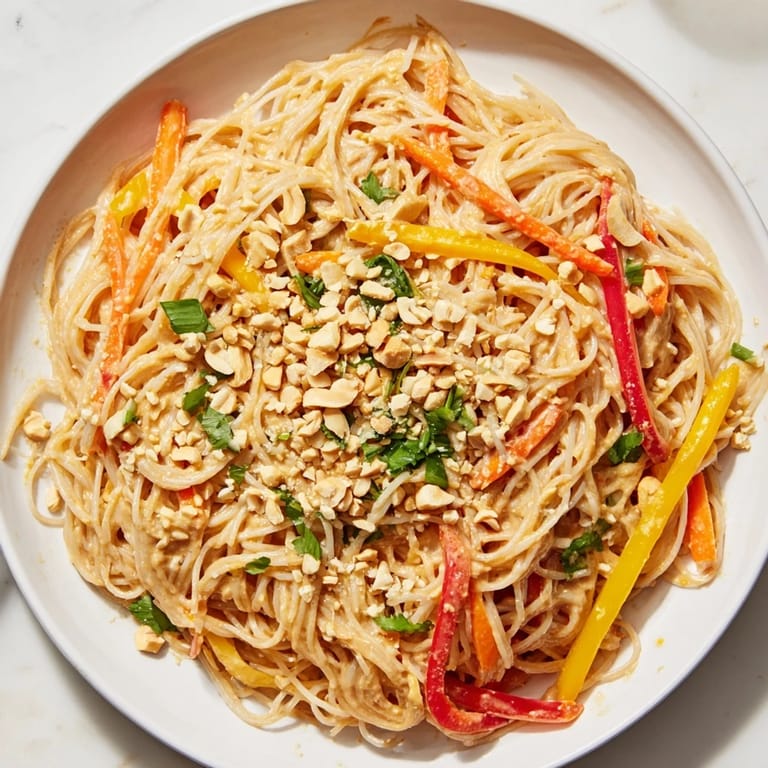
- Divide the noodles among bowls and top generously with sliced scallions, roasted peanuts, and cilantro. A squeeze of fresh lime right before eating makes all the difference, so don't skip this step.
- Serve or chill:
- Eat immediately while the noodles are still warm, or cover and refrigerate for a cold version that's equally delicious the next day.
 Save
Save I once made a huge batch of these noodles for a potluck and watched people go back for thirds, spooning extra sauce from the bottom of the bowl. Someone asked if I'd bought it from a restaurant, and honestly, that moment made me realize how much power there is in feeding people something simple but made with real attention.
Playing with Heat and Flavor
The beauty of this sauce is how personal you can make it. I've served it to friends who love spice and others who barely tolerate it, and everyone gets their version just right. Start with less sriracha than you think you need, taste it, and adjust—your palate is the best guide, and there's no shame in liking things milder or spicier than the recipe suggests.
Protein and Texture Ideas
These noodles shine on their own, but they're also the perfect canvas for whatever protein sounds good that day. Crumbled tofu tossed in the sauce gets crispy at the edges, shredded rotisserie chicken makes it feel more substantial, and shrimp cooks in minutes if you're feeling fancy. Even a runny egg yolk on top transforms the whole experience into something richer and more luxurious.
Making It Yours
The first time you make this, follow the recipe as written so you know what you're working with. After that, feel free to get creative with whatever vegetables are in your fridge or whatever nut butter you have on hand. This dish teaches you something valuable about confidence in the kitchen—that recipes are more like guidelines than laws.
- If you hate cilantro, leave it out without guilt and top with something you actually love instead.
- Cold noodles from the fridge make an excellent lunch the next day, even better than the first night.
- Make extra sauce—you'll want to drizzle more on top, and honestly, it's delicious on steamed vegetables or rice bowls too.
 Save
Save This recipe has become my go-to when I want something that feels both effortless and impressive, which honestly is the sweet spot in home cooking. Make it once, and it'll probably become one of those meals you return to over and over.
Recipe FAQ
- → What type of noodles work best for this dish?
Dried rice noodles or spaghetti both make great options, offering a tender texture that absorbs the peanut sauce well.
- → How can I adjust the spice level?
Vary the amount of sriracha or chili garlic sauce to suit your preferred heat intensity, from mild to spicy.
- → Can I make this dish gluten-free?
Use gluten-free noodles and substitute soy sauce with tamari to keep the dish gluten-free without compromising flavor.
- → Are there alternatives to peanut butter in the sauce?
Almond or cashew butter can be used as alternatives, or sunflower seed butter for those with nut allergies.
- → What garnishes enhance the dish?
Scallions, roasted peanuts, fresh cilantro, and a squeeze of lime add freshness and texture to lift the flavors.
- → Can I add protein to this dish?
Yes, sautéed tofu, cooked chicken, or shrimp can be incorporated to increase protein content and make it more substantial.