 Save
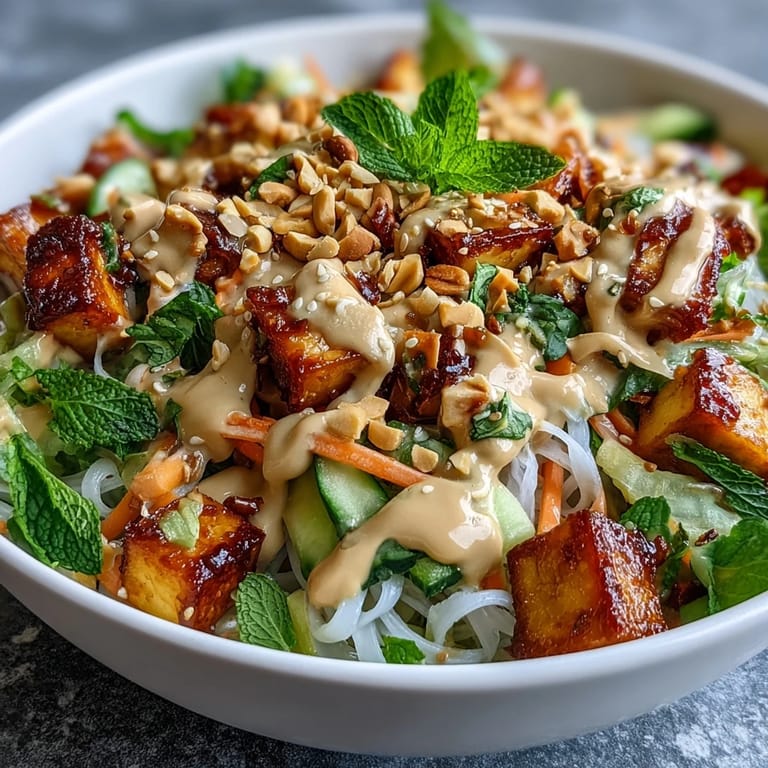
Save One humid afternoon, I was craving spring rolls but didn't want the fuss of rolling and frying. So I scattered everything across a bowl instead—the noodles, the vegetables, the sauce—and realized I'd stumbled onto something even better. There's something about deconstructing a dish that makes you appreciate each ingredient more, and this bowl captures that same bright, fresh energy without the kitchen steam and sticky fingers.
I made this for friends who showed up unannounced one evening, and I watched their faces light up when they realized they could customize their own bowls—extra cilantro here, more sauce there, a squeeze of lime whenever they wanted. It turned dinner into something interactive and personal, which felt like a small luxury.
Ingredients
- Rice vermicelli noodles: They're delicate and cook in minutes, but rinsing them cold and tossing with sesame oil prevents that frustrating clump that ruins everything.
- Carrots and cucumber: Julienning them thin isn't just for looks—it lets them absorb the sauce and soak up flavors instead of staying stubbornly crunchy.
- Red bell pepper: I slice it thin so it softens slightly from the warm noodles underneath, striking that perfect balance between tender and crisp.
- Red cabbage: Its slight earthiness and vibrant color anchor the bowl, and finely shredding it means it actually mingles with everything instead of sitting separate.
- Bean sprouts: They add a fresh snap that survives even if the bowl sits for a moment, making them essential for texture.
- Spring onions: Thinly sliced, they bring a gentle allium bite that brightens the whole dish without overpowering.
- Fresh cilantro and mint: These herbs are the soul of the bowl—add them generously right before eating so they stay bright and alive.
- Tofu or shrimp: Protein anchors the meal; pressed and pan-fried tofu gets golden and slightly crispy, while cold shrimp add a different kind of elegance.
- Creamy peanut butter: Full-fat versions make the sauce silky without needing cream, and the flavor is deeper and more satisfying.
- Soy sauce, rice vinegar, maple syrup: This trio balances salty, tangy, and sweet—adjusting any one changes the whole character of the sauce.
- Sesame oil, garlic, ginger: Together they create warmth and depth that makes the sauce feel sophisticated rather than one-note.
- Roasted peanuts and sesame seeds: These final garnishes add texture and richness that keeps every spoonful interesting.
Tired of Takeout? 🥡
Get 10 meals you can make faster than delivery arrives. Seriously.
One email. No spam. Unsubscribe anytime.
Instructions
- Prepare the noodles:
- Boil the rice vermicelli according to the package—usually just a few minutes—then drain and rinse under cold water until they're completely cool. The rinsing stops the cooking and keeps them from turning mushy.
- Toss with sesame oil:
- Drizzle a tablespoon of sesame oil over the cooled noodles and gently toss; this prevents them from clumping into a solid mass that's impossible to separate later.
- Prep all vegetables:
- Julienne the carrots and cucumber into matchstick-thin pieces, slice the bell pepper into thin strips, finely shred the cabbage, and set each in its own bowl. Having everything prepped and separated makes assembly feel organized and calm.
- Handle your protein:
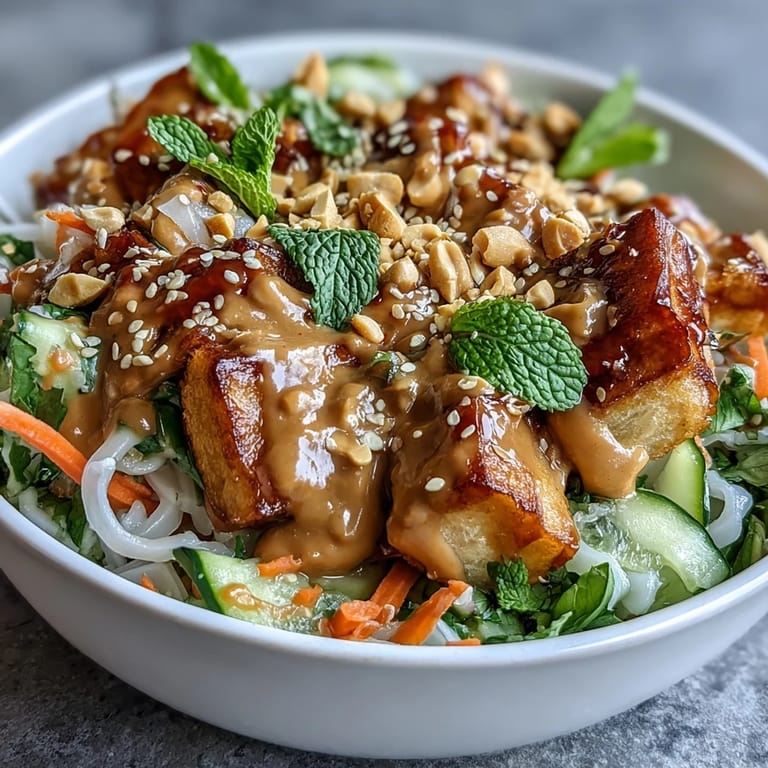
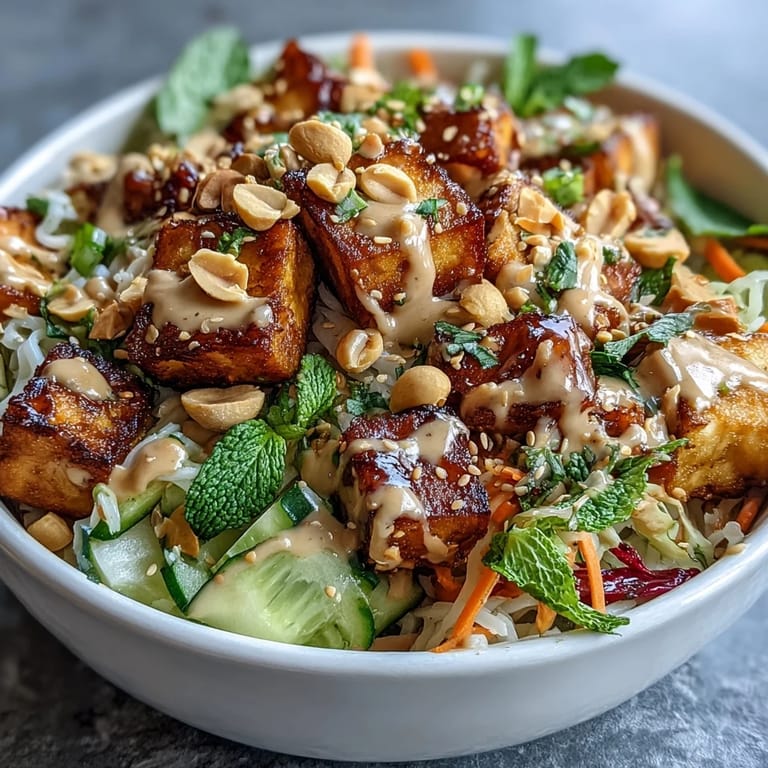
- If using tofu, press it gently between paper towels to release excess moisture, then cut into small cubes and pan-fry in a little oil over medium heat until the edges turn golden and slightly crispy—about 5 to 7 minutes total, turning occasionally. If using shrimp, make sure they're cooked, peeled, and chilled before serving.
- Build the peanut sauce:
- Whisk together the peanut butter, soy sauce, rice vinegar, maple syrup, sesame oil, minced garlic, and fresh ginger in a small bowl. Add warm water one tablespoon at a time, whisking constantly, until the sauce flows like thick honey but still coats a spoon—not too thick, not too thin.
- Assemble the bowls:
- Divide the cooled noodles among four bowls, then arrange the vegetables, protein, cilantro, and mint on top in whatever pattern feels right to you. There's no wrong way; you're building something beautiful that's also going to get mixed together.
- Dress and garnish:
- Drizzle each bowl generously with peanut sauce, then scatter the chopped roasted peanuts and toasted sesame seeds over top. Serve with lime wedges on the side so everyone can brighten their bowl to their own taste.
 Save
Save There's a quiet joy in offering someone a bowl of food where they can see every ingredient, where nothing is hidden. This dish does that—it lets people eat with intention, choosing what goes into each bite, and somehow that small act of control makes the meal feel more nourishing.
Why the Bowl Format Works
Spring rolls are delicious, but they require timing, technique, and a certain amount of kitchen confidence that not everyone has on a Tuesday evening. The bowl version strips away that pressure while keeping every flavor and texture that makes spring rolls special. You get to enjoy the freshness without the performance anxiety.
Making It Your Own
This recipe is a template, not a law. I've served it with grilled chicken instead of tofu, with thinly sliced radishes for extra crunch, and once with a handful of finely chopped lettuce mixed into the noodles. The core of the dish—fresh vegetables, a creamy peanut sauce, tender noodles—stays the same, but everything else shifts based on what's in your kitchen or what you're craving that day.
Sauce Secrets and Smart Swaps
The peanut sauce is forgiving once you understand its balance. A bit too thick? Warm water fixes it. Too salty? A splash of rice vinegar corrects it. For a spicy version, whisk in a teaspoon of sriracha or add fresh sliced chili to the bowl. If you're cooking for someone avoiding soy, tamari swaps in seamlessly, and the dish remains just as satisfying without sacrificing any depth.
- Make the sauce ahead and store it in the fridge for up to three days—it actually tastes better the next day once the flavors settle.
- Toast your own sesame seeds if you can; the difference between raw and toasted is the difference between good and genuinely memorable.
- Serve everything cold or at room temperature, and let people add warmth through the sauce rather than heating the components—it keeps the vegetables crisp.
 Save
Save This bowl has become my answer to the question of what to make when you want something that feels special but doesn't require you to spend the whole evening in the kitchen. It's fresh, it's colorful, and somehow it always makes people feel cared for.
Recipe FAQ
- → What protein options work best in this bowl?
Firm tofu and cooked shrimp are recommended for their texture and flavor compatibility, but grilled chicken can also be used.
- → How can I make the peanut sauce gluten-free?
Use tamari instead of regular soy sauce to keep the sauce gluten-free without compromising taste.
- → Can I add spice to the peanut sauce?
Yes, adding sriracha or fresh sliced chili to the peanut sauce can provide a nice spicy kick.
- → What vegetables are used in the bowl?
Carrots, cucumber, red bell pepper, red cabbage, bean sprouts, spring onions, cilantro, and mint create a fresh, crunchy medley.
- → How should the noodles be prepared for this dish?
Rice vermicelli noodles are cooked according to package instructions, rinsed in cold water, then tossed with sesame oil to prevent sticking.