 Save
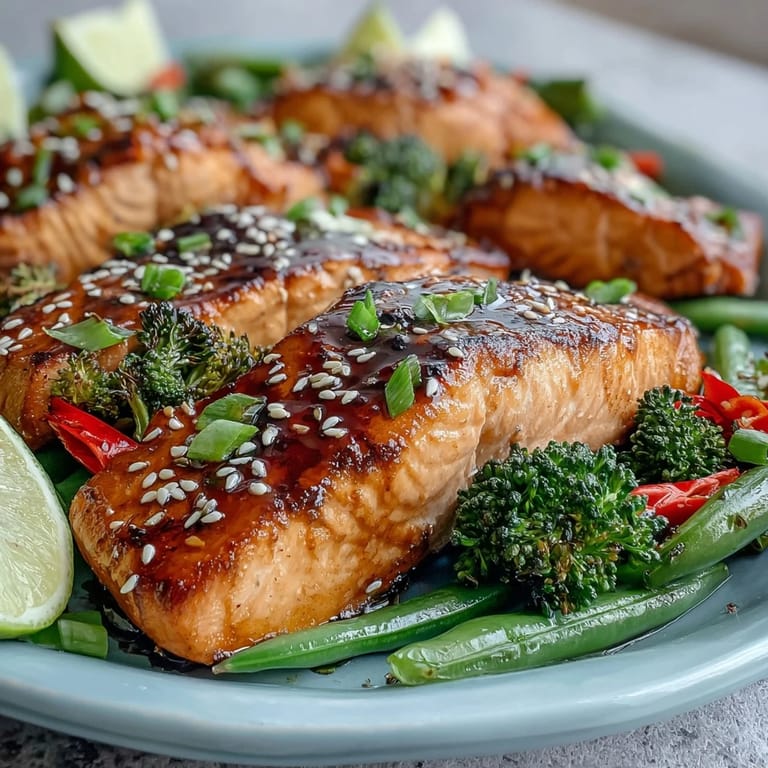
Save One weeknight, I stood in front of my open fridge watching the clock tick closer to dinner time, salmon thawing on the counter and absolutely no inspiration. Then I remembered my neighbor raving about a teriyaki glaze she'd perfected, and something clicked—why not throw everything on one pan and let the oven do the heavy lifting? Twenty minutes later, the kitchen smelled incredible, my family was already gathered around the table, and I realized this had become my secret weapon for nights when I need something that tastes like I spent hours cooking but actually didn't.
I made this for my parents last month when they visited, and my dad—who claims he doesn't like vegetables—went back for seconds of the broccoli. My mom kept asking about the sauce, convinced I'd added something mysterious when really it was just good soy sauce, honey, and ginger doing what they do best. Watching them eat something I'd made in under an hour felt like a small victory.
Ingredients
- Salmon fillets, skin-on: Four five to six ounce pieces are perfect for four people, and skin-on keeps everything juicy during roasting.
- Broccoli florets: Cut them roughly the same size so they cook evenly, and don't worry about them being perfect—the roasting brings out their natural sweetness.
- Sugar snap peas: These stay crisp and sweet, adding a textural contrast that keeps the dish interesting instead of mushy.
- Bell pepper, sliced: Optional, but the red ones add brightness and a hint of natural sweetness that balances the salty-sweet sauce.
- Low-sodium soy sauce: Regular soy sauce works too, but low-sodium lets you control the saltiness without the sauce becoming overpowering.
- Honey or maple syrup: Honey caramelizes beautifully, but maple syrup adds an earthy note if that's what you have on hand.
- Rice vinegar: This prevents the glaze from being one-note sweet and adds a subtle tang that makes everything taste brighter.
- Sesame oil: Just one tablespoon is enough to fill the kitchen with that warm, toasty aroma that signals you're cooking something good.
- Fresh garlic and ginger: These are non-negotiable—minced fine, they dissolve into the sauce and become the backbone of the whole flavor profile.
- Cornstarch slurry: Mix it with cold water before stirring in so the sauce thickens without lumps, creating that glossy coating everyone loves.
- Sesame seeds and scallions: These feel like finishing touches, but they're what transform a simple roasted dinner into something memorable.
Tired of Takeout? 🥡
Get 10 meals you can make faster than delivery arrives. Seriously.
One email. No spam. Unsubscribe anytime.
Instructions
- Set the stage:
- Preheat your oven to four hundred degrees while you line a large sheet pan with parchment paper—this small step means you'll actually want to cook this again because cleanup becomes effortless.
- Build the sauce:
- In a small saucepan, combine soy sauce, honey, rice vinegar, sesame oil, minced garlic, and grated ginger over medium heat. Watch it come to a gentle simmer, then whisk in your cornstarch slurry and cook for just a minute or two until it thickens and turns glossy—you'll know it's ready when it coats the back of a spoon.
- Arrange and glaze the salmon:
- Place salmon fillets on one side of your pan, skin-side down, then brush each one generously with teriyaki sauce, remembering to save some for the vegetables. The sauce will stick better if you work quickly and don't oversaturate.
- Toss the vegetables:
- In a bowl, combine broccoli, snap peas, and bell pepper with a light drizzle of olive oil and a tablespoon of your remaining teriyaki sauce, tossing until everything is evenly coated. Spread them in a single layer next to the salmon, giving them room to roast instead of steam.
- Roast together:
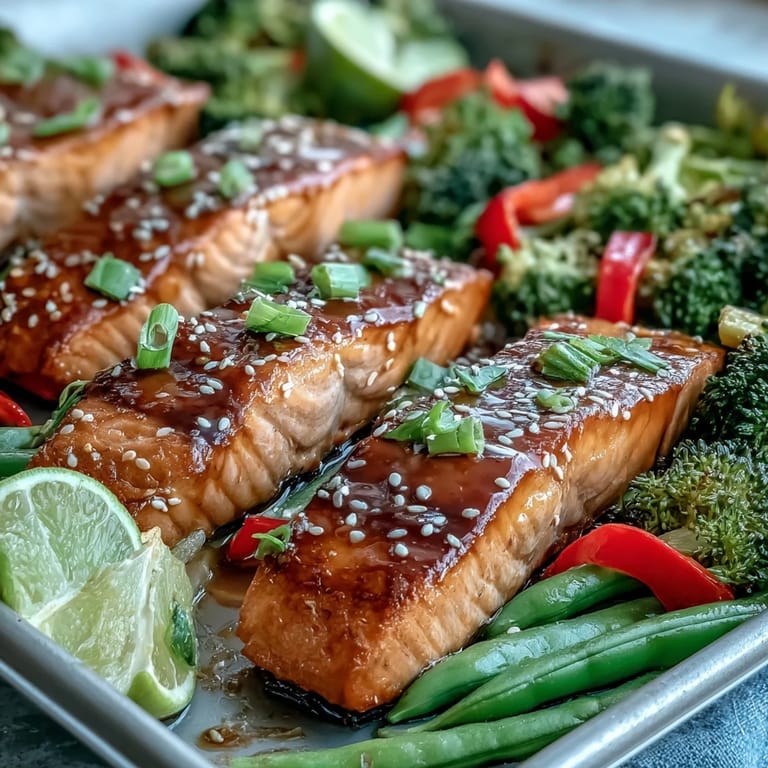
- Slide everything into the oven for fifteen to eighteen minutes, checking at the fifteen minute mark—the salmon should flake easily with a fork and the vegetables should be tender but still have a slight bite. The broccoli edges might start to char a little, and that's exactly what you want.
- Optional broil for shine:
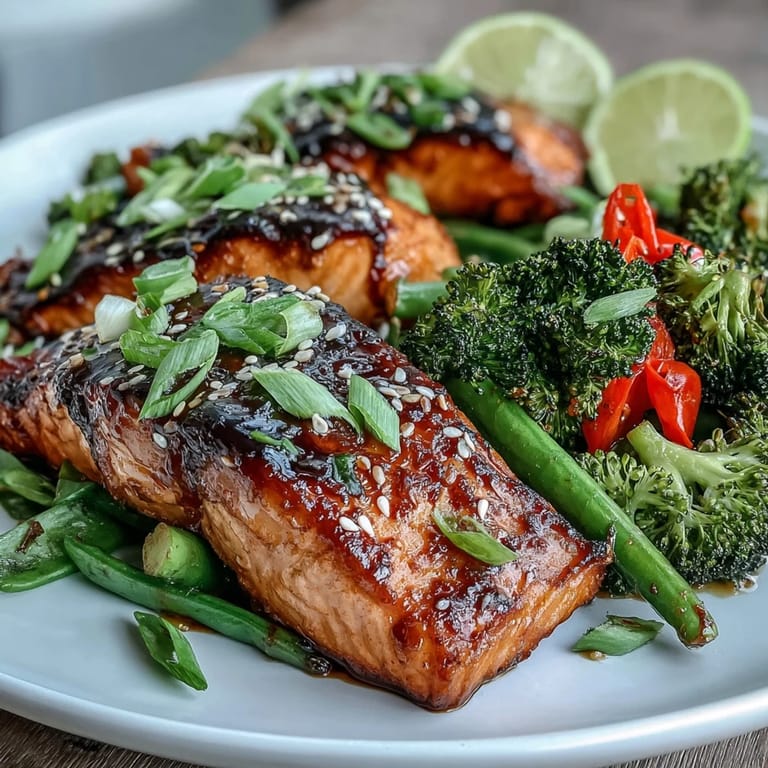
- If you're feeling fancy or want extra caramelization, switch to broil for the last minute or two, but watch carefully because this happens fast and you want glaze, not char.
- Finish and serve:
- Pull everything out, drizzle with any remaining sauce, scatter sesame seeds and sliced scallions over top, and finish with a squeeze of fresh lime. Serve immediately while everything is still warm and the sauce is still clinging to every bite.
 Save
Save There's something almost meditative about roasting salmon and vegetables on a single pan—no frantic juggling of different cooking times, no trying to time rice or noodles perfectly, just one oven doing all the work. When everyone sits down to eat and the kitchen still smells incredible, you understand why this becomes a go-to dish.
Customizing Your Bowl
This recipe is more flexible than it looks, and that's part of why I love it. Not a snap pea person? Green beans or asparagus roast beautifully in the same time, and they soak up the teriyaki just as well. If you want to bulk it up, serve everything over jasmine rice or brown rice, letting the extra sauce soak into the grains—suddenly it becomes a complete meal that feels intentional instead of thrown together.
Making It Work For Your Dietary Needs
This dish already feels naturally dairy-free and pescatarian, which means it fits into lots of different eating styles without feeling like you're missing out. If gluten is a concern, swap regular soy sauce for tamari—the swap is invisible, the taste is identical, and nobody needs to know you've made an accommodation unless you tell them. If sesame allergies run in your family, skip the sesame oil and seed garnish, use olive oil instead, and you've still got a delicious, fully flavored meal.
Meal Prep and Storage Wisdom
This is one of those meals that actually improves slightly when you store it—the flavors deepen and the sauce continues to coat everything as it sits. I've portioned leftovers into glass containers and grabbed them for lunch, and honestly they're almost better cold or reheated gently than hot off the sheet pan. If you're thinking ahead, this scales up beautifully for two sheet pans if you're feeding more people or want leftovers built in from the start.
- Store leftovers in airtight containers in the refrigerator for up to two days, though I've never had any last that long.
- Reheat gently in a four hundred twenty-five degree oven for five to eight minutes until warmed through, not in the microwave where the salmon can dry out.
- The teriyaki sauce thickens even more when cold, so if yours seems too stiff, thin it with a splash of water or extra soy sauce before serving.
 Save
Save This dish has earned its spot in my regular rotation because it works—for weeknight dinners, for impressing people without stress, for those moments when you want something that tastes intentional but your energy is limited. Once you make it once, you'll understand why it keeps coming back to your table.
Recipe FAQ
- → Can I use frozen salmon for this dish?
Yes, frozen salmon works well. Thaw it completely in the refrigerator overnight before cooking. Pat the fillets dry with paper towels to remove excess moisture, which helps the teriyaki glaze adhere properly and promotes better caramelization in the oven.
- → How do I know when the salmon is done?
The salmon is perfectly cooked when it flakes easily with a fork and reaches an internal temperature of 145°F. The flesh should turn opaque and slightly pink throughout. Avoid overcooking, as the salmon will continue cooking slightly from residual heat when removed from the oven.
- → Can I make the teriyaki sauce ahead of time?
Absolutely. Prepare the teriyaki sauce up to 3 days in advance and store it in an airtight container in the refrigerator. Reheat gently on the stovetop or in the microwave before brushing onto the salmon and vegetables, whisking to smooth any separation.
- → What vegetables work best as substitutions?
Beyond broccoli and snap peas, try asparagus, green beans, bok choy, or snow peas. Root vegetables like carrots or sweet potato work but may need longer cooking time. Aim for vegetables that cook in roughly 15–18 minutes at 400°F for even doneness.
- → Is this suitable for meal prep?
Yes, this dish meal preps beautifully. Portion leftovers into airtight containers and refrigerate for up to 2 days. Reheat gently in the microwave at 50% power to maintain the salmon's texture, or enjoy cold over salads for a refreshing lunch option.
- → How can I make this gluten-free?
Simply substitute low-sodium soy sauce with tamari or coconut aminos. Ensure all other ingredients, including the cornstarch and any garnishes, are certified gluten-free. The rest of the dish naturally contains no gluten-containing ingredients.