 Save
Save My grandmother's kitchen in Palermo always smelled like wine reduction and toasted pine nuts, and braciole was her answer to feeding a table full of hungry relatives without fuss. She'd pound those thin steaks with the confident rhythm of someone who'd made them a thousand times, while I watched from a stool, mesmerized by how she tucked each filling like she was wrapping a secret inside the meat. The first time I tried making them myself, I overstuffed a roll and it burst open in the sauce, but somehow that mistake taught me more than any perfect batch ever could. Now when I make braciole, I'm not just cooking—I'm recreating that particular warmth of a Sicilian Sunday, when time stretches and nothing matters except the food and the people around the table.
There was this one evening when my best friend came over right after a rough week at work, and I had these braciole simmering quietly on the stove. The house filled with this deep, complex aroma that seemed to settle everyone's nerves before we even sat down. By the time we plated them—the sauce coating each slice, steam rising—she'd already stopped talking about the terrible meeting and started smiling again. Food doesn't fix everything, but braciole comes close.
Ingredients
- Beef top round or flank steak: Look for slices that are already pounded thin, or ask your butcher to do it—saves time and ensures even thickness so everything cooks at the same pace.
- Pecorino cheese: The sharpness cuts through the richness of the beef and filling like a wake-up call for your palate; don't substitute with milder cheeses.
- Pine nuts: Toast them yourself if you have time, even just in a dry pan—it deepens their flavor from subtle to genuinely nutty and memorable.
- Raisins: They plump up in the filling and dissolve slightly into the beef, adding a whisper of sweetness that balances the herbs.
- Fresh parsley and basil: Fresh is non-negotiable here; dried herbs will make the filling taste like dusty disappointment.
- Breadcrumbs: These act as a binder and help the filling stay put while the braciole cooks; panko works beautifully if that's what you have.
- Olive oil: Use good oil for searing and sauce-building—it's the backbone of the flavor foundation.
- Crushed tomatoes: San Marzano if your budget allows; they're sweeter and less acidic, which means less tweaking later.
- Dry red wine: A Nero d'Avola or Barbera works wonderfully, but honestly, skip it if you don't have any rather than using something you wouldn't drink.
Tired of Takeout? 🥡
Get 10 meals you can make faster than delivery arrives. Seriously.
One email. No spam. Unsubscribe anytime.
Instructions
- Prepare your beef:
- Lay each slice on a cutting board and pound gently with a meat mallet until it's about a quarter-inch thick—you're looking for thin enough to roll easily but thick enough that it doesn't tear. Season both sides generously with salt and pepper and set aside.
- Mix your filling:
- In a bowl, combine the pecorino, toasted pine nuts, raisins, parsley, basil, minced garlic, and breadcrumbs, stirring until everything is evenly distributed. The mixture should feel slightly damp but not wet—if it seems too dry, add a splash of olive oil.
- Roll and secure:
- Place a beef slice in front of you and spoon filling onto the lower third, leaving a border on both sides. Roll tightly from the bottom up, tucking in the sides as you go, then tie with kitchen twine or secure with toothpicks to keep everything contained during cooking.
- Sear for color:
- Heat two tablespoons of olive oil in a large skillet over medium-high heat until it shimmers. Working in batches if needed, sear each braciole on all sides until deeply browned—this takes about six to eight minutes total and builds flavor you can't skip. Remove and set aside on a plate.
- Build your sauce base:
- In the same skillet, add two more tablespoons of olive oil and sauté the chopped onion until it's soft and slightly golden, around three minutes. Add the minced garlic and let it toast for just one minute until fragrant—any longer and it turns bitter.
- Deglaze and reduce:
- Pour in the red wine (if using) and let it bubble and reduce by half, scraping the bottom of the pan with a wooden spoon to lift all those caramelized, flavorful bits. This step is where ordinary sauce becomes extraordinary.
- Simmer everything together:
- Add the crushed tomatoes, oregano, salt, pepper, and a pinch of sugar if your tomatoes taste sharp. Bring to a gentle simmer, then nestle the braciole back into the sauce, cover loosely, and reduce heat to low.
- Low and slow:
- Let this cook for about one hour and fifteen minutes, turning the braciole every twenty minutes or so to ensure even cooking and sauce absorption. The beef is done when it's fork-tender and the sauce has darkened and thickened.
- Finish and serve:
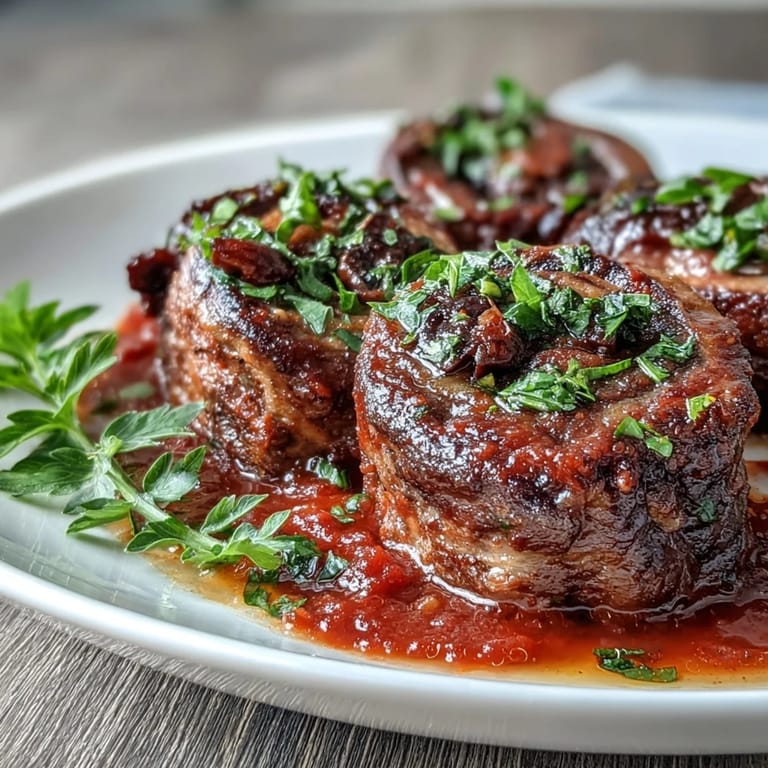
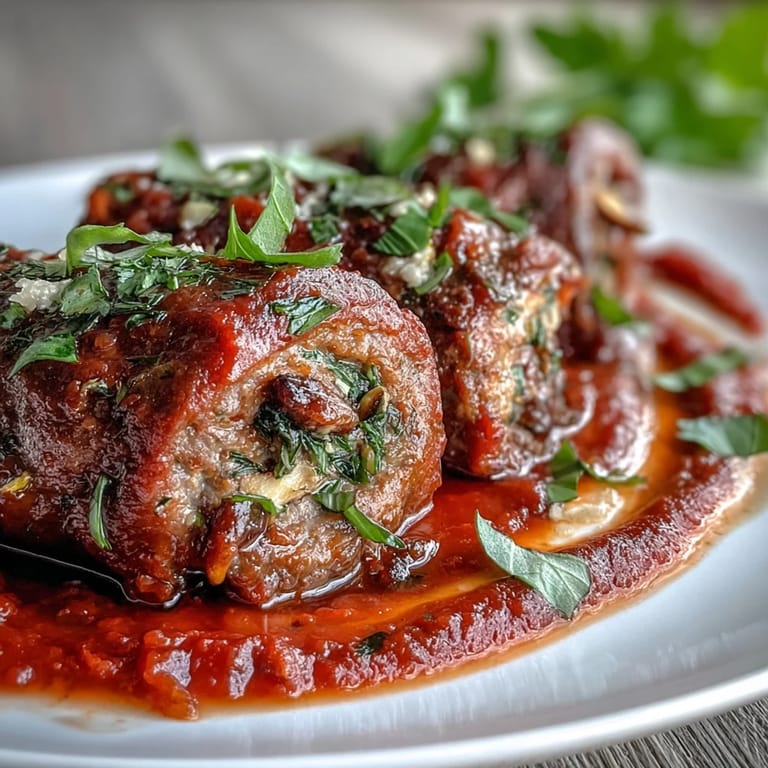
- Remove the braciole from the pan, carefully snip away the twine or toothpicks, and slice at an angle to reveal the pretty filling inside. Spoon that gorgeous sauce over each serving—it's liquid gold.
 Save
Save I learned the real magic of braciole one night when my son asked to help make dinner, and together we stuffed each roll and watched them brown. Somewhere between the searing and the simmering, he stopped thinking about screens and started asking questions about why the sauce changed color and why the pine nuts mattered. That's when I realized braciole isn't just about feeding people—it's about creating these small, quiet moments where cooking becomes conversation.
Why This Dish Matters
Braciole represents something essential about Sicilian cooking: the marriage of sweet and savory, the layering of flavors, and the understanding that simple ingredients become extraordinary when treated with intention. Every component has a reason—the raisins add brightness, the pine nuts add texture and richness, the cheese anchors everything with salt and umami. This isn't a dish that tries to impress with complicated techniques; it impresses because it tastes like someone who knows what they're doing spent time thinking about every bite.
Timing and Make-Ahead Magic
You can stuff and roll your braciole several hours ahead and keep them covered in the refrigerator until you're ready to sear them. In fact, some cooks swear that letting them sit for a bit helps the filling settle and stay intact during cooking. The sauce itself is actually better the next day—the flavors marry and deepen overnight, so don't hesitate to make this a day early and simply reheat gently before serving.
How to Serve It Right
Braciole is traditionally served with something to soak up that incredible sauce—creamy polenta, soft pasta, or crusty bread all work beautifully. A simple arugula salad on the side cuts through the richness without competing, and a glass of robust Sicilian red wine (Nero d'Avola, Primitivo, or Barbera) is practically required reading. The braciole can sit in its sauce for a bit while you finish other dishes, which means it's essentially a hands-off main course once it starts simmering.
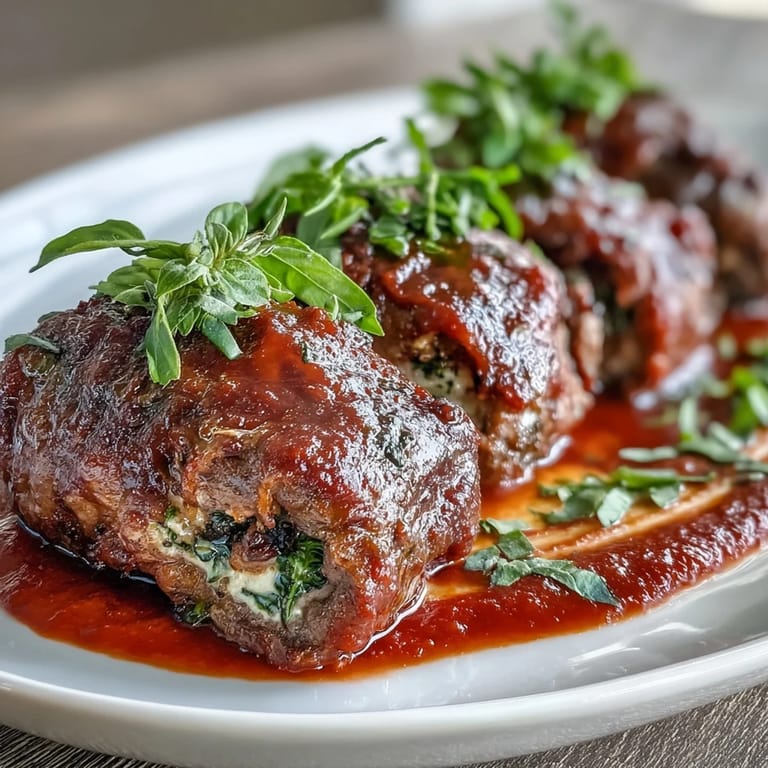
- Slice the braciole at an angle to show off that pretty filling inside—presentation matters even on a busy weeknight.
- If your sauce seems thin after cooking, remove the braciole and let the sauce simmer uncovered for a few minutes to concentrate it.
- Leftover braciole actually freezes beautifully, so don't hesitate to double the recipe and stash extras for future emergencies.
 Save
Save Making braciole reminds me that the best meals are the ones made with presence rather than perfection. Every time you make this, it becomes more yours—maybe you'll add a pinch of cinnamon, or use prosciutto instead of just cheese, or discover that your family prefers it without raisins. That's the beauty of a dish with such deep roots; it survives variation and tastes like home no matter what.
Recipe FAQ
- → Can I prepare braciole in advance?
Yes, you can assemble the beef rolls up to 24 hours ahead, cover tightly, and refrigerate. You can also make the entire dish a day before and gently reheat in the sauce before serving.
- → What cut of beef works best for braciole?
Top round or flank steak work excellently as they become tender when slow-simmered. Ask your butcher to slice them thin, or pound them yourself to about 1/4-inch thickness for easier rolling.
- → Can I substitute the pecorino cheese?
While pecorino provides authentic Sicilian flavor, you can use Parmigiano-Reggiano or a mix of both. Each offers a slightly different sharpness but will still deliver delicious results.
- → How do I prevent the rolls from opening during cooking?
Secure them tightly with kitchen twine or toothpicks, and don't skip the searing step—it helps seal the edges. Handle gently when turning in the sauce to keep the filling intact.
- → What should I serve with braciole?
Traditional accompaniments include pasta tossed in the braciole sauce, creamy polenta, or crusty Italian bread for soaking up the rich tomato sauce. A simple green salad balances the meal perfectly.
- → Can I make this without wine?
Absolutely. The wine adds depth but isn't essential. Simply skip that step or substitute with a splash of beef broth or balsamic vinegar for added complexity to the sauce.