 Save
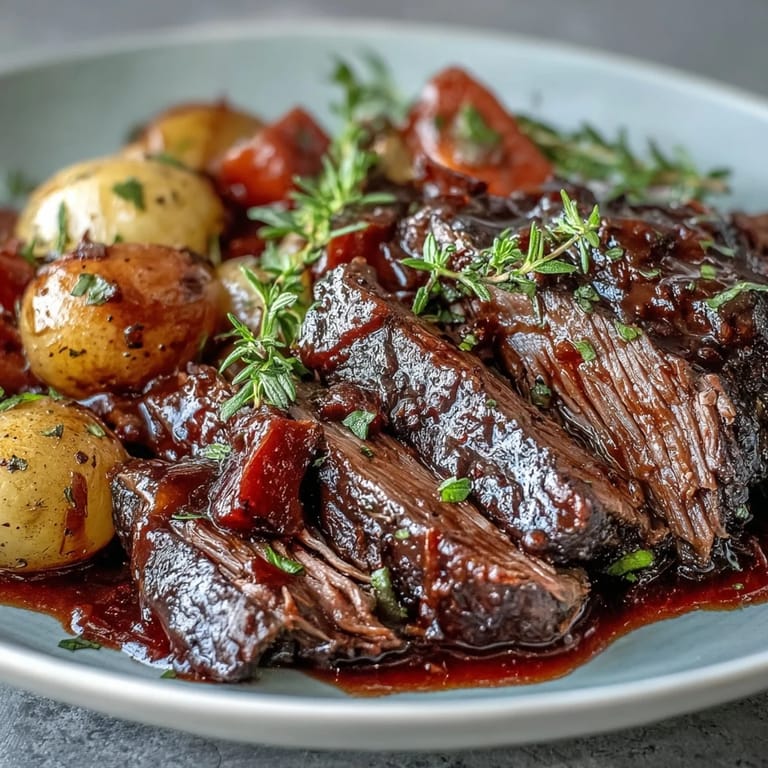
Save My grandmother used to make pot roast every Sunday, and the smell would drift through the entire house before we even woke up. She never measured anything, just threw vegetables around the meat and let it simmer for hours. When I started cooking on my own, I realized her improvisational style was actually built on solid technique, even if she could not explain why she did what she did.
The first time I made pot roast for friends, I panicked halfway through because the liquid looked too thin. I almost added cornstarch early, but my friend grabbed my arm and said to trust the process. She was right, that reduction created the most intense flavorful gravy I have ever tasted, and now I never rush that step.
Ingredients
- Beef chuck roast or blade roast: The marbling throughout this cut melts during cooking, keeping the meat incredibly moist while adding depth to the sauce
- Kosher salt and black pepper: Season generously before cooking since the roast is large and you want flavor throughout every bite
- All-purpose flour: Creates a beautiful crust when searing and helps thicken the braising liquid naturally as it cooks
- Olive oil and butter: The combination gives you a high smoke point from oil plus the rich browning capability of butter
- Yellow onion wedges: Thick slices hold their shape during long cooking while becoming meltingly sweet and savory
- Garlic cloves: Smashed cloves release more flavor and infuse the braising liquid with their aromatic essence
- Carrots, celery, and potatoes: These classic vegetables absorb the beef flavor while contributing their own sweetness and earthiness to the broth
- Tomato paste: Adds umami richness and helps create that deep mahogany color in the finished sauce
- Red wine: The acidity cuts through the rich beef while adding complexity and fruitiness to the gravy
- Beef broth: Forms the base of your braising liquid, so use a good quality one or make your own stock
- Worcestershire sauce: That secret ingredient nobody can quite identify but everyone notices when it is missing
- Fresh rosemary and thyme: Woody herbs stand up to long cooking time without turning bitter, infusing the dish with their piney fragrance
- Bay leaves: Subtle background flavor that helps round out all the other ingredients
Tired of Takeout? 🥡
Get 10 meals you can make faster than delivery arrives. Seriously.
One email. No spam. Unsubscribe anytime.
Instructions
- Preheat your oven:
- Set to 300 degrees for that low and slow cooking that transforms tough meat into something fork tender
- Prepare the beef:
- Pat the roast completely dry with paper towels, then season generously on all sides with salt and pepper
- Dust with flour:
- Lightly coat the roast, shaking off any excess flour so you just get a thin layer that will help with browning
- Get your pot hot:
- Heat oil and butter in a large Dutch oven over medium high heat until the butter foams and smells nutty
- Sear the roast:
- Brown the beef for about 5 minutes per side until it develops a dark crust, getting the edges too, then set aside
- Cook the aromatics:
- Add onion wedges to the pot and cook until golden, then throw in garlic for just a minute until fragrant
- Build flavor base:
- Stir in tomato paste and let it cook until it darkens to a rusty color, which intensifies its sweetness
- Deglaze the pot:
- Pour in wine while scraping up all those browned bits from the bottom, then simmer briefly
- Add liquid and herbs:
- Pour in broth and Worcestershire, then add rosemary, thyme, and bay leaves
- Return the beef:
- Put the roast back in the pot, making sure the liquid comes about halfway up the meat
- Start braising:
- Bring to a gentle simmer, cover tightly, and cook for about an hour and a half
- Add vegetables:
- Flip the roast, tuck carrots, celery, and potatoes around the meat, and cook another hour and a half
- Rest the meat:
- Remove beef and vegetables to a platter, cover with foil, and let the juices settle
- Finish the gravy:
- Skim fat from the liquid, simmer if you want it thicker, or stir in cornstarch mixture for body
- Serve it up:
- Shred or slice the beef, arrange over vegetables, and spoon that glorious gravy over everything
 Save
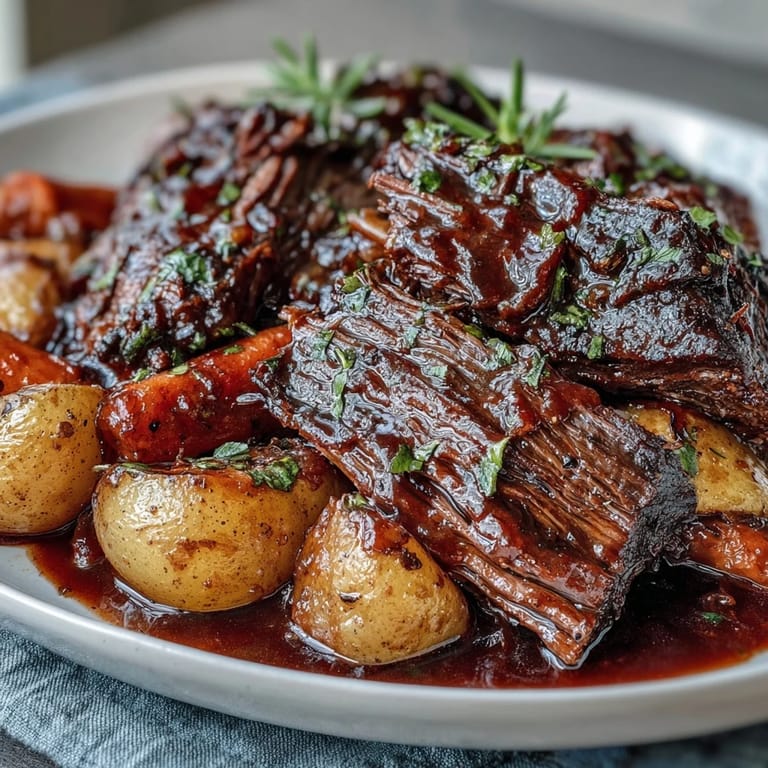
Save There was this terrible winter storm a few years back when we lost power for days. We cooked this pot roast on the wood stove, huddled under blankets, and it was the most memorable meal I have ever made. Something about food cooked during difficult circumstances just tastes better.
Making It Your Way
Once you have the basic technique down, pot roast becomes incredibly forgiving. I have made it with red wine, white wine, beer, and even just extra broth when the liquor cabinet was empty. Each version tastes different but somehow always turns into comfort food.
Timing Your Vegetables
The secret to perfect vegetables is adding them at the right time so they do not turn to mush. Carrots and celery can go in earlier, but potatoes should wait until the last hour or two. If you want everything done at the same time, cut your potatoes larger than everything else.
Serving Suggestions
Crusty bread is mandatory for soaking up that gravy, but buttered egg noodles or mashed potatoes work just as well. Sometimes I serve it over polenta when I want something different, and the creamy corn really pairs beautifully with the rich beef sauce.
- A green salad with sharp vinaigrette cuts through all that richness
- Simple roasted green beans or steamed broccoli add color and freshness
- Light red wine like Pinot Noir complements without overpowering the dish
 Save
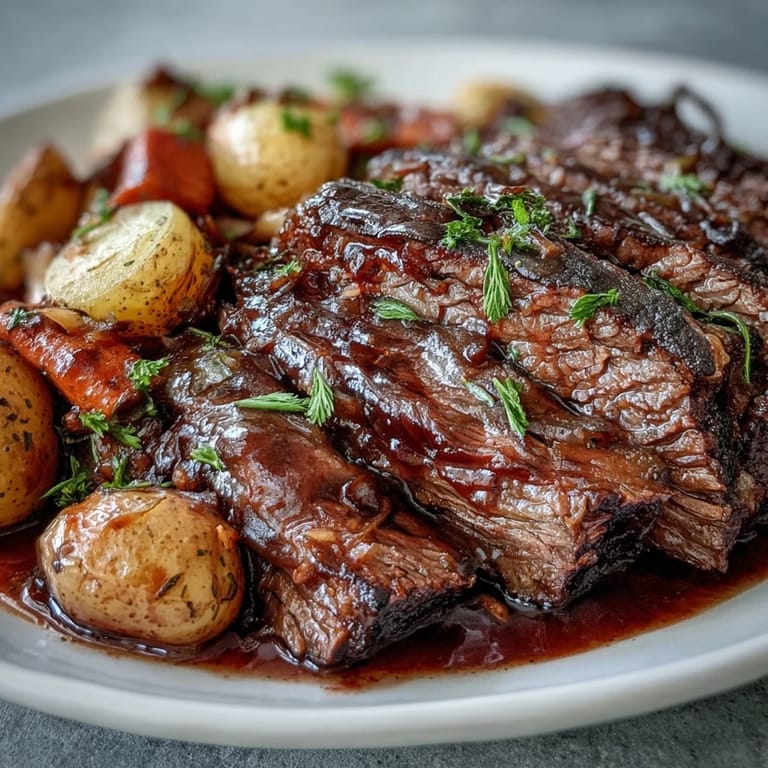
Save Pot roast is one of those dishes that tastes better when you are not in a hurry, so plan it for a lazy weekend when you can enjoy the whole process.
Recipe FAQ
- → What's the best cut of beef for this?
For the most tender and flavorful outcome, use a well-marbled beef chuck roast or blade roast. These cuts have enough fat and connective tissue to break down beautifully during the long, slow braising process, resulting in incredibly succulent meat.
- → Can I make this without alcohol?
Absolutely! If you prefer to omit the red wine, simply substitute it with an equal amount of additional low-sodium beef broth. The dish will still be rich and delicious, just with a slightly different flavor profile.
- → How do I thicken the braising liquid into gravy?
After removing the cooked beef and vegetables, bring the braising liquid to a simmer. In a separate small bowl, whisk together 1½ tablespoons of cornstarch with 2 tablespoons of cold water to form a slurry. Gradually whisk this mixture into the simmering liquid and cook for 2-3 minutes, stirring constantly, until it reaches your desired thickness. Add more broth if it becomes too thick.
- → Can this be prepared in a slow cooker?
Yes, it's perfect for a slow cooker! After searing the beef and aromatics, transfer everything to your slow cooker. Cook on low for 8-10 hours or on high for 5-6 hours. For firmer vegetables, add the carrots, celery, and potatoes during the last 2-3 hours of cooking.
- → What are good serving suggestions?
This hearty dish pairs wonderfully with crusty bread for soaking up the rich gravy, creamy mashed potatoes, or buttered egg noodles. You could also serve it over polenta or rice for a complete and satisfying meal.
- → How long do leftovers last?
Leftovers can be stored in an airtight container in the refrigerator for 3-4 days. The flavors often deepen overnight, making it even more delicious the next day. It's excellent for making sandwiches, tacos, or serving over grains.