 Save
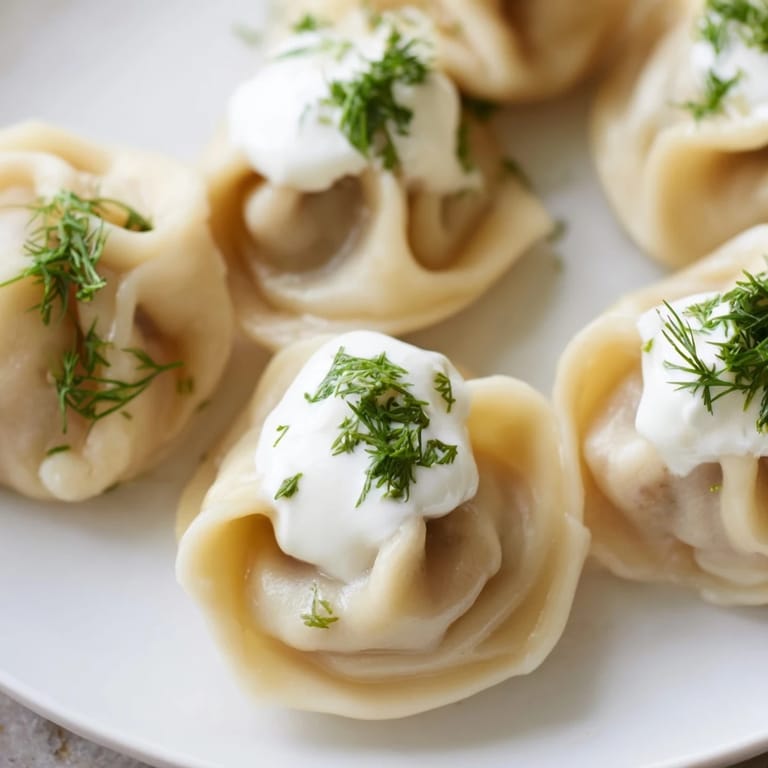
Save My first encounter with pelmeni happened on a freezing winter evening when a friend's grandmother invited me to her kitchen. She moved with such practiced efficiency—rolling, filling, folding—that what seemed impossibly intricate became almost meditative. Within an hour, her counter held hundreds of these delicate half-moons, and minutes later, a steaming bowl arrived in front of me with a generous dollop of sour cream melting across the top. That first bite transformed how I understood comfort food: it wasn't just about fullness, but about the warmth that spreads through you when something is made with such care.
I remember teaching my roommate how to fold these one rainy afternoon, and watching her frustration turn to triumph when her tenth dumpling finally held together without leaking. We played music, drank tea between batches, and by the end she was folding faster than me. Later that evening, we boiled them while catching up about our week, and something about the shared rhythm of cooking and eating made everything feel less overwhelming. Food made by hands you trust tastes fundamentally different.
Ingredients
- All-purpose flour (2 cups): This is your foundation—it needs just enough structure to hold the filling without becoming tough when boiled.
- Cold water (1/2 cup) and 1 large egg: Together they create a tender dough; the cold water matters because it keeps gluten development gentle.
- Salt for dough (1/2 tsp): Seasons the dough itself and helps develop elasticity during kneading.
- Ground pork and beef (7 oz each): The combination of both meats gives depth; pork alone can feel one-dimensional.
- Finely grated onion: Grate it just before mixing so it releases its moisture and flavors the filling evenly without chunks.
- Garlic (2 cloves, minced): Use fresh garlic—jarred simply won't carry the same brightness through boiling.
- Black pepper and salt for filling: Don't skip seasoning the filling separately from the dough; your taste buds will notice the difference.
- Cold water for filling (2 tbsp): This keeps the mixture sticky and helps it stay moist during cooking.
- Sour cream (1 cup): The true star; use full-fat sour cream, never light versions that taste like sadness.
- Fresh dill (1 tbsp, optional): It's optional but transforms the dish from good to memorable—fresh makes all the difference.
Tired of Takeout? 🥡
Get 10 meals you can make faster than delivery arrives. Seriously.
One email. No spam. Unsubscribe anytime.
Instructions
- Build your dough foundation:
- Combine flour and salt, then add the egg and gradually introduce cold water while mixing. Knead for 8–10 minutes until the dough becomes smooth and silky—you're looking for a texture that springs back when you poke it. Cover and let it rest for 20 minutes; this time lets the gluten relax and makes rolling easier.
- Prepare the filling:
- Mix ground pork, beef, grated onion, garlic, salt, pepper, and cold water in a bowl until everything is sticky and unified. The cold water is essential—it keeps the filling moist and tender rather than dense.
- Roll and cut the dough:
- On a floured surface, roll the dough to about 1/16 inch thick (almost translucent when held to light). Use a 2.5-inch round cutter to cut circles, working methodically so you don't tear the delicate dough.
- Fill and fold with intention:
- Place about 1 teaspoon of filling in the center of each circle—not more, or it will burst when boiling. Fold into a half-moon and pinch the edges tightly, then bring the two corners together and seal them, forming the signature pelmeni shape that looks like a tiny sleeping pouch.
- Cook in boiling salted water:
- Drop pelmeni into a large pot of rolling boiling salted water in batches, stirring gently so they don't stick to the bottom. They're done when they float and stay floating for 2–3 minutes, which means the filling is cooked through.
- Serve with warmth:
- Remove with a slotted spoon and transfer to bowls, then top generously with sour cream and fresh dill. Serve immediately while everything is hot and the sour cream is still melting.
 Save
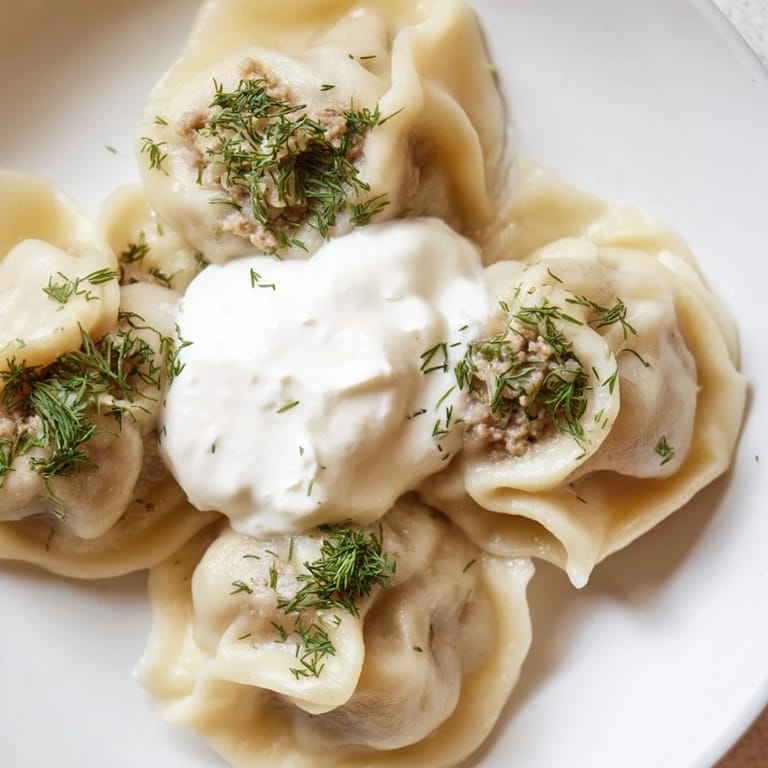
Save There's something about the moment when you bite into a perfectly cooked pelmeni and the filling is hot and juicy inside, surrounded by tender dough, that makes all the folding worthwhile. I've made these dozens of times now, and I still find myself slowing down to appreciate the small miracle of it—a delicate pocket that traveled through boiling water intact, filled with meat seasoned just right, waiting for that cool contrast of sour cream on top.
The Art of Folding
Folding pelmeni is one of those kitchen skills that feels impossible until your hands understand the motion, and then it becomes almost automatic. The first dozen will feel clumsy and time-consuming; by the fortieth, you'll find a rhythm. Don't rush this part—sloppy folds lead to leaks, and leaked filling creates a disappointingly thin-tasting broth. Instead, treat each fold as a small act of care, pressing edges firmly so they seal during cooking.
Freezing and Make-Ahead Magic
One of the greatest gifts pelmeni give you is their willingness to be frozen. After you've folded a batch, lay them on a tray (not touching) and freeze for a few hours, then transfer to a freezer bag for up to three months. Cooking frozen pelmeni takes only a couple extra minutes—they don't need thawing, just go straight into boiling water. This means you can spend one afternoon making, then have restaurant-quality meals ready on nights when cooking feels like too much.
Finishing Touches and Variations
The sour cream and dill topping is traditional and perfect, but this dish invites gentle experimentation once you master the base. Some people add a tiny pinch of nutmeg to the meat filling for subtle warmth; others drizzle melted butter instead of sour cream for richness, or add a splash of vinegar for brightness. The dough itself can handle slight tweaks—some families add a tablespoon of oil for tenderness, though the version here is beautifully pure. The magic lies in respecting the fundamentals while making space for your own preferences.
- A pinch of nutmeg in the filling adds an almost imperceptible warmth that makes people ask what makes these taste so good.
- Melted butter or vinegar are traditional serving options that shift the flavor profile in interesting directions.
- If your dough tears while rolling, pinch it back together gently—small repairs are invisible once the dumpling is cooked.
 Save
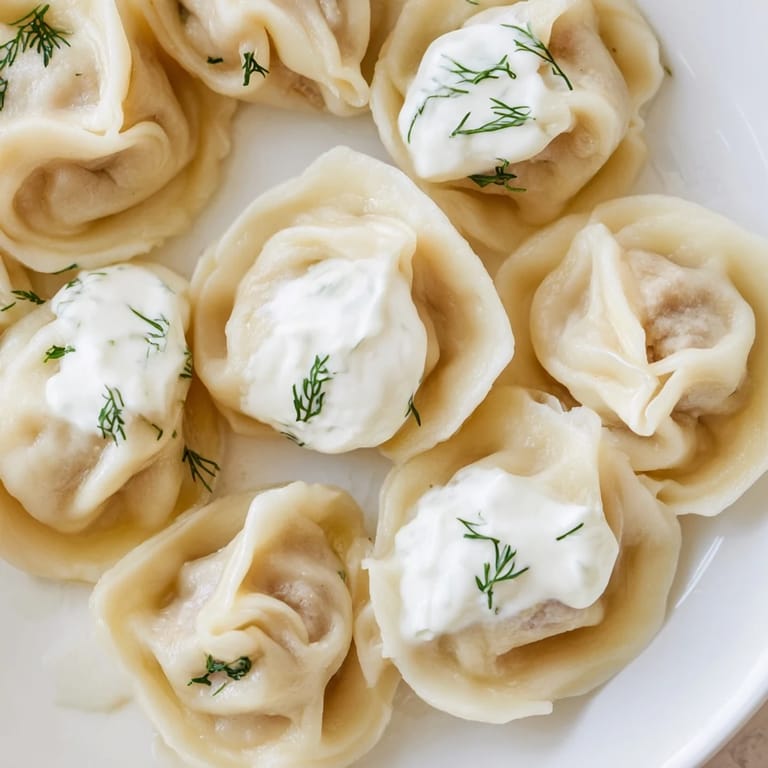
Save Making pelmeni teaches you something about patience and repetition that extends beyond cooking—the calm that comes from doing something small and useful with your hands, over and over. They're humble dumplings, but they carry the warmth of kitchens where people have gathered for generations, and now they can be part of your kitchen story too.
Recipe FAQ
- → What type of meat is used in pelmeni filling?
A mixture of ground pork and ground beef is typically used, seasoned with onion, garlic, salt, and pepper.
- → How is the pelmeni dough prepared?
The dough is made from flour, egg, cold water, and salt, kneaded until elastic and rested to improve texture.
- → What is the best way to cook pelmeni?
Boil pelmeni in salted water until they float, indicating they are fully cooked through, usually 5 to 7 minutes.
- → How can pelmeni be stored before cooking?
They can be frozen on a tray before transferring to a bag, preserving freshness for up to three months.
- → What sauce complements pelmeni well?
A rich sour cream sauce with fresh dill enhances the flavors and adds a creamy contrast to the savory filling.
- → Can pelmeni be flavored differently?
Yes, adding a pinch of nutmeg to the filling provides an extra depth of aroma and warmth.