 Save
Save There's something about the sharp brightness of lemon that stops you mid-bite and makes you pay attention. I discovered that the hard way one weeknight when I was rushing through dinner prep, throwing together whatever was in the fridge—chicken, pasta, a half lemon I'd forgotten about. The first taste was electric, and suddenly thirty minutes didn't feel rushed anymore. Now whenever I make this piccata, I'm back in that kitchen, wondering how something so simple became the dish I crave when I need to feel like I'm actually cooking.
I made this for a friend who claimed she couldn't cook, just to prove her wrong. Watching her face when she tasted it—that moment when she realized the brown bits stuck to the pan actually made the sauce better—something clicked for both of us. She's made it probably fifty times since, and she still texts me pictures.
Ingredients
- Chicken breasts: Sliced horizontally means they cook faster and more evenly, and you get more surface area for that golden crust.
- All-purpose flour: Just enough to catch the heat and turn golden; too much and you're eating a breading rather than tasting the chicken.
- Olive oil and butter: Together they create a fat that browns beautifully without burning, which honestly makes all the difference.
- Garlic: Minced small and added just before the wine so it blooms without getting bitter.
- Dry white wine: The acidity cuts through richness and scrapes up all those flavorful browned bits from the pan bottom.
- Fresh lemon juice: Bottled works in a pinch, but fresh juice from actual lemons tastes like you meant it.
- Capers: Briny little flavor bombs that anchor the whole sauce; rinse them to control the salt.
- Chicken broth: Low-sodium lets you be the salt boss, and it mellows the acidity just enough.
- Pasta: Spaghetti or linguine catches the sauce better than thicker cuts; cook it one minute under what the box says.
- Fresh parsley: Chopped right before serving so it stays green and alive-tasting on the plate.
Tired of Takeout? 🥡
Get 10 meals you can make faster than delivery arrives. Seriously.
One email. No spam. Unsubscribe anytime.
Instructions
- Boil the pasta first:
- Get salted water going in a large pot while you prep everything else. Cook the pasta just under al dente since it'll finish in the pan with the sauce—that starchy water you save is liquid gold for making everything silky.
- Thin out your chicken:
- Slice each breast horizontally like you're opening a book, creating two thin cutlets instead of one thick one. Season generously with salt and pepper, then dredge lightly in flour and shake off the excess so you get a thin, golden crust, not a breaded coating.
- Get that golden crust:
- Heat olive oil and butter together over medium-high heat until it foams. When the chicken hits the pan, it should sizzle immediately—that's your signal the heat is right. Cook 3 to 4 minutes per side, listening for that sizzle to stay consistent, and transfer to a plate when the chicken is cooked through but still tender.
- Build the sauce:
- In the same skillet, add minced garlic and let it toast for about 30 seconds until it smells incredible. Pour in the white wine and use a wooden spoon to scrape up every brown bit stuck to the pan, then add lemon juice, capers, and broth. Simmer for 2 to 3 minutes until it tastes brighter and the volume reduces slightly.
- Make it silky and rich:
- Turn the heat to low and whisk in butter pieces one at a time until the sauce looks glossy and feels velvety on your tongue. Return the chicken to the pan and spoon the sauce over each piece so it soaks in the flavors.
- Bring it all together:
- Add the drained pasta directly to the skillet and toss gently so every strand gets coated. If it looks too thick, splash in some of that reserved pasta water a little at a time until it flows like a light sauce rather than a thick glaze.
- Plate and garnish:
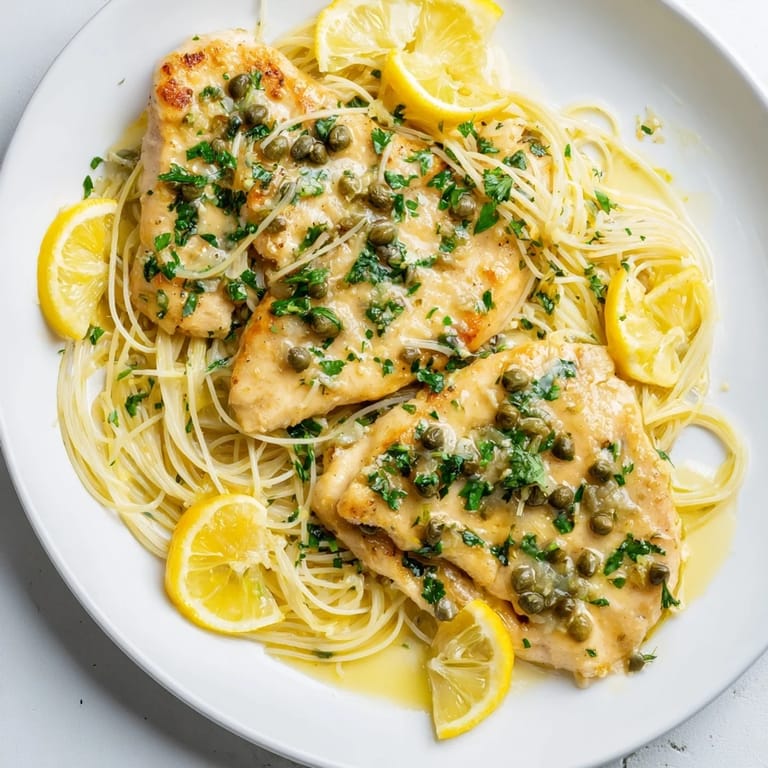
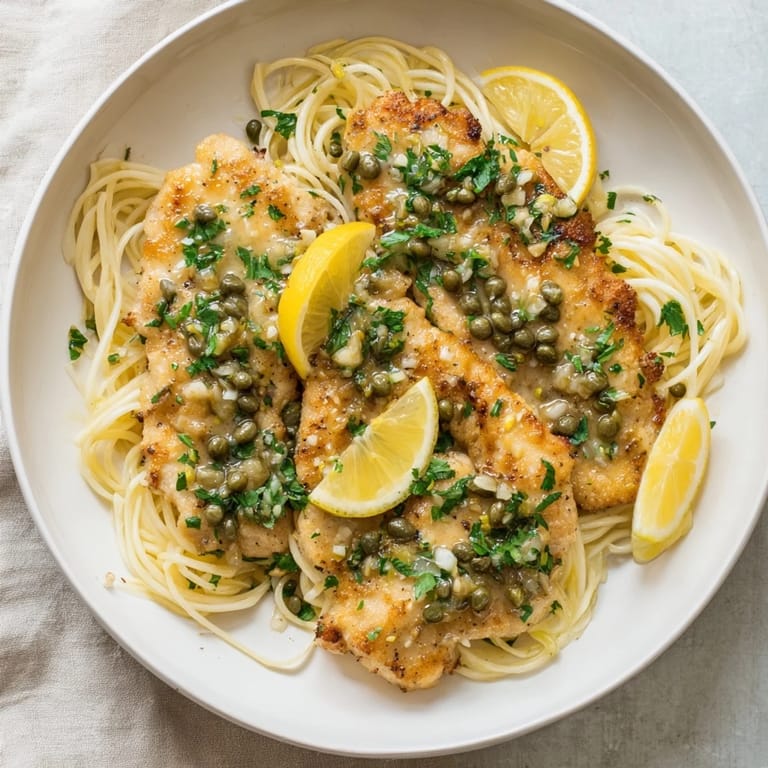
- Twirl pasta onto a plate, lay a chicken cutlet on top, and spoon extra sauce over everything. Finish with fresh parsley and maybe a thin lemon slice if you want to telegraph the bright flavor coming.
 Save
Save The moment this dish stopped being just dinner for me was the first time someone asked for the recipe unprompted. Not because it's fancy, but because the lemon lingers in a way that makes people want to recreate that brightness at home. That's when I realized simple food done right is the most powerful thing a kitchen can offer.
Why This Works So Fast
Everything happens in under thirty minutes because nothing asks for long cooking times. The chicken cooks through in minutes once it's thin, the pasta hits al dente quickly, and the sauce builds flavor through acidity and browning rather than hours of simmering. It's not rushed cooking—it's efficient cooking, and there's a difference.
The Science of the Sear
That golden crust on the chicken isn't just for looks; it's flavor. When the flour-dusted chicken hits hot oil and butter, the surface proteins react with heat and create hundreds of new flavors through something called the Maillard reaction. The browned bits left in the pan after you remove the chicken are pure umami, which is why deglazing with wine and scraping them up makes the sauce taste so complete and round.
Making It Your Own
This recipe is sturdy enough to handle small changes without falling apart. A splash more wine makes it winier, fewer capers means less briny, and swapping pasta shapes changes how the sauce clings. I've made it with chicken thighs when breasts weren't on hand, and the darker meat actually holds up better to the sauce—it just takes a minute longer to cook through.
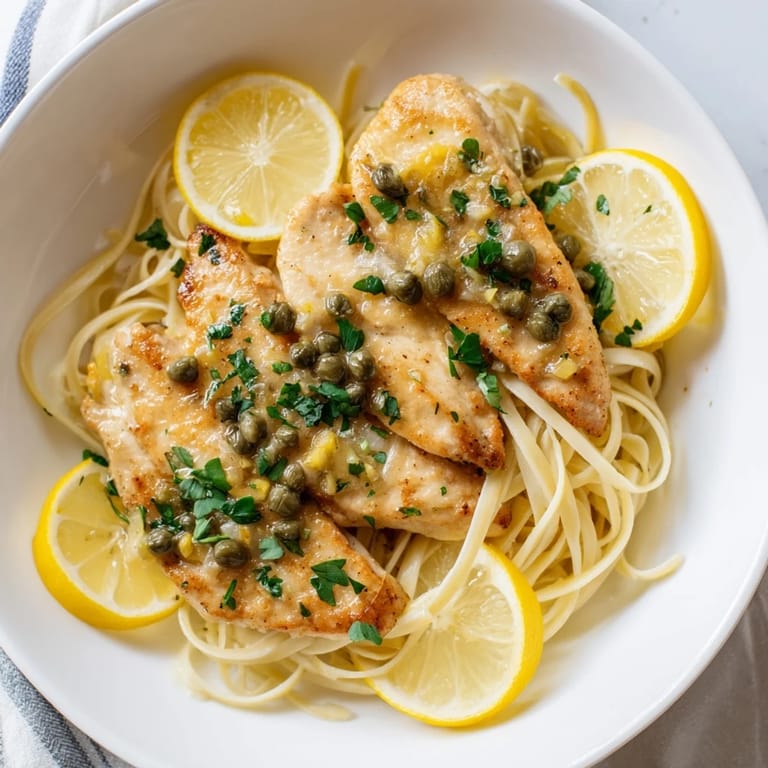
- Try angel hair pasta if you want something that feels lighter and more delicate on the plate.
- A pinch of red pepper flakes added with the garlic brings heat that plays beautifully against the lemon and butter.
- If you're avoiding wine, use extra chicken broth and add a tablespoon of vinegar for the acidity the wine would have given.
 Save
Save This is the kind of meal that reminds you why you cook in the first place. It's not complicated, but it tastes like you cared, and honestly, that's everything.
Recipe FAQ
- → What type of pasta works best?
Spaghetti or linguine are ideal for this dish, providing the right texture to absorb the tangy sauce.
- → Can I substitute white wine in the sauce?
Yes, chicken broth can be used as a non-alcoholic substitute without compromising flavor.
- → How do I keep the chicken moist?
Cooking cutlets quickly over medium-high heat and finishing with sauce helps retain moisture and tenderness.
- → Is there a gluten-free option?
Gluten-free flour and pasta can be used to adapt the dish for gluten intolerance.
- → What pairs well with this meal?
A crisp white wine like Pinot Grigio or Sauvignon Blanc complements the lemony and savory flavors nicely.