 Save
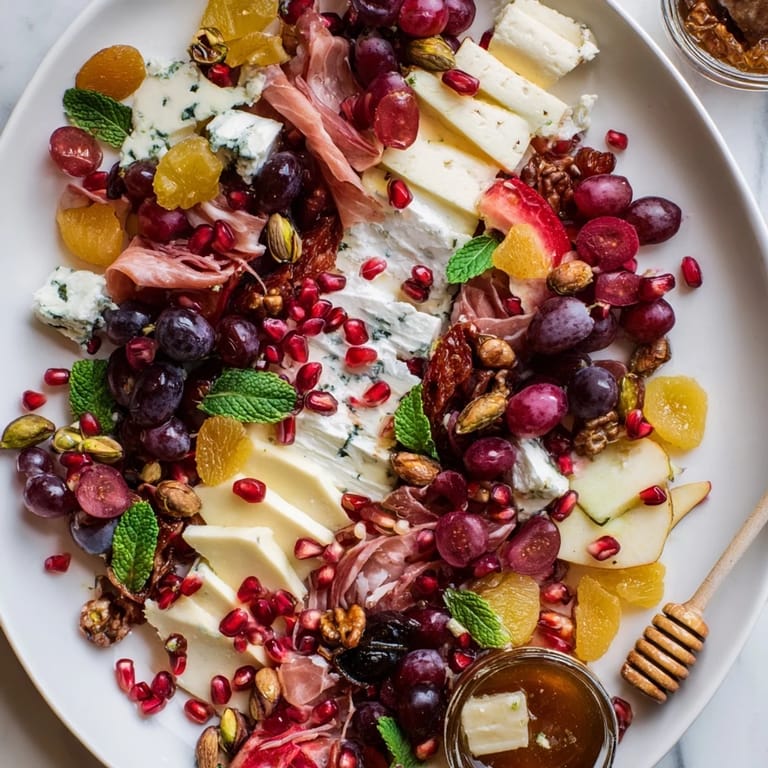
Save I still remember the afternoon my friend Sarah arrived with a pomegranate and a challenge: could I create a cheese board that looked like something from a fancy magazine? We stood in my kitchen, pomegranate juice staining our fingertips, and as those ruby-red arils tumbled across the board I was arranging, something magical happened. The chaos became art, and suddenly I understood that the most impressive dishes aren't about complicated techniques—they're about understanding how flavors and colors can dance together on a single canvas.
The first time I made this for my book club, I was terrified the arrangement would look chaotic instead of intentional. But as I placed that last handful of pomegranate arils and stepped back, my sister gasped. That gasp—that moment when people saw food as something beautiful—that's when I realized this wasn't just a board, it was a conversation starter.
Ingredients
- Creamy goat cheese, 100 g sliced: This is your soft anchor, the one that makes everything feel luxurious. I learned to slice it when it's slightly cold but not rock-hard, using a hot knife that I wipe between cuts
- Aged Manchego, 100 g sliced: This Spanish cheese brings a nuttiness that bridges the gap between the delicate goat cheese and the bold blue. Don't skip it
- Blue cheese, 100 g crumbled: This is your flavor punch. Use a quality one because every crumble will be tasted
- Prosciutto, 80 g thinly sliced: The salty element that makes every other flavor pop. I learned to drape it loosely rather than lay it flat, which creates these beautiful, inviting folds
- Spicy salami, 80 g thinly sliced: This adds depth and a hint of heat that surprises people in the best way
- Pomegranate, 1 large with arils only: These are your jewels. The secret is using a bowl of water when you extract them—the arils sink while the pith floats, saving you time
- Red grapes, 1 small bunch halved: They provide bursts of sweetness and a pretty sphere shape. Halving them lets them nestle better into the arrangement
- Pear, 1 ripe thinly sliced: Slice just before serving or toss with a little lemon juice to prevent browning
- Apple, 1 small thinly sliced: Pick a crisp variety like Honeycrisp. Same trick with the lemon juice applies here
- Dried apricots, 50 g halved: Their tangy sweetness becomes more interesting when you taste them alongside something salty
- Dried figs, 40 g sliced: These are little flavor bombs. Don't skimp on quality here
- Toasted pistachios, 40 g: The green color is essential to the visual appeal, but more importantly, they taste better toasted. If yours aren't, toast them yourself for 5 minutes at 350°F
- Roasted almonds, 40 g: Crunch, protein, and a subtle earthiness that grounds all the sweetness
- Honeycomb, 1 small piece: This is optional but magical. A small spoonful on a cracker with cheese is unforgettable
- Fig jam, 1 small jar: Store-bought is perfectly fine here. You're looking for something rich and concentrated
- Crusty baguette, 1 sliced: These are your edible vessels. Slice fresh if possible, or slice a day ahead and leave out to dry slightly
- Artisan crackers, 80 g: Variety is your friend. Include different textures and shapes
- Fresh mint leaves for garnish: These aren't just decoration—they add a cooling, aromatic element that ties everything together
Tired of Takeout? 🥡
Get 10 meals you can make faster than delivery arrives. Seriously.
One email. No spam. Unsubscribe anytime.
Instructions
- Visualize your diagonal:
- Stand back and imagine a line running from the top left to the bottom right of your board. This is your guide. I use my eyes only, no chalk or marks—part of the fun is letting it evolve as you work
- Begin with cheese as your foundation:
- Place your three cheeses along this diagonal in alternating blocks. The creamy goat cheese feels best at one end, the aged Manchego in the middle, and the blue crumbled across its section. You're creating contrast in both color and texture
- Drape the cured meats with intention:
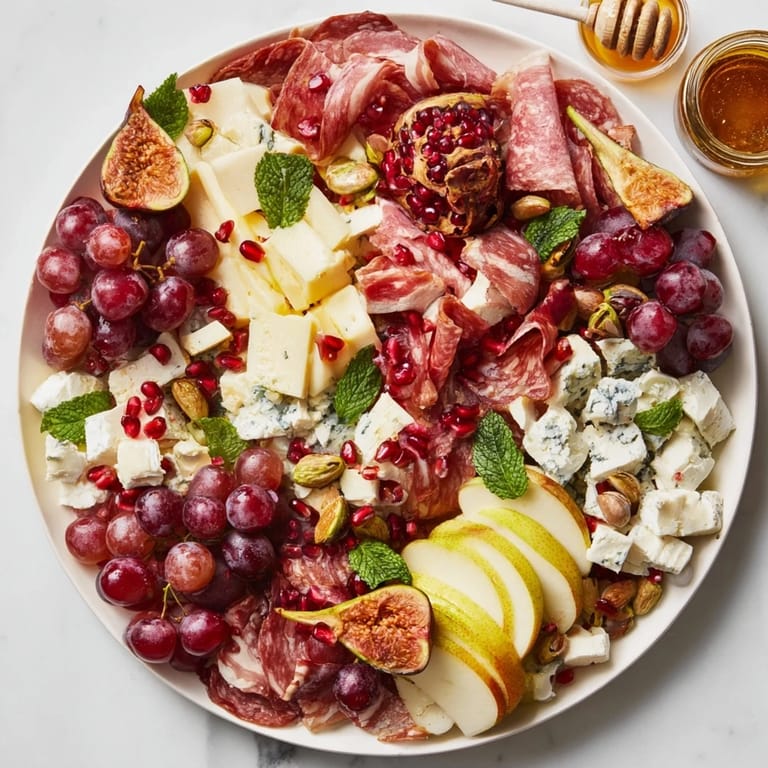
- Take your prosciutto and let it fall loosely between cheese sections. Don't lay it flat like you're making a sandwich—fold it gently, let edges rise and create shadows. Do the same with the salami. This is where your board goes from flat to dimensional
- Weave in the fresh fruits:
- Now here's where your hands slow down and your eye takes over. Lay pear slices so they overlap slightly. Nestle apple slices nearby. Tuck grape halves into gaps. You're filling spaces but also creating visual interest. Each piece should have a little room to breathe
- Scatter the pomegranate arils like treasure:
- This is the moment that changes everything. Sprinkle them generously across your diagonal, and then add clusters where the colors feel sparse. They're your jewels, so let them catch light. Focus on edges where they'll create the most impact
- Add the dried fruits and nuts:
- Slip dried apricots and figs into the arrangement, then scatter pistachios and almonds. Listen for the sound of shells clicking against the board—it means you're creating texture
- Position your condiments thoughtfully:
- Place your honeycomb and fig jam in small bowls at opposite ends of the cascade. These anchor the board and give guests something to reach for
- Frame with bread and crackers:
- Fan your baguette slices and arrange crackers along both sides of the diagonal. They should look accessible and inviting, like an invitation to start building your perfect bite
- Finish with mint:
- Tear some mint leaves and scatter them across the board. They should catch the light and remind people that this is fresh, alive food meant to be enjoyed right now
- Present with confidence:
- Serve at room temperature, which means all the flavors are at their fullest. Don't rearrange it as people eat—the chaos that follows is part of the beauty
 Save
Save When my mother-in-law took a photo of that first board and sent it to her whole book club, I felt something shift. Food had always been about nourishment for me, but suddenly it was also about creating moments. A teenager asked for seconds and stayed to help arrange crackers. That's when I knew this was more than just an appetizer board—it was permission to slow down and make something beautiful together.
Building Your Perfect Bite
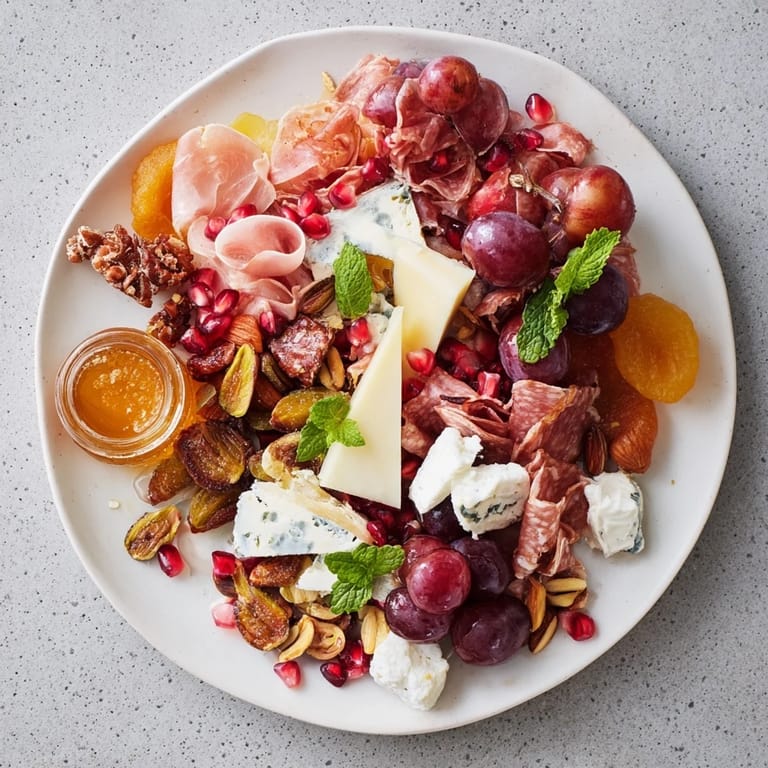
The magic of this board isn't just in what's on it, but in how you combine things. The best bites I've discovered pair creamy cheese with a hit of sharp blue, balance salty meat with sweet pomegranate, and always include at least one crunchy element. I've learned to taste as I build, stealing little bites to make sure the flavors are singing together. Don't be afraid to taste everything raw—that's how you understand what this board is really about.
Making It Your Own
This is where your instincts matter more than any recipe. Prefer different cheeses? Swap them in. Your farmers market has beautiful roasted vegetables? Add them. I once made this board with beets instead of some of the fruits, and it became something entirely new while still feeling true to the original vision. The diagonal cascade is your structure, but everything inside it is yours to interpret.
Timing and Storage Tips
The beauty of this board is that it thrives on good timing. Assemble the hard cheeses, cured meats, dried fruits, nuts, and bread the morning of your gathering. About 30 minutes before people arrive, add the fresh fruits and pomegranate arils. This timing means everything arrives at the table at peak freshness and visual appeal. The assembled board without fresh items keeps beautifully for several hours in a cool kitchen, covered loosely with plastic wrap.
- Slice fresh fruits with a very sharp knife to keep them from browning, and use lemon juice as your secret weapon against oxidation
- Toast your own nuts if store-bought ones feel stale—5 minutes at 350°F makes an enormous difference in flavor and crunch
- Consider your guests' preferences and always offer alternatives, but trust that the core arrangement speaks for itself
 Save
Save This board has taught me that sometimes the most impressive things we can create are also the simplest. It's not about fancy techniques—it's about respecting good ingredients and arranging them with intention and joy.
Recipe FAQ
- → How should the cheeses be arranged?
Slice and crumble different cheeses and place them diagonally, alternating types for a balanced look.
- → Can this board be made vegetarian-friendly?
Yes, simply omit cured meats and add extra nuts or roasted vegetables to maintain variety and texture.
- → What fruits pair well with the cheeses and meats?
Fresh grapes, pears, apples, and dried apricots or figs complement both cheeses and cured meats beautifully.
- → How is the pomegranate used in the presentation?
Pomegranate arils are sprinkled generously along a diagonal cascade to mimic jewels, adding color and freshness.
- → What accompaniments enhance this spread?
Honeycomb, fig jam, crusty baguette slices, and artisan crackers provide texture contrasts and sweetness.