 Save
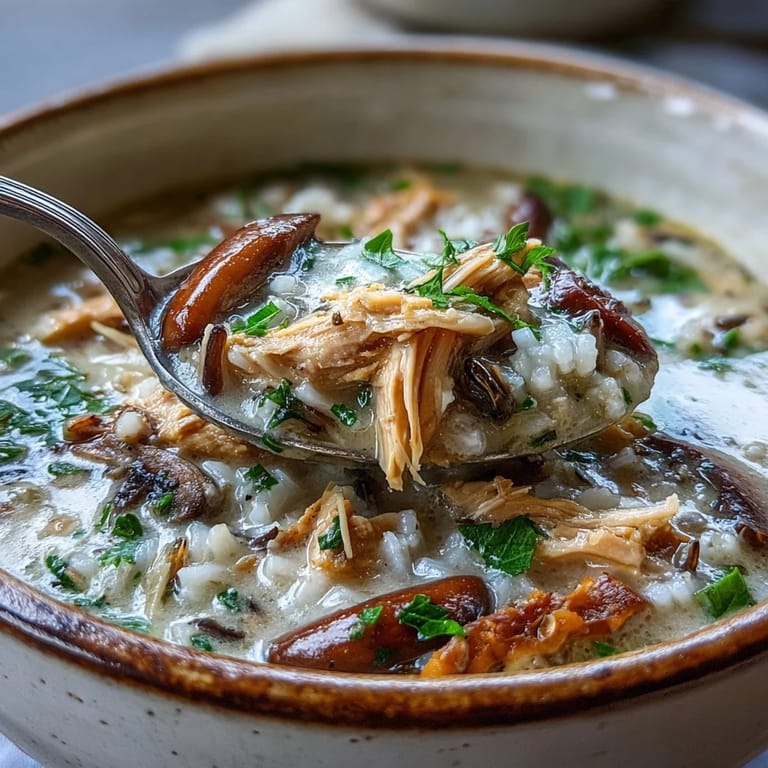
Save There's something about the smell of mushrooms hitting hot butter that makes you stop whatever you're doing. I was meal prepping on a gray Sunday afternoon when a friend texted asking if I had anything warm to offer—turns out they'd had the worst day at work. Twenty minutes later, this soup was simmering on my stove, and I realized I'd stumbled onto something that felt both elegant and deeply comforting, the kind of dish that doesn't apologize for being nourishing.
I made this for my partner when they were recovering from being sick, and watching them have a second bowl while actually smiling felt like I'd accomplished something real. That's when I knew this recipe was keeper—not because it was complicated, but because it did exactly what good food should do: it made someone feel seen and cared for.
Ingredients
- Boneless, skinless chicken breasts (2, about 400 g), diced: Dicing them into bite-sized pieces ensures they cook through in the broth without getting tough or stringy, and they distribute their flavor evenly throughout the soup.
- Wild rice (3/4 cup or 140 g), rinsed: Rinsing removes the dusty exterior and helps it cook more evenly; it needs the full 40 minutes in the broth to reach that tender-chewy texture that makes this soup special.
- Cremini or white mushrooms (300 g or 10 oz), sliced: Cremini mushrooms have deeper earthiness than white buttons, but either works beautifully—the key is cooking them until their liquid releases and evaporates, which concentrates their flavor.
- Heavy cream (1/2 cup or 120 ml): This arrives at the end to soften the broth's edges and make it silky without overwhelming the delicate flavors you've built up.
- Freshly grated Parmesan cheese (1 cup or 100 g): Grating it fresh matters here because pre-grated versions have anti-caking agents that can make the soup look cloudy; fresh Parmesan melts into the broth and disappears beautifully.
- Olive oil (2 tablespoons) and unsalted butter (1 tablespoon): The combination gives you the high heat tolerance of oil with the flavor depth that only butter brings—they work together rather than against each other.
- Yellow onion (1 large), diced: This is your flavor foundation; the gentle heat breaks down the onion's sharpness and builds the sweet undertone that balances everything else.
- Garlic cloves (3), minced: Add these after the onion has softened so they don't burn and turn bitter—they should smell fragrant and mellow when you add the mushrooms.
- Carrots (3 medium) and celery stalks (3), sliced: These create the classic aromatic base and add natural sweetness that rounds out the earthiness of the mushrooms and rice.
- Fresh thyme leaves (2 teaspoons or 1 teaspoon dried): Thyme whispers rather than shouts; it gives the soup an herbal quietness that makes you want another spoonful.
- Low-sodium chicken broth (1.5 liters or 6 cups): Use low-sodium so you can control the final salt level—overly salted broth can quickly ruin a delicate balance.
- Bay leaf (1): This sits in the broth during cooking and comes out at the end; it adds complexity without any single dominant flavor.
- Salt and freshly ground black pepper: Taste as you go, especially at the end—the Parmesan adds saltiness, so you may need less than you'd expect.
- Fresh parsley (2 tablespoons, chopped) for garnish: A small handful of bright green at the end lifts the whole bowl and reminds you this soup is about more than richness.
Tired of Takeout? 🥡
Get 10 meals you can make faster than delivery arrives. Seriously.
One email. No spam. Unsubscribe anytime.
Instructions
- Start your aromatics:
- Heat the olive oil and butter together in a large pot over medium heat until the butter foams and smells nutty. Add the diced onion, carrots, and celery, stirring occasionally for about 5 minutes until the onion becomes translucent and the vegetables begin to release their sweetness—you want them softened but not yet taking on color.
- Build mushroom depth:
- Stir in the sliced mushrooms and minced garlic, cooking for 6 to 8 minutes until the mushrooms have collapsed and their liquid has mostly evaporated. This step concentrates their earthy flavor rather than diluting it into the broth; you'll notice the pot smells almost meaty now.
- Combine your main ingredients:
- Add the diced chicken, wild rice, fresh thyme, bay leaf, salt, and pepper, stirring everything together for 2 to 3 minutes. This brief cooking allows the flavors to start mingling and ensures the chicken gets a light coating of the oil and vegetable mixture.
- Simmer until rice is tender:
- Pour in the chicken broth and increase the heat to bring everything to a rolling boil, then immediately reduce to low. Cover and let it simmer undisturbed for 40 to 45 minutes—the wild rice needs this time to soften and release its nutty flavor, and the chicken will cook through gently without drying out.
- Finish with cream and cheese:
- Remove the bay leaf from the pot, then stir in the heavy cream and grated Parmesan, simmering uncovered for another 5 minutes. The cheese will melt into the broth and create a subtle richness, while the cream rounds out the edges and makes the whole thing feel like a hug.
- Taste and serve:
- Adjust the seasoning with additional salt and pepper to your preference—remember that the Parmesan already brings saltiness. Ladle into bowls and crown each one with a sprinkle of fresh parsley and extra Parmesan if you're feeling generous.
 Save
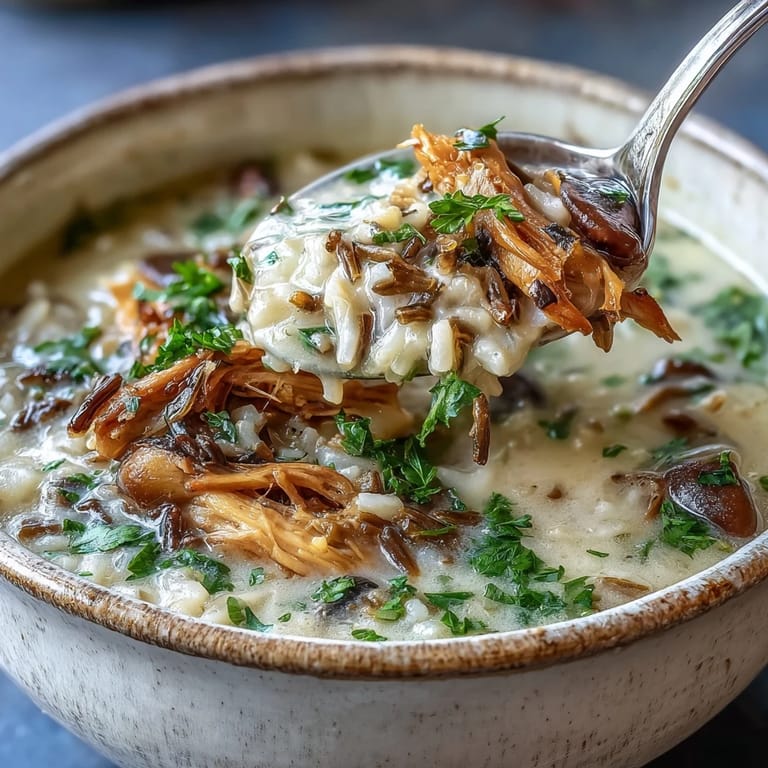
Save One winter, I made this soup for my neighborhood book club, and instead of talking about the novel we were supposed to discuss, everyone spent twenty minutes asking why it tasted restaurant-quality and whether I'd been secretly taking cooking classes. The truth was simpler: it just took one person treating humble ingredients with respect and patience.
Why Wild Rice Makes All the Difference
Wild rice isn't actually rice—it's the seed of an aquatic grass, which explains its chewy texture and nutty flavor that stays distinct even after simmering in broth. Unlike white or brown rice, it won't get mushy or bland because it has a built-in resilience. When you bite into each grain in this soup, you get a little burst of earthiness that echoes the mushrooms and adds complexity that regular rice would miss entirely. Most people skip wild rice because they think it's fussy, but rinsing it is the only prep it needs, and the cooking happens entirely in the broth where it's supposed to.
The Mushroom and Parmesan Partnership
Mushrooms and Parmesan are a quiet miracle together—they both contain glutamates, which means they amplify each other's umami flavor in a way that makes your brain want more spoonfuls. You don't taste them as separate ingredients; instead, they create this savory depth that feels almost like the soup has been slow-cooked for hours even though you've spent less than an hour total. The trick is cooking the mushrooms first so they concentrate, then letting the Parmesan melt in at the end so it doesn't get lost in the longer simmer. This sequencing means both flavors stay bold and present rather than fading into the background.
Customizing Without Losing the Soul
This soup is forgiving enough to adapt to what's in your kitchen, but there are a few rules worth following so it stays delicious. You can swap cremini mushrooms for white buttons or even add a handful of dried porcini for deeper flavor—just avoid the super-delicate varieties like oyster mushrooms that dissolve into nothing. If you're using rotisserie chicken to save time, shred it and stir it in during the cream step rather than at the beginning, since it's already cooked. For vegetarians, skip the chicken and broth, use vegetable broth instead, and add white beans or extra mushrooms for substance. The soup stays soulful as long as you respect the core flavors and cooking sequence.
- Substitute rotisserie chicken to cut prep time, but add it when you add the cream so it doesn't overcook.
- Extra mushrooms or white beans work beautifully if you're avoiding meat—they add the heartiness the chicken provides.
- A splash more cream or a knob of butter stirred in at serving elevates an already-rich soup into pure comfort.
 Save
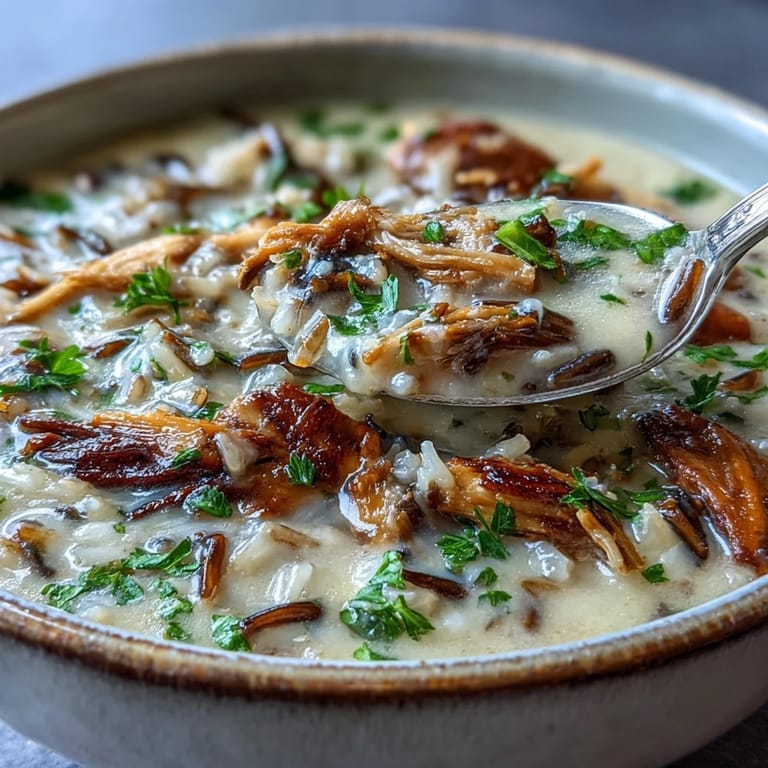
Save This soup has become the thing I make when I want to feel capable in the kitchen but also want to actually enjoy the process rather than stress through it. It's the kind of meal that reminds you that good food doesn't need to be complicated—it just needs respect for its ingredients and patience for the timing.
Recipe FAQ
- → Can I make this soup ahead of time?
Yes, this soup actually tastes better the next day as flavors have time to meld. Store in the refrigerator for up to 3 days. The wild rice will continue absorbing liquid, so you may need to add more broth when reheating.
- → Can I freeze this soup?
You can freeze it for up to 3 months, though the cream may separate slightly upon thawing. Reheat gently over low heat while stirring to recombine. For best results, add the cream and Parmesan after thawing and reheating.
- → What can I substitute for wild rice?
Brown rice works well as a substitute, though cooking time may vary. For a gluten-free option, ensure your broth is certified gluten-free. You can also use a wild rice blend for slightly different texture and flavor.
- → How do I make this vegetarian?
Replace the chicken broth with vegetable broth and omit the chicken breast. Add extra mushrooms, white beans, or diced potatoes to maintain heartiness and protein content. The Parmesan and cream provide plenty of savory richness.
- → Why is my soup too thick?
Wild rice naturally absorbs liquid as it cooks. If your soup becomes too thick, simply add more broth or water until you reach your desired consistency. This is especially common when making it ahead or freezing.
- → Can I use rotisserie chicken?
Absolutely. Use about 2-3 cups of shredded rotisserie chicken and add it during the last 5-10 minutes of simmering just to heat through. This reduces total cooking time and adds extra flavor to the broth.