 Save
Save I'll never forget the year I decided to transform my holiday party into something truly theatrical. After attending a performance of The Nutcracker Suite, I was so enchanted by the elaborate sets and color-coordinated costumes that I rushed home determined to capture that same magic on a table. That's when I discovered the power of a color-blocked grazing board. My guests arrived expecting the usual cheese platter, but instead they gasped at this multi-tiered edible masterpiece arranged like a Nutcracker stage production. From that night on, this became my signature move for entertaining.
I still remember my sister's face when she walked into my kitchen and saw me creating this. She thought I'd lost my mind, stacking cake stands and pedestals everywhere, but once I arranged those first color blocks, she understood immediately. Her friends started calling it "the board" all season long. It became less about the individual foods and more about the shared experience of discovering something beautiful and delicious together.
Ingredients
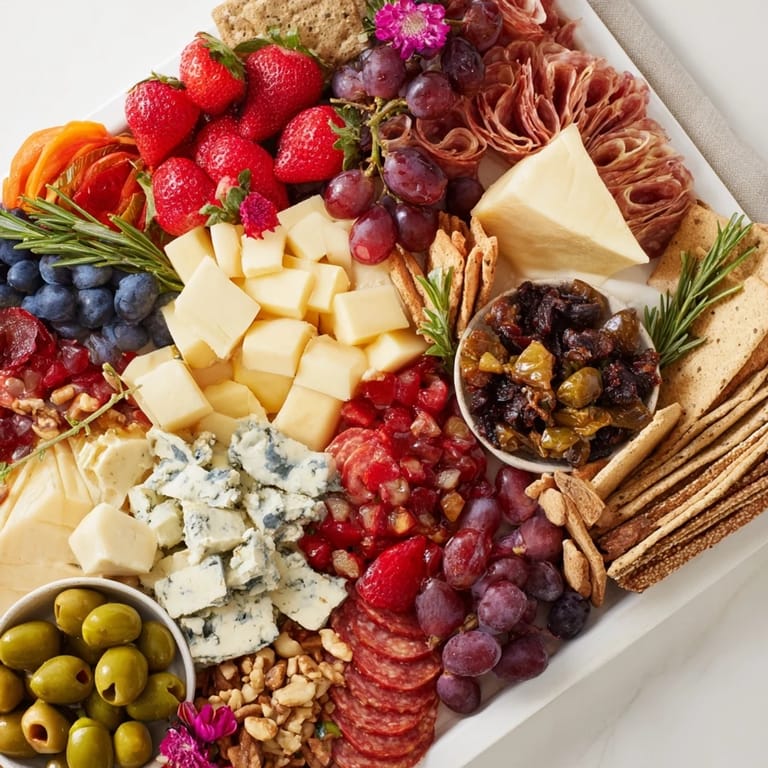
- Brie, aged cheddar, blue cheese, gouda, and cranberry goat cheese: These five cheeses form your color foundation—white, yellow, blue, orange, and red-pink respectively. The variety in flavors keeps things interesting; I learned the hard way that repeating cheese types gets dull, but mixing styles and ages keeps your guests engaged.
- Prosciutto, salami, and soppressata: These cured meats add sophistication and complement the cheeses beautifully. Fold or drape them rather than laying them flat; it creates visual interest and makes them easier to grab.
- Red grapes, green grapes, blueberries, strawberries, dried apricots, and pomegranate seeds: Fresh and dried fruits provide natural sweetness and jewel-like colors. The contrast between glossy fresh berries and dusty dried apricots is where real visual drama happens.
- Marcona almonds, pistachios, candied pecans, and mixed olives: These elements add texture and satisfy those wanting something savory or nutty. I always toast nuts fresh on the day of serving for maximum crunch.
- White chocolate bark, dark chocolate, macarons, and petit fours: The sweets are your grand finale. They bridge the gap between charcuterie board and dessert, making guests linger longer.
- Crackers and baguette slices: Your neutral vehicles for cheese and spreads. Slice the baguette fresh just before serving so it's still slightly warm.
- Fresh rosemary sprigs and edible flowers: These aren't just garnish—they're your Nutcracker Suite set pieces. They signal that this is a special occasion.
Tired of Takeout? 🥡
Get 10 meals you can make faster than delivery arrives. Seriously.
One email. No spam. Unsubscribe anytime.
Instructions
- Build your architecture:
- Start with your large wooden board as your canvas, then gather cake stands, pedestals, and overturned bowls to create height and drama. I stack three levels for maximum impact—it mirrors the three-act structure of The Nutcracker perfectly and gives your board a theatrical presence that a flat arrangement never could.
- Anchor with neutrals:
- Begin at the base tier, laying out your crackers in neat rows and fanning your baguette slices. Scatter the marcona almonds and candied pecans around these, creating a welcoming ground floor that invites people to start here. This tier is your foundation for everything above.
- Color-block your cheeses:
- On your upper tiers, arrange each cheese type in its own distinct section, thinking of them as characters in a story. Cut some into wedges to show off their colors, leave others as blocks. The brie should feel creamy and inviting, the blue cheese bold and mysterious, the cheddar warm and nostalgic. Position them so their colors don't blur together.
- Drape and fold the charcuterie:
- This is where theater happens. Don't lay prosciutto flat like deli meat—fold and ruffle it so it catches light and shadow. Lean pieces against cheese blocks, create little peaks and valleys. The movement of the meat draws the eye and makes the board feel alive.
- Layer fruits with intention:
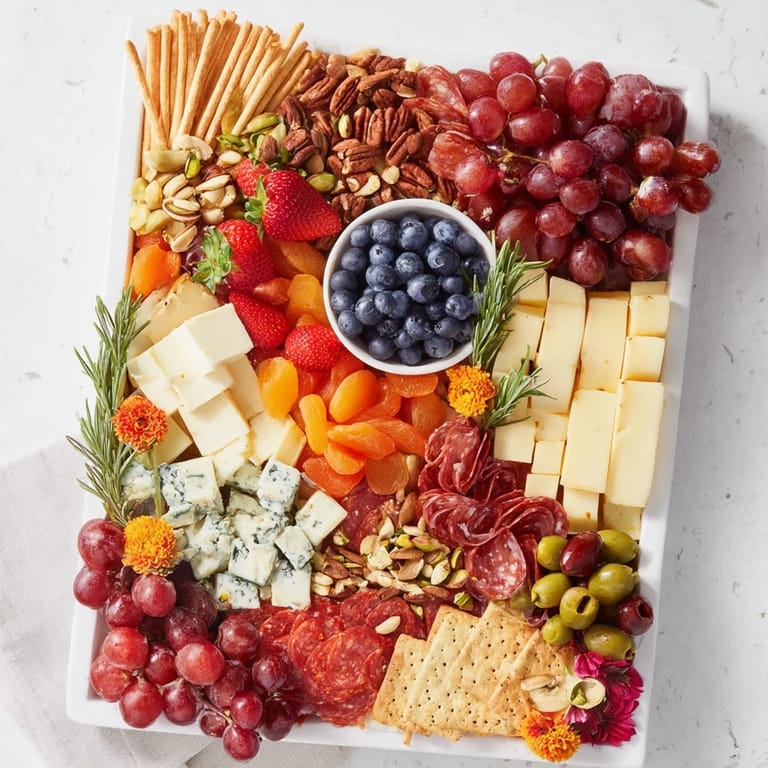
- Cluster your grapes by color, creating little jeweled sections. Let pomegranate seeds catch the light. Arrange strawberries in a line or pattern rather than randomly scattered. Dried apricots should be visible and accessible, not hidden in corners. Think of each fruit grouping as a costume in the Nutcracker's grand ensemble.
- Fill strategically with nuts and olives:
- Use small bowls or nest them directly into the board's landscape. Pistachios' green is nature's perfect accent color. Place olives where they'll catch light. These smaller elements are the embellishments that make the whole board feel abundant and complete.
- Crown with sweets:
- Position your macarons and petit fours at eye level on upper tiers—they're too beautiful to hide. The white chocolate bark can lean against a cheese block, and dark chocolate should sit proudly where people will notice it. These are your curtain call.
- Garnish for magic:
- Tuck rosemary sprigs between sections—their green needles become tiny evergreen trees in your edible landscape. Scatter edible flowers for color pops and a sense of celebration. Step back and look at the whole thing. Does it feel like a stage? If it does, you've succeeded.
- Serve with confidence:
- Ensure each tier is stable, provide small plates nearby, and watch as your guests circle the board like it's intermission at the theater. Keep everything accessible so people naturally gravitate toward different levels.
 Save
Save The most magical moment came when my elderly grandmother, who usually sits quietly at parties, stood up and said this board reminded her of the first time she'd ever seen The Nutcracker in 1952. We ended up spending the whole evening talking about that memory while everyone else grazed around us. That's when I realized this wasn't just appetizers anymore—it was a memory maker.
The Art of Color Blocking
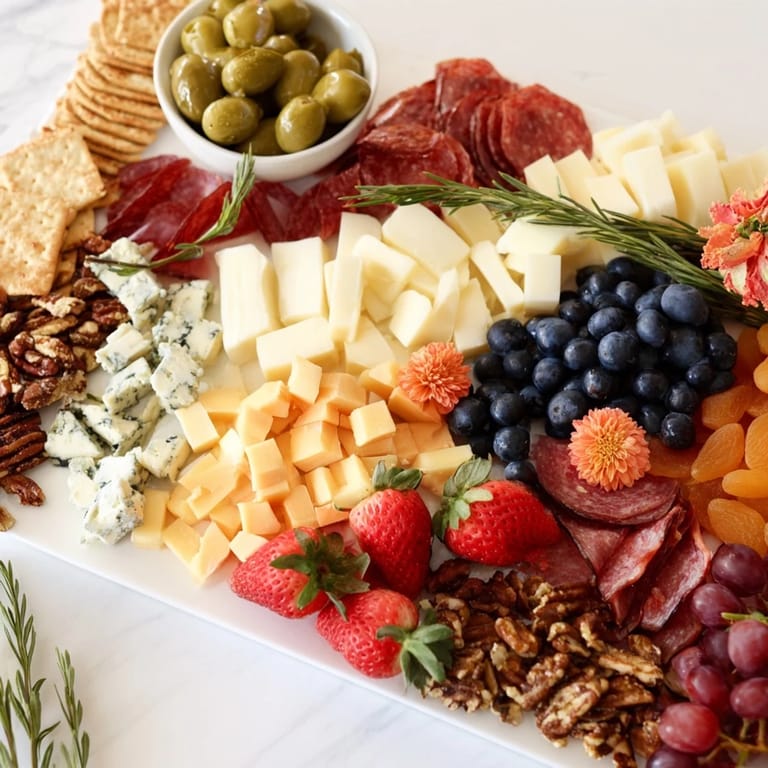
The secret to this board's theatrical impact is treating it like a painting where color placement tells the story. I learned this by accident during my third attempt when I randomly scattered everything—it looked chaotic. Then I organized by hue, understanding that our eyes crave harmony. The red block (strawberries, salami, pomegranate) becomes a dramatic statement. The blue (blue cheese, blueberries) feels cool and elegant. The orange (cheddar, apricots, gouda) radiates warmth. When colors are distinct and grouped, the board becomes instantly sophisticated, even if you're using simple ingredients.
Creating Height and Dimension
I discovered that flat boards, no matter how carefully arranged, feel ordinary. But the moment you add vertical elements, something shifts—guests perceive abundance and effort in a completely different way. I use wooden cake stands (thrift stores are gold for these), ceramic pedestals, and even overturned small mixing bowls covered with cloth before topping with platters. The height allows colors to show fully without overlapping, and it creates natural tiers where different foods have their moment to shine. Three tiers is my sweet spot—enough for drama without becoming unstable.
Pacing Your Board for the Season
What makes this board work year-round is the flexibility to shift what's featured based on what's available and beautiful. In winter, I emphasize the dried fruits, candied nuts, and chocolate. In summer, fresh berries and lighter items take center stage. But what never changes is the principle: arrange with care, respect the colors, and remember you're creating an experience, not just setting out food. Consider it your seasonal signature.
- Always taste-test your chocolate and macarons ahead of time—nothing worse than discovering the dark chocolate is bitter or the macarons are stale during a party.
- Label major allergens subtly with small cards if you're serving a crowd—people appreciate knowing about nuts, dairy, and gluten before they reach for something.
- Keep backup supplies nearby: extra crackers, fruit in the fridge, and a cheese knife backup in case one goes missing to someone's plate.
 Save
Save This board represents everything I love about entertaining: the freedom to create something beautiful without stress, the joy of watching people linger and connect over good food, and the magic of turning a simple gathering into something memorable. Whether you're hosting a holiday party or a casual get-together, this theatrical grazing board will become your secret weapon.
Recipe FAQ
- → How do I create the color-blocked sections?
Group ingredients by color, arranging cheeses, meats, fruits, and sweets in distinct blocks for visual contrast and harmony across the board.
- → What can I use to add height to the board?
Use cake stands, pedestals, or stack smaller boards to create multiple tiers with dramatic elevation.
- → Are there vegetarian options included?
Yes, simply omit the charcuterie and add more cheeses, marinated vegetables, or roasted nuts to maintain variety and balance.
- → How should I garnish the board for a festive look?
Fresh rosemary sprigs and edible flowers add color pops and an elegant finishing touch.
- → What drinks pair well with this board?
Sparkling wine, light red wines, or herbal teas complement the variety of flavors presented.