 Save
Save There's something quietly thrilling about standing in front of a blank board with three ingredients that need no introduction. I'd just gotten back from a market trip where I splurged on a wedge of aged Comté that the vendor practically whispered about, some paper-thin Jamón Ibérico that cost more than I usually spend on dinner, and a handful of those buttery green olives from Castelvetrano that taste like they've been kissed by Mediterranean sun. The question wasn't how to cook them—it was how to let them breathe. That's when the idea hit me: what if restraint itself was the recipe?
I made this for the first time on a Tuesday evening when a friend stopped by unexpectedly, and I had nothing in the house except these three luxuries I'd been saving for a moment that felt important enough. We sat with a bottle of cold Champagne, and I remember her closing her eyes after the first bite—not because anything was elaborate, but because each element was so distinctly, unapologetically itself. She said, "This is what confidence tastes like," and I've thought about that every time I've made it since.
Ingredients
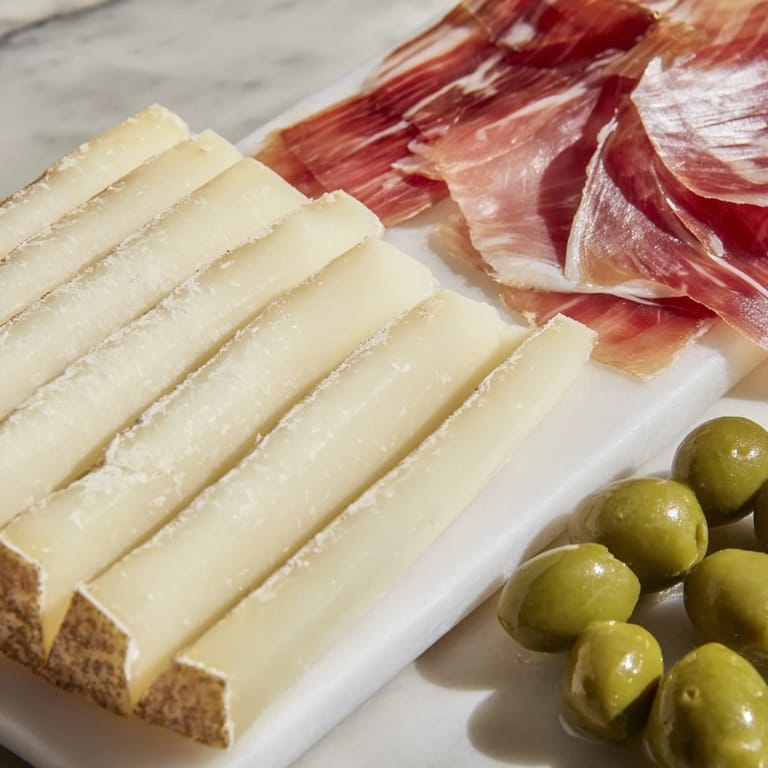
- Aged Comté (80 g): This is the soul of the board—look for a wedge that's at least two years old, with those tiny flavor crystals running through it that crunch between your teeth. Slice it just thick enough that each piece has character, not so thin it disappears.
- Jamón Ibérico (80 g): This is the ham that changed my mind about what cured meat could be, with a richness that feels almost buttery. Ask your cheesemonger or trusted market to slice it paper-thin, or invest in a slicer if you're going to do this often—it's worth it.
- Castelvetrano Olives (80 g): These green olives from Sicily are buttery and mild, nothing harsh or bitter about them. Pit them yourself if you can find them unpitted, which somehow makes them taste even better, though I know that's probably just psychology.
Tired of Takeout? 🥡
Get 10 meals you can make faster than delivery arrives. Seriously.
One email. No spam. Unsubscribe anytime.
Instructions
- Find your board and claim your thirds:
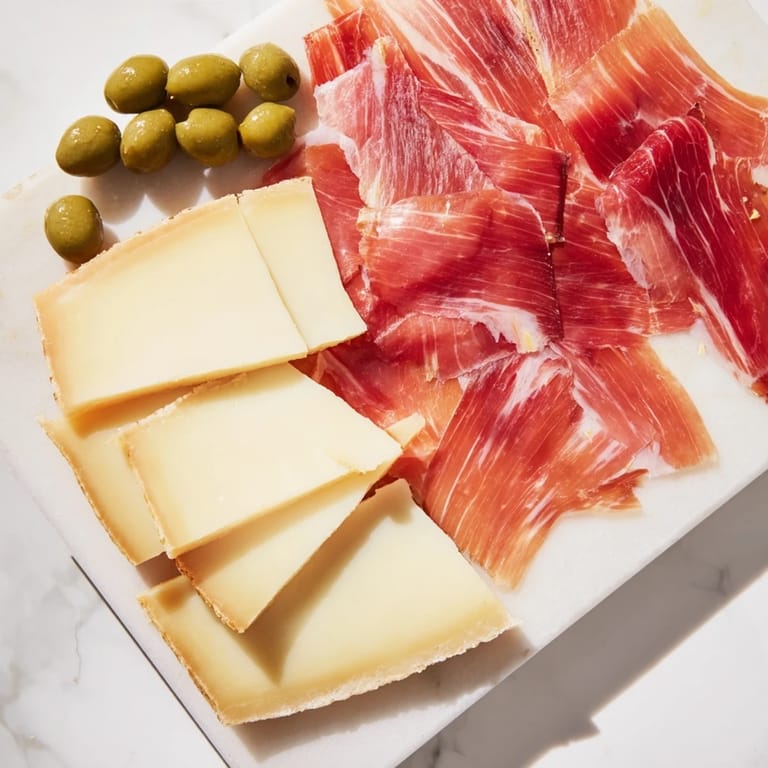
- Take whatever board or platter speaks to you—marble, wood, slate, even a clean white plate if that's what you have. Visually divide it into three equal sections, and let yourself get a little particular about the proportions. This visual clarity is doing half the work for you.
- Arrange the Comté with intention:
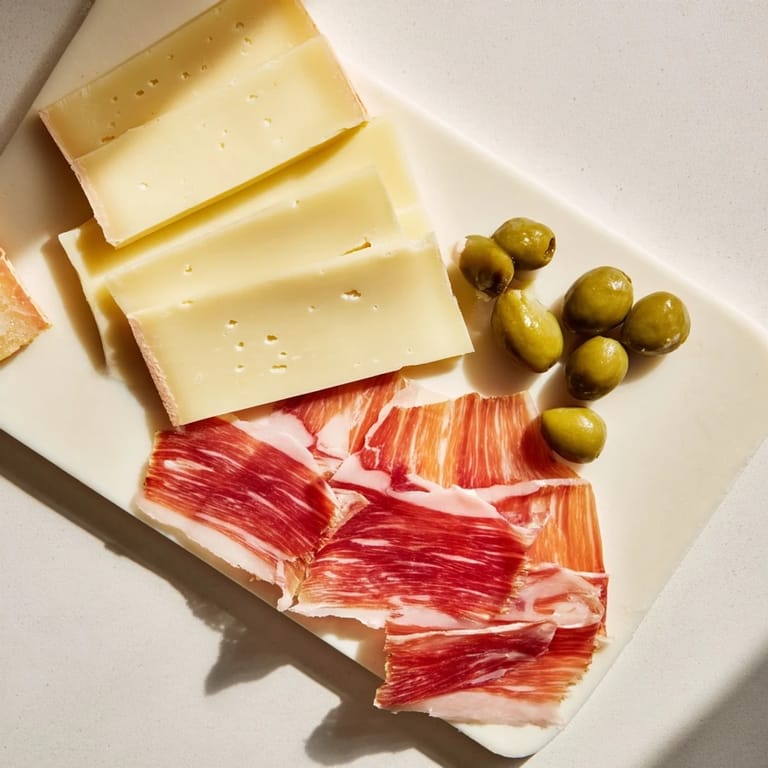
- Lay the cheese slices in the first third, slightly overlapping them like you're fanning out cards. The goal is neat without being rigid—let a little imperfection show through.
- Fold and layer the Jamón Ibérico:
- In the second third, fold each slice once or twice and lean them against each other. The ruffles and folds catch light and make the whole thing look like you know what you're doing, even though you're just being thoughtful.
- Gather the olives:
- In the final third, you can pile them loose or nestle them in a small bowl—either way works. I usually go loose because there's something honest about seeing the olives exactly as they are.
- Serve at room temperature:
- Bring everything to room temperature before serving so the flavors aren't muted by cold. The butter in the Comté needs to soften just slightly, and the ham releases its perfume when it's warm.
 Save
Save I've learned that this board is best shared with someone who gets it, someone who will pause and actually taste each component instead of treating it like a snack station. It's the kind of thing that turns a Tuesday into something memorable, or turns an ordinary Friday into something elegant without any fuss.
When Simple Becomes Luxurious
There's a particular kind of confidence that comes with knowing when not to interfere. A chef friend once told me that the greatest skill is knowing what not to do, and this board is the purest expression of that philosophy I've found in the kitchen. It taught me that presentation matters, but only insofar as it serves the ingredients—the real art is choosing things worth presenting.
How to Choose Your Ingredients
If Comté feels too expensive or hard to find, Gruyère will sing just as beautifully, or try Manchego for something with a little more grip. The rule is: aged, distinctive, and worth eating on its own. For the ham, if Jamón Ibérico is out of reach, a good prosciutto di Parma works, though it's gentler. The olives are the easiest variable—Castelvetrano is ideal, but any quality green olive that tastes clean and buttery will do. What matters is that you're not settling for anything that makes you shrug.
Building Your Own Variations
Once you understand the principle, you can play with it. I've made boards with different cheeses in different seasons—a sharp aged Cheddar in winter, a creamy Taleggio in spring. The structure stays the same: three elements, each chosen for their own excellence, given space to breathe. The olives could become marcona almonds or candied walnuts. The ham could become smoked salmon or anchovy fillets. The real lesson is that constraint breeds creativity, and three perfectly chosen things beat ten mediocre ones every time.
- Let the ingredients guide you, and trust that quality needs little help.
- The board itself can be as simple or as beautiful as your kitchen allows—the food does the talking.
- This is a recipe that scales: double the amounts and it's still ten minutes of work, but it feeds more people and looks even more impressive.
 Save
Save This board taught me that sometimes the most generous thing you can do in the kitchen is to get out of the way and let good things be themselves. It's become my go-to when I want to feel elegant without stress, or when someone stops by and deserves a little something that says you're worth the good stuff.
Recipe FAQ
- → What is the best way to arrange the ingredients?
Divide the serving board into three equal sections, placing the aged Comté in one, folded Jamón Ibérico in the second, and Castelvetrano olives in the last for visual appeal and flavor separation.
- → Can I substitute the Comté cheese?
Yes, Gruyère or Manchego are excellent alternatives that offer similar aged and nutty flavor profiles.
- → How should the board be served?
Serve immediately at room temperature to enhance the distinct flavors of each ingredient.
- → Is this suitable for vegetarian diets?
The original contains Jamón Ibérico, but a vegetarian version can be made by replacing it with plant-based alternatives.
- → What drinks pair well with this cheese board?
Crisp dry white wine or Champagne complements the rich aged cheese and salty olives elegantly.
- → Are there allergen concerns to note?
Cheese contains milk; the charcuterie might have traces of nuts or gluten depending on processing, so check labels if allergies are a concern.