 Save
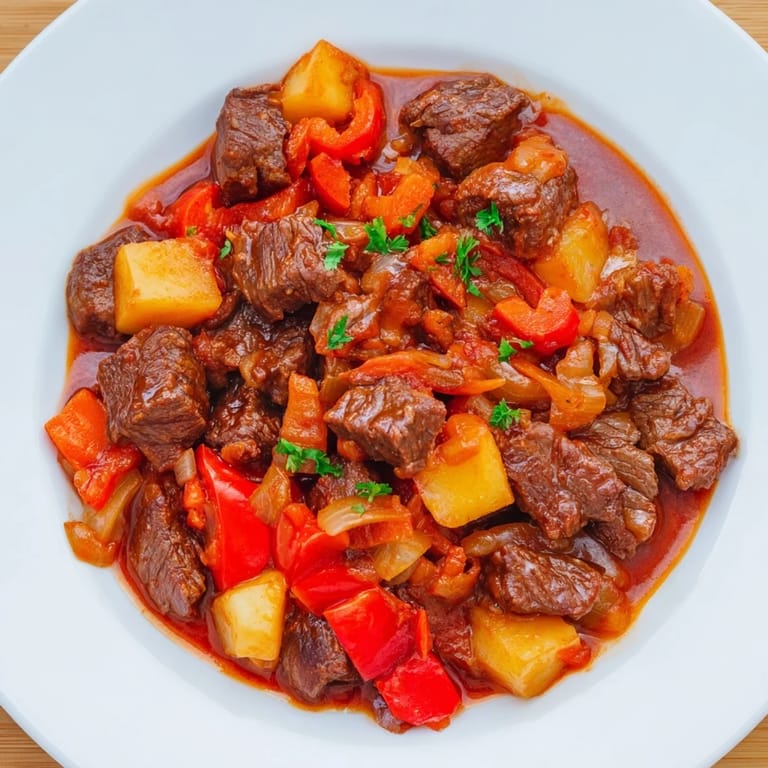
Save My first real Hungarian goulash came together on a crisp autumn evening when I borrowed a friend's Dutch oven and a container of authentic paprika from her grandmother's kitchen. I'd been intimidated by the recipe for years, convinced it required some secret Hungarian knowledge I didn't possess. But as the beef slowly surrendered to heat and spice, filling the kitchen with that unmistakable warm, earthy aroma, I realized the magic was simply patience and good ingredients. By the time those tender cubes had absorbed all that paprika-rich broth, I understood why this dish has fed generations across Central Europe.
I made this for my neighbors one cold November evening, and watching them taste it for the first time reminded me why comfort food matters. The way their expressions softened, how someone asked for seconds before finishing their first bowl—that's when I stopped worrying about whether my version measured up to tradition. It was just good, honest food that brought people to the table.
Ingredients
- Beef chuck (2 lbs, cut into 1-inch cubes): This cut has enough marbling to stay juicy during the long braise, and it becomes impossibly tender if you give it time—don't rush toward a leaner cut.
- Onions (2 large, finely chopped): They're the flavor foundation, so take a minute to chop them evenly and let them turn truly golden before moving forward.
- Carrots (2 medium, sliced): They add natural sweetness that balances all that paprika and develops more complexity as they soften.
- Red bell pepper (1 large, diced): Sweet peppers are traditional here, and they add both color and gentle sweetness to every spoonful.
- Garlic (2 cloves, minced): Just enough to whisper in the background, not shout—this isn't a garlic-forward dish.
- Potatoes (2 medium, peeled and cubed, optional): They thicken the stew naturally and turn creamy, but leave them out if you prefer a brothier version.
- Hungarian sweet paprika (3 tbsp): This is non-negotiable; it's the soul of the dish, so use good-quality paprika and never let it burn—add it quickly and stir constantly.
- Caraway seeds (1 tsp): These add an unexpected subtle note that makes people say, "What is that?" in the best way.
- Dried marjoram (1 tsp): Marjoram is the Hungarian herb choice here, gentler and more authentic than oregano.
- Black pepper (1/2 tsp, freshly ground): Freshly ground makes a real difference in how it blends with everything else.
- Salt (1 tsp, plus more to taste): Start here, taste as you go, and adjust at the end.
- Bay leaf (1): Don't forget to fish it out before serving—I learned that lesson the hard way.
- Beef broth (4 cups): Use good broth, because this stew relies on it for most of its flavor.
- Tomato paste (2 tbsp): It adds umami depth and helps build the sauce body.
- Vegetable oil or lard (2 tbsp): Either works, though lard gives you a more traditional flavor and slightly richer mouthfeel.
Tired of Takeout? 🥡
Get 10 meals you can make faster than delivery arrives. Seriously.
One email. No spam. Unsubscribe anytime.
Instructions
- Build your foundation with onions:
- Heat your oil over medium heat and add those chopped onions, letting them cook undisturbed for a few minutes until they start to soften and brown at the edges. Keep stirring and let them go golden and sweet, which takes about 8 minutes—this is patient work, but it creates the flavor base for everything that follows.
- Bloom the garlic:
- Add your minced garlic and let it cook just for 1 minute, until it smells incredible and the raw edge disappears. This quick moment prevents garlic from becoming bitter later.
- Brown the beef:
- Add your beef cubes to the pot, resisting the urge to stir constantly; let them sit and develop a golden crust on each side, about 5 minutes total. This browning builds flavor through the Maillard reaction, even though the beef will finish cooking in liquid.
- Toast the paprika:
- Sprinkle your paprika over the beef and onions, and here's the critical part—stir quickly and constantly for about 30 seconds so it coats everything and releases its flavor without burning. Burned paprika tastes bitter and ruins the whole dish, so this moment deserves your full attention.
- Deepen with tomato and spices:
- Add your tomato paste, caraway seeds, marjoram, pepper, and salt, stirring everything into a cohesive mixture. You're building layers of flavor that will meld and deepen during the long cook.
- Add vegetables and liquid:
- Toss in your carrots, bell pepper, and bay leaf, then pour in the beef broth, scraping the bottom of the pot with your wooden spoon to lift up all those browned, flavorful bits. Bring everything to a gentle simmer—you want small bubbles breaking the surface, not a rolling boil.
- Low and slow for the first hour:
- Cover the pot and let it cook on low heat for 1 hour, stirring occasionally so nothing sticks. The beef is starting to break down and become tender, and the flavors are getting to know each other.
- Add potatoes and finish:
- Stir in your cubed potatoes (if using) and continue to simmer uncovered for another 45-60 minutes, checking occasionally, until the beef is fall-apart tender and the sauce has thickened slightly. The uncovered time lets some liquid evaporate and concentrates the flavors.
- Taste and adjust:
- Remove from heat, fish out that bay leaf, and taste carefully, adding more salt and pepper if needed. This is your moment to make it exactly how you want it.
 Save
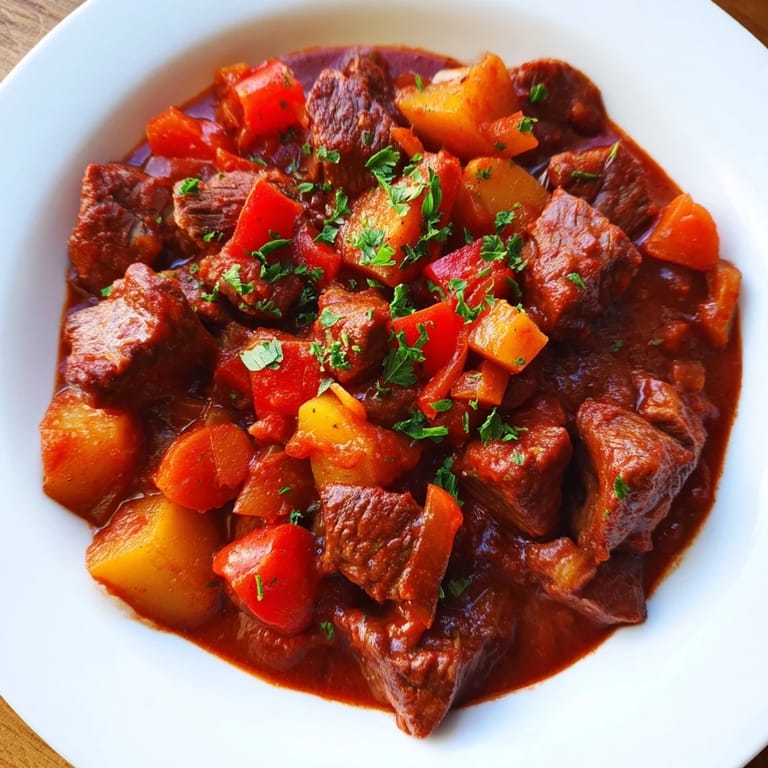
Save There's something about sitting down to a bowl of goulash on a night when everything else feels scattered and uncertain—it grounds you. The smell alone brings people to the table faster than any announcement ever could.
The Paprika Question
The first time I made this with standard supermarket paprika, I got a decent stew but nothing that sang. Then I found real Hungarian paprika from a European market, and the difference was immediate—deeper, more nuanced, less one-note. That paprika isn't just an ingredient; it's the voice of the whole dish, so it's worth seeking out and worth keeping in a cool, dark place away from light and heat so it doesn't fade.
Timing and Temperature
The cooking times in this recipe are guidelines more than gospel, because how long your beef takes to become tender depends on the cut's thickness, your pot, your stove, and even the beef's age. The real test is forking a piece of beef—if it falls apart easily, you're done; if it still resists, keep cooking. Also, resist the urge to boil this stew hard; gentle, steady heat creates a more tender result than aggressive bubbling, which can toughen the meat.
Serving and Storing
Goulash is naturally a vessel for other flavors, so it pairs beautifully with crusty bread for soaking up sauce, traditional Hungarian csipetke dumplings for a more authentic presentation, or even egg noodles for something simpler. Leftover goulash keeps in the fridge for at least four days and actually improves, making it an ideal meal to prepare on a weekend and revisit throughout the week.
- A dollop of sour cream on top adds richness, though it's not traditional—try both ways and decide your preference.
- Freeze extras in portions for up to three months, and reheat gently on the stovetop, adding a splash of broth if the sauce has gotten too thick.
- Make a double batch; you'll be grateful when you're heating up leftovers and remembering why you loved this dish in the first place.
 Save
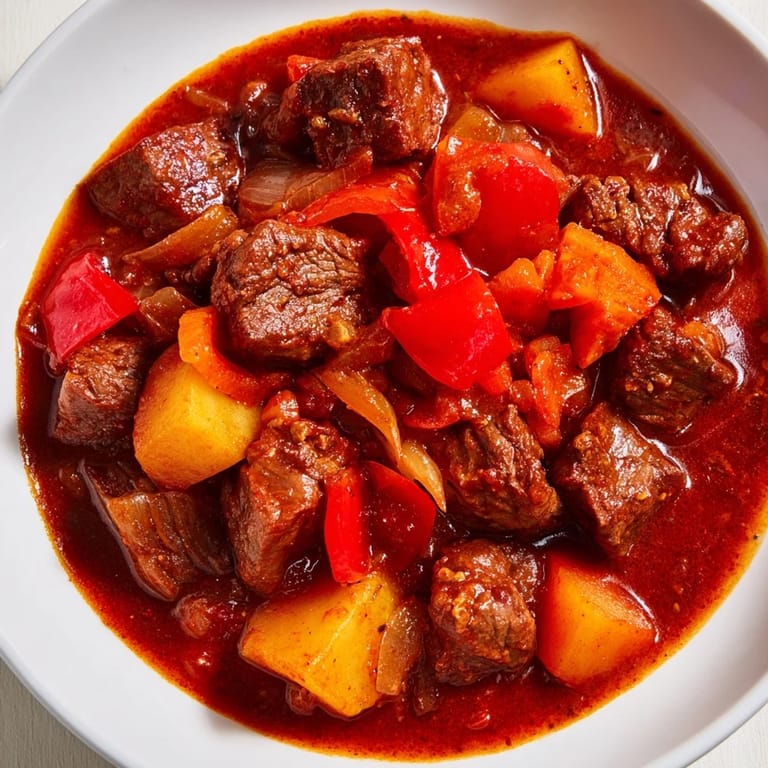
Save This goulash is the kind of dish that settles into your kitchen rotation and becomes one of those meals people ask you to make. It's not fussy, it doesn't require rare ingredients, and it rewards patience with the kind of flavor and texture that makes everything else fade away.
Recipe FAQ
- → What cut of beef works best for this dish?
Beef chuck cut into 1-inch cubes is ideal for tender, flavorful results after slow simmering.
- → Can I adjust the spice level?
Yes, adding a pinch of hot paprika or a chopped chili will give the dish a spicier kick.
- → What sides complement this flavorful dish?
Rustic bread, egg noodles, or Hungarian csipetke dumplings pair excellently alongside.
- → Is it necessary to add potatoes?
Potatoes are optional but provide additional texture and make the dish heartier.
- → How long should the stew simmer for best results?
Simmer on low heat for approximately 1 hour, then add potatoes and cook uncovered for another 45-60 minutes.