 Save
Save There's something about the smell of a bone-in rib eye hitting a hot grill that makes everything else fade away. My neighbor Mike taught me years ago that the bone isn't just for show—it conducts heat straight into the meat and keeps it impossibly juicy. That first time I grilled one his way, I was nervous, but the moment I heard that sizzle and saw the crust forming, I knew I was doing something right. Now whenever someone asks what I'm making for dinner, and I say bone-in rib eye, their eyes light up like I've just promised them the best meal of their week.
I'll never forget the time I made this for my sister's birthday dinner last summer. She's usually the cook in her family, so I was determined to prove I could pull off something special. When I set that perfectly rested steak in front of her and she took that first bite, the way her face softened told me everything. She texted me the next day saying it was the best steak she'd ever had, and honestly, that compliment meant more to me than any restaurant review ever could.
Ingredients
- Bone-in rib eye steaks (1.5 inches thick, 16 oz each): The bone is your secret weapon—it radiates heat into the meat and protects it from overcooking while creating that perfect crust.
- Olive oil: This isn't just for flavor; it helps create that gorgeous sear and prevents sticking on the grill grates.
- Kosher salt and freshly ground black pepper: Season generously right before cooking—waiting until after grilling means the seasoning stays on the surface where it belongs.
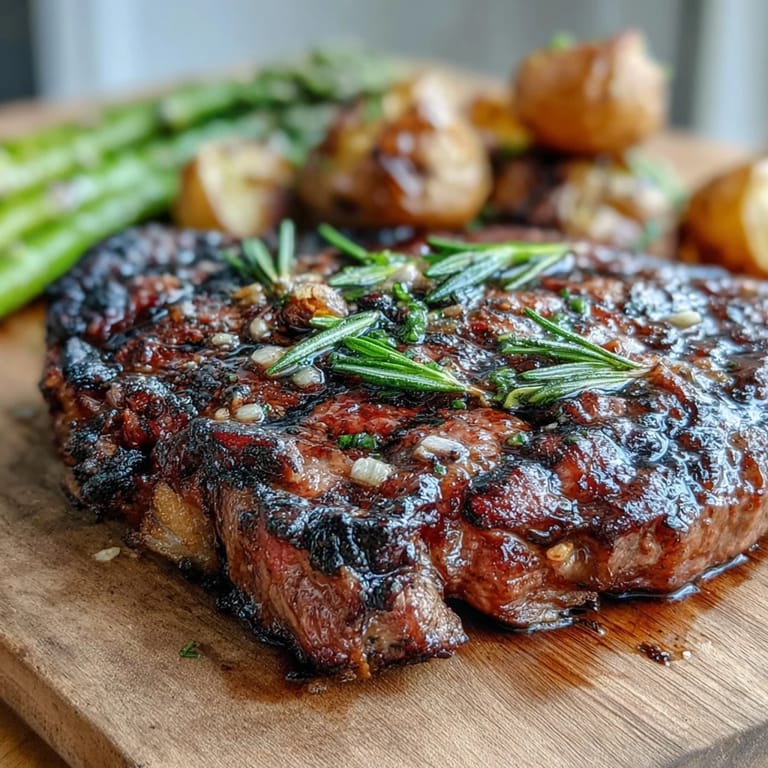
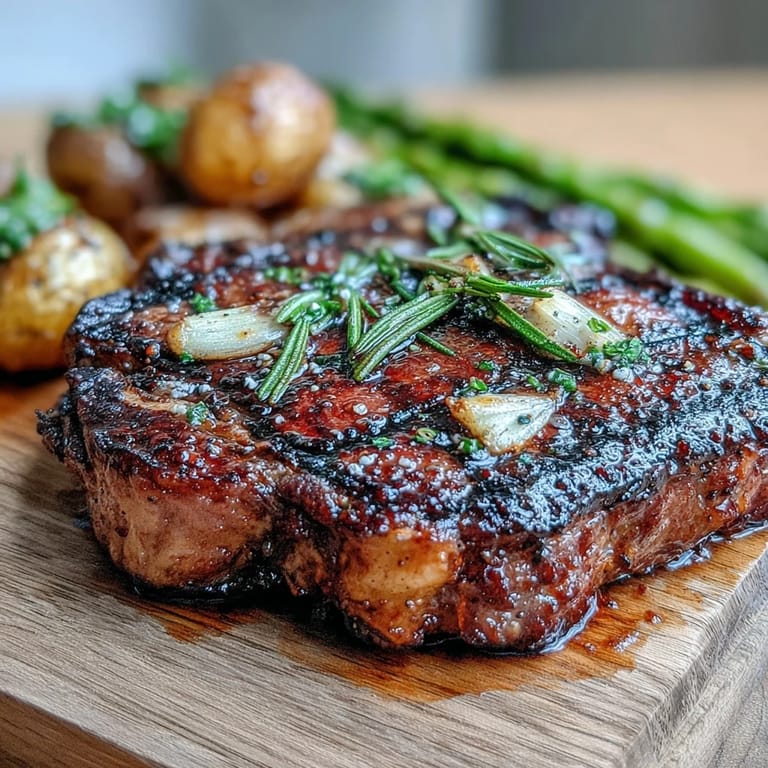
- Fresh rosemary and smashed garlic: These aromatics toast right on top of the steak, infusing it with herbal depth that you taste in every bite.
- Baby potatoes: These little guys get creamy and buttery, and their small size means they cook fast enough to finish with the steak.
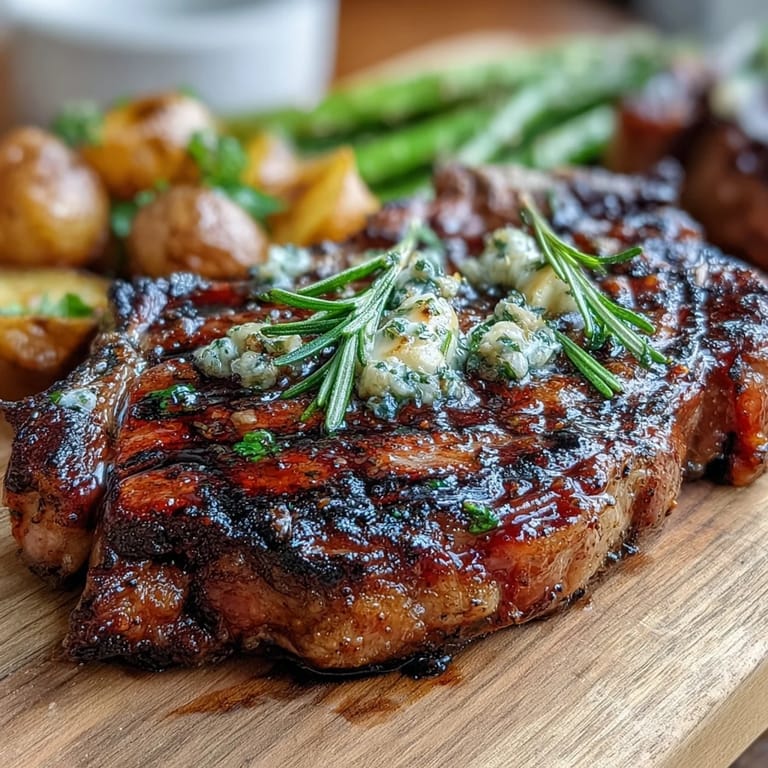
- Unsalted butter and fresh parsley: A simple toss brings everything together and adds that finishing touch of elegance.
- Asparagus and lemon: The char on the asparagus adds bitterness that balances the richness of the steak, while lemon brightens everything up.
Tired of Takeout? 🥡
Get 10 meals you can make faster than delivery arrives. Seriously.
One email. No spam. Unsubscribe anytime.
Instructions
- Get Your Steaks Ready:
- Pull those rib eyes out of the fridge thirty minutes before you fire up the grill—room temperature meat cooks more evenly and develops a better crust. Pat them dry with paper towels, then rub them generously with olive oil, salt, and pepper until they look like they're ready for their close-up.
- Fire Up the Grill:
- Get your grill screaming hot, around 450 to 500 degrees Fahrenheit. You want it hot enough that you can only hold your hand above the grates for a couple of seconds before the heat drives you away.
- Sear Those Beauties:
- Place the steaks on the grill and immediately lay the rosemary sprigs and smashed garlic right on top of each one. Listen for that satisfying sizzle—that's the sound of a good crust forming. Grill for four to five minutes on each side for medium-rare, letting a nice caramelized crust develop without moving them around.
- Rest Like Champions:
- This is the step people skip and regret—tent the steaks loosely with foil and let them rest for eight minutes. The meat fibers relax and reabsorb all those delicious juices you just spent time building.
- Cook Your Sides:
- While the steaks are grilling, get your potatoes boiling in salted water—they'll be tender in about ten to twelve minutes. During the last five minutes of steak cooking, toss your asparagus with olive oil, salt, and pepper, then lay it on the grill to pick up some char and smoky flavor.
- Bring It All Together:
- Drain the potatoes, toss them with butter and fresh parsley, and arrange everything on a platter with those rested steaks, charred asparagus, and lemon wedges for squeezing.
 Save
Save What I love most about this meal is how it brings people together without requiring you to spend all day in the kitchen. My kids now ask me to make this instead of going out to restaurants, and there's something beautiful about knowing you've created something they genuinely crave.
The Art of the Perfect Sear
Getting that caramelized, golden crust is where the magic happens, and it's all about patience and heat. Don't move the steak around constantly—let it sit on one side long enough to develop that flavorful, crispy exterior before flipping. I used to be the type to fuss with everything on the grill, but I've learned that the best cooks are the ones who know when to leave things alone. The Maillard reaction (that's the chemical reaction creating all those delicious flavors) needs uninterrupted time and high heat to do its job.
Timing Is Everything
The thirty-minute wait before grilling isn't just some fancy tip—it's the difference between a steak that cooks unevenly and one that's perfect from edge to center. Cold meat hitting a hot grill means the outside cooks before the inside catches up, leaving you with a burned exterior and a rare interior. Bringing everything to room temperature also means you're not fighting the temperature gradient, so those four to five minutes per side actually works like it's supposed to. I learned this by experience (and a few overcooked mistakes) rather than instruction, and now I never skip this step.
Making It Your Own
One of my favorite things about this recipe is how forgiving and adaptable it is. I've made it with different herbs, swapped out the asparagus for broccolini or green beans, and even experimented with different finishing salts. The core technique stays the same, but the possibilities are endless. What matters most is using good ingredients and respecting the meat enough to treat it with care.
- If your asparagus is particularly thick, cut the spears in half lengthwise so they cook through before charring too much.
- A splash of red wine or broth poured over the resting steaks adds incredible depth, though it's entirely optional.
- Serve everything while it's still hot—these steaks don't taste nearly as good lukewarm, and the potatoes deserve that warmth too.
 Save
Save There's a reason bone-in rib eye has been a favorite since long before I was born, and making it yourself proves you don't need a fancy steakhouse to have that experience at home. Once you nail this, you'll be the person everyone wants to cook for.
Recipe FAQ
- → What internal temperature should I aim for when grilling rib eye?
For medium-rare, aim for 130-135°F internal temperature. Medium is 135-145°F, and medium-well is 145-155°F. Always use a meat thermometer and remember the steak will continue cooking while resting.
- → Can I cook this on a stovetop if I don't have a grill?
Yes, use a cast-iron skillet or grill pan over high heat. Sear the steaks for 4-5 minutes per side, then finish in a 400°F oven for 5-7 minutes until desired doneness is reached.
- → Why is it important to let the steak rest after grilling?
Resting allows the juices to redistribute throughout the meat. If you cut immediately, the juices will run out onto the plate, leaving the steak dry. An 8-minute rest ensures maximum tenderness and flavor.
- → What can I substitute for asparagus as a side?
Green beans, broccolini, grilled zucchini, or Brussels sprouts work beautifully. Any vegetable that grills well and complements the richness of the steak is an excellent choice.
- → How do I know when the potatoes are properly cooked?
Pierce them with a fork or knife. They should be tender all the way through with no resistance in the center. This typically takes 10-12 minutes after the water reaches a full boil.
- → What wine pairs best with bone-in rib eye?
Bold red wines like Cabernet Sauvignon, Malbec, or Syrah complement the rich, fatty flavors of rib eye. The tannins in these wines cut through the richness beautifully.