 Save
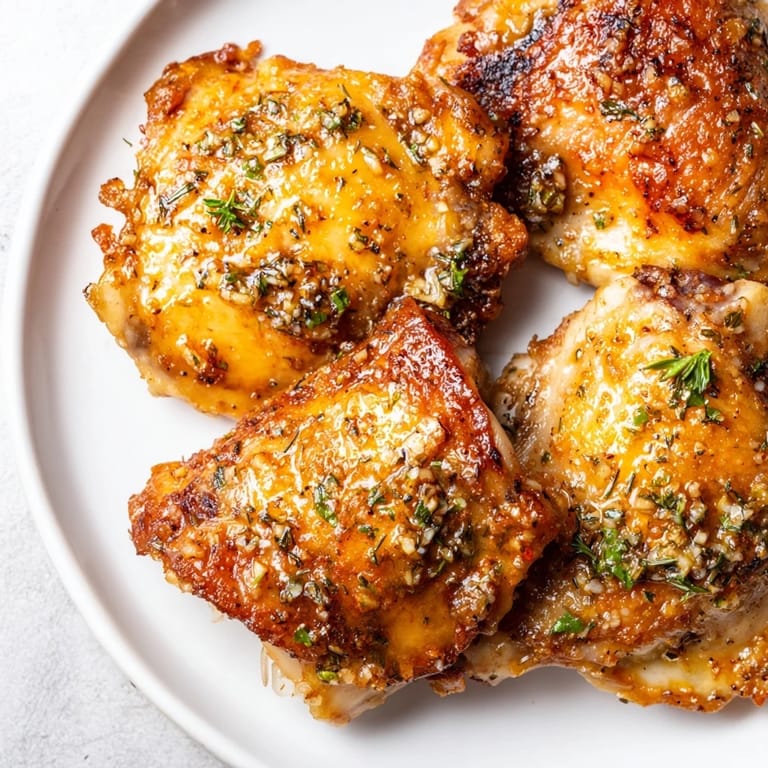
Save There's something about the sizzle of chicken thighs hitting a hot skillet that tells you you're about to make something worth remembering. I stumbled onto this garlic butter version on a weeknight when I had exactly eight thighs in the fridge and nothing to lose, tossing them with melted butter, smashed garlic, and whatever herbs hadn't wilted in my crisper drawer. The smell alone—that golden, toasty garlic mingling with rosemary—had my family asking questions before I'd even slid the pan into the oven. Forty-five minutes later, I pulled out thighs so golden and crispy on top, so impossibly tender underneath, that I understood why this became the recipe I return to again and again.
I made this for my brother's surprise dinner once, and watching him take that first bite—eyes closing like he'd tasted something illegal—made me realize this dish has a quiet power to it. He asked for the recipe immediately, which meant I'd done something right, and now it's become his go-to when he wants to impress someone at home.
Ingredients
- Bone-in, skin-on chicken thighs (8 pieces, about 1.2 kg): The bones and skin are non-negotiable here—they're the difference between dry chicken and meat so tender it falls apart with a fork.
- Unsalted butter (4 tablespoons, melted): Unsalted lets the garlic and herbs shine instead of fighting salt, and melting it first makes it easier to distribute evenly.
- Fresh garlic (5 cloves, minced): Don't use pre-minced or powdered if you can help it—fresh garlic becomes sweet and mellow when roasted whole with butter.
- Fresh parsley (1 tablespoon, chopped): Adds brightness and freshness that cuts through the richness, plus it looks beautiful scattered on top at the end.
- Fresh rosemary (1 tablespoon, or 1 teaspoon dried): This is the herb that makes people say "what is that amazing smell?"—earthy, almost peppery, it belongs in this dish.
- Fresh thyme (1 teaspoon, or ½ teaspoon dried): Subtler than rosemary but absolutely essential for depth and that classic herb-roasted flavor.
- Paprika (1 teaspoon): Adds color and a gentle warmth that makes the skin even more golden.
- Salt (1 teaspoon): Season generously—chicken needs more than you'd think, and the thighs can handle it.
- Freshly ground black pepper (½ teaspoon): Freshly ground makes an actual difference here; pre-ground tastes flat by comparison.
- Onion powder (½ teaspoon): Works quietly in the background to add savory depth without making the dish taste like onions.
- Lemon wedges and extra parsley (for serving): The lemon is optional but serves a purpose—a squeeze of fresh acid wakes up all those rich, buttery flavors right before you eat.
Tired of Takeout? 🥡
Get 10 meals you can make faster than delivery arrives. Seriously.
One email. No spam. Unsubscribe anytime.
Instructions
- Get your oven and chicken ready:
- Heat your oven to 220°C (425°F)—this high heat is what gives you that crispy, golden skin. Pat your chicken thighs completely dry with paper towels; any moisture clinging to the skin will steam instead of crisping, so don't skip this step.
- Build your garlic butter:
- In a small bowl, stir together melted butter, minced garlic, parsley, rosemary, and thyme until everything is well combined and smells absolutely incredible. You're creating an aromatic paste that's going to infuse every bite.
- Mix your seasoning blend:
- In another bowl, whisk together paprika, salt, black pepper, and onion powder—keep these separate from the butter because you'll rub them on the chicken first for even coating.
- Season the chicken:
- Rub the seasoning mix evenly over each thigh, making sure both sides get coated. This is your chance to really get your hands in there and make sure nothing is missed.
- Arrange in your pan:
- Place the chicken thighs skin-side up in a large oven-proof skillet or baking dish, making sure they're not crowded and have room to roast.
- Drizzle with garlic butter:
- Pour the garlic butter mixture evenly over the chicken, and here's the trick—lift the skin gently and get some of that butter underneath where it can really work its magic.
- Roast until golden:
- Slide the pan into the oven for 35 to 40 minutes, until the skin is deep golden and crispy and the internal temperature hits 75°C (165°F) when you check with a meat thermometer. Don't skip this temperature check; it's how you know for certain the chicken is cooked through.
- Finish with a broil (optional but worth it):
- For extra crispiness, move the pan to the broiler for the last 2 to 3 minutes—but watch it closely because it can go from golden to burned in seconds.
- Rest and serve:
- Pull the pan from the oven and let it rest for 5 minutes; this lets the juices settle back into the meat. Scatter extra parsley over the top, squeeze lemon over if you like, and serve while it's still warm.
 Save
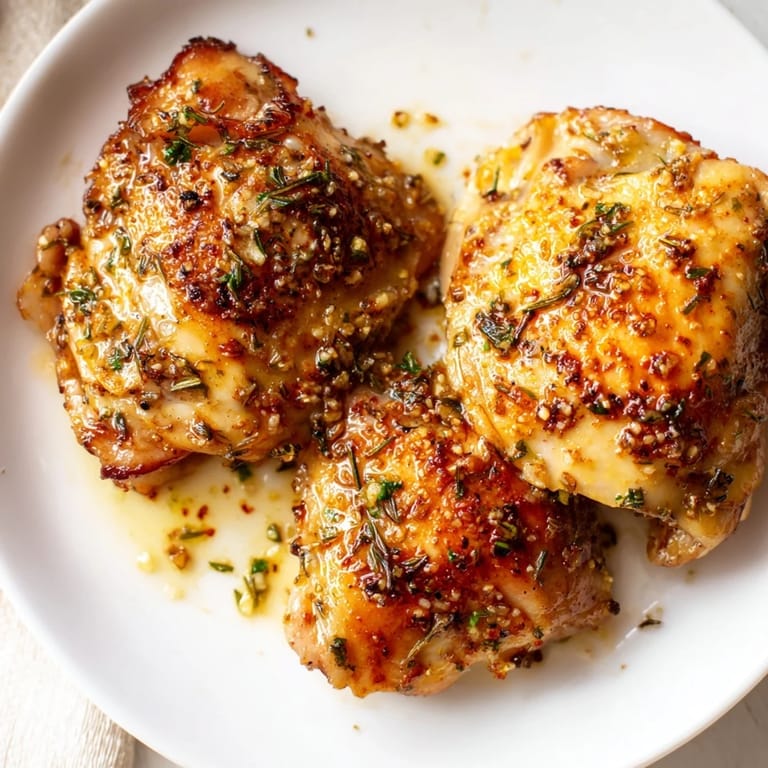
Save There was an afternoon when my roommate came home early to find the apartment smelling like a dream—roasted garlic, herbs, golden chicken—and she literally stopped in her tracks and asked what I was making. That's when I realized this dish has a presence beyond the plate; it announces itself in a way that makes people feel welcome before they even sit down to eat.
Why Bone-In, Skin-On Matters
Boneless, skinless chicken breasts have their place, but thighs are a different animal entirely—literally. The dark meat is more forgiving because it has more fat running through it, which means it stays moist even if you accidentally cook it a minute or two too long. The skin is where all the crispy magic happens, and the bone adds flavor to everything touching it. Once you cook thighs this way, you'll understand why restaurants prefer them; they're harder to mess up and they taste better.
Fresh Herbs vs. Dried: What You Need to Know
I've made this recipe both ways, and while fresh herbs are absolutely preferable—they have brightness that dried herbs simply can't match—dried herbs will work if that's what you have. The key is using about one-third the amount of dried herbs compared to fresh, because drying concentrates their flavor. If you're using dried, add them to the melted butter and let them bloom for a minute or two before brushing onto the chicken; this wakes them up and distributes their flavor more evenly.
What to Serve Alongside
These thighs come with their own rich, garlicky sauce pooled in the bottom of the pan, so you don't need a sauce situation. What they do love is something on the side that can soak up all those juices—creamy mashed potatoes are the obvious choice, but roasted vegetables, crusty bread, or even simple rice all work beautifully. A green salad with a bright vinaigrette is also perfect because it cuts through the richness and makes the whole meal feel balanced.
- Roasted potatoes or mashed potatoes absorb the buttery pan juices and are deeply satisfying.
- A simple arugula salad with lemon vinaigrette provides brightness and contrast that makes every bite better.
- Crusty bread is essential if you want to soak up every drop of that garlic butter at the bottom of the pan.
 Save
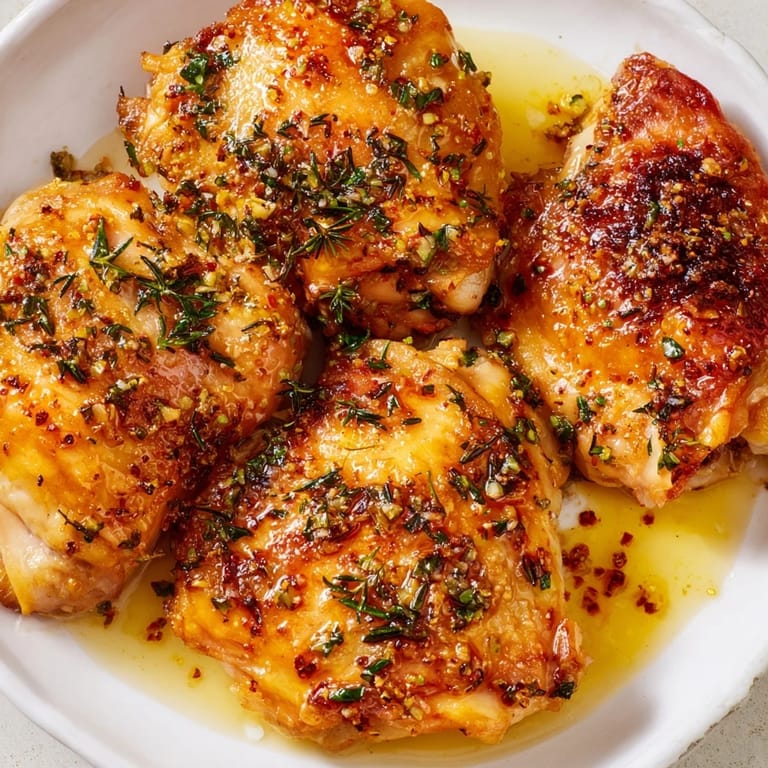
Save This recipe became a favorite because it's honest food—no complicated technique, no pretension, just really good ingredients treated simply and roasted until they're perfect. It's the kind of dish that reminds you why you cook in the first place.
Recipe FAQ
- → How do I get the chicken skin crispy?
Pat the chicken thighs dry before seasoning and roast at a high temperature. Broiling for the last few minutes helps achieve extra crispiness.
- → Can I use dried herbs instead of fresh?
Yes, dried herbs can be substituted at one-third the amount of fresh herbs for a similar aromatic effect.
- → What sides pair well with garlic butter chicken thighs?
Roasted vegetables, mashed potatoes, or a fresh green salad complement the rich flavors well.
- → Is it possible to make this dish dairy-free?
For a dairy-free option, substitute olive oil for the butter while maintaining the herb blend.
- → How do I ensure the chicken is fully cooked?
Roast until the internal temperature reaches 75°C (165°F), ensuring juices run clear and meat is tender.