 Save
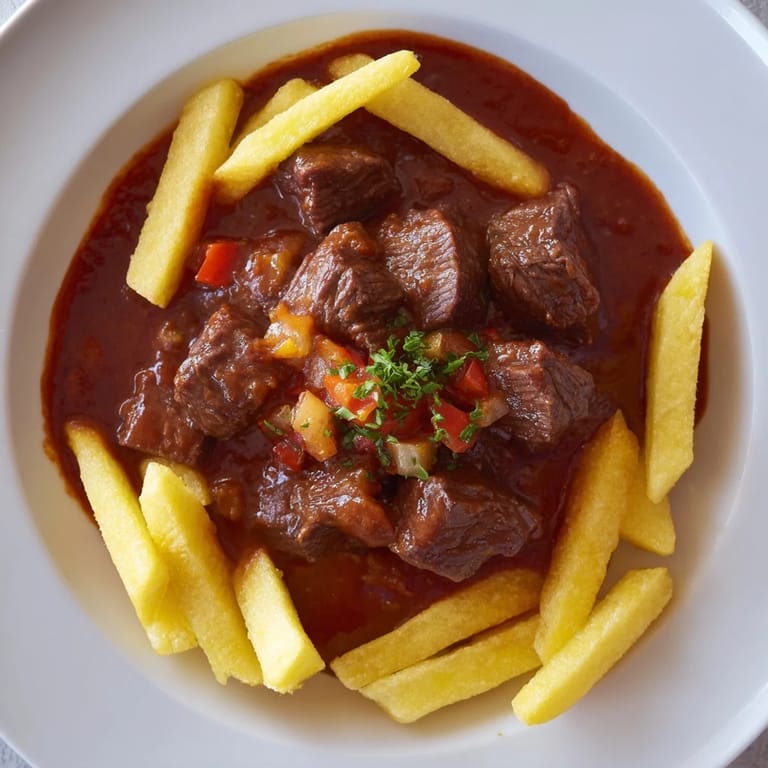
Save My first real Czech goulash lesson came not from a cookbook but from watching my neighbor Eva stand at her stove on a chilly autumn evening, the apartment filling with that unmistakable paprika warmth. She'd invited me over almost casually, as if she wasn't about to teach me one of the most comforting dishes I'd ever taste. What struck me most wasn't the complexity, but how she moved through it with such ease, like her hands already knew the rhythm. That night, serving those crispy golden potato strips perched on top of the dark, wine-rich sauce, something clicked. This wasn't just dinner—it was that perfect balance of effort and reward that keeps you coming back.
I made this for friends who'd been skeptical about slow-cooked beef, and watching their faces when they took that first bite—the surprise, the quiet contentment—made me realize why Czech grandmothers have been serving this for generations. There's something about a dish that requires patience but rewards you with such obvious deliciousness that it feels less like cooking and more like magic happening in a pot.
Ingredients
- Beef chuck, cut into 2.5 cm cubes (800 g): This cut has just enough fat and connective tissue to become silky after long cooking, unlike leaner cuts that can turn stringy and tough.
- Vegetable oil (2 tbsp, plus 500 ml for frying): Choose something neutral that won't compete with the paprika—I learned the hard way that olive oil makes this taste wrong.
- Onions, finely chopped (2 large): They're not just flavoring; they practically dissolve into the sauce and create its natural sweetness.
- Garlic, minced (3 cloves): Fresh matters here because it needs to bloom quickly in the heat without turning acrid.
- Sweet Hungarian paprika (2 tbsp): This is the soul of the dish—don't skip it or substitute with smoked paprika unless you want something completely different.
- Caraway seeds (1 tsp): These tiny seeds add an almost invisible earthiness that makes people ask what that subtle flavor is.
- Marjoram (1 tsp): Dried marjoram works perfectly here, lending a warmth that feels distinctly Czech.
- Salt and black pepper (1 tsp salt, ½ tsp pepper): Start with this amount, but always taste before serving—beef broth varies in saltiness.
- Tomato paste (2 tbsp): This deepens the sauce without making it taste tomatoey, creating that rich, savory backbone.
- Beef broth (750 ml): Use good quality broth or homemade if you have it; thin broths make thin sauces.
- Bell pepper, diced (1): Added near the end so it stays slightly firm and adds brightness to the richness.
- All-purpose flour (1 tbsp): This gentle thickener creates body without being obvious; gluten-free flour works just as well.
- Bay leaf (1): Removes easily and adds a subtle herbaceous note you'll feel more than taste.
- Large potatoes, peeled (4): Starchy potatoes like russets crisp up better than waxy ones; this makes a noticeable difference.
Tired of Takeout? 🥡
Get 10 meals you can make faster than delivery arrives. Seriously.
One email. No spam. Unsubscribe anytime.
Instructions
- Build your flavor base with onions and aromatics:
- Heat oil in your pot and let the onions turn deep golden—this takes longer than you'd think, about 8 minutes, but those caramelized edges are where the sweetness lives. Quickly stir in garlic, caraway, and paprika, and watch the whole kitchen transform; this is the smell that tells you something important is beginning.
- Brown the beef properly:
- Don't crowd the pot; let each cube touch the bottom and develop that dark, crusty exterior that seals in flavor. About 5 minutes is right, and you'll know it's working when you smell something almost savory-sweet.
- Layer in the depth:
- Tomato paste, marjoram, salt, pepper, and bay leaf go in now, followed by that light flour dusting that will thicken everything later. Stir it all together and let it sit for a moment—the heat awakens everything.
- The long, slow simmer:
- Pour in your broth, add the bell pepper, and bring everything to a gentle boil before turning the heat way down. Cover the pot and let time do the work; 1.5 to 2 hours until the beef is so tender a spoon cuts through it like butter.
- Prepare the crispy finish:
- While the goulash rests and bubbles, cut your potatoes into thin matchsticks—a mandoline is faster, but a sharp knife and patience work fine. Rinse them in cold water to remove the starch, then pat completely dry; any moisture will make them steam instead of crisp.
- Fry until golden:
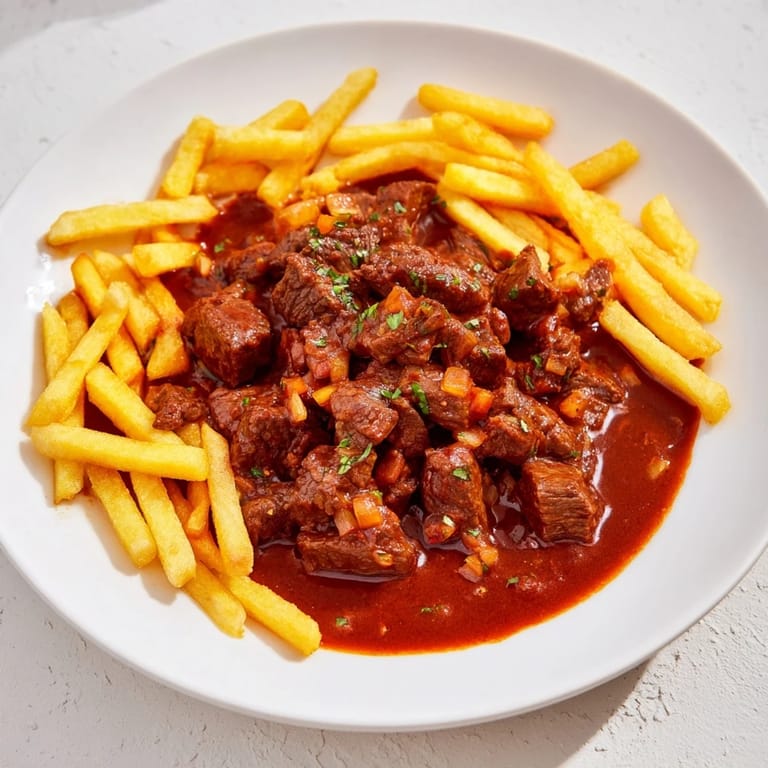
- Heat your oil to 180°C and work in batches so the temperature stays steady; when potatoes hit the hot oil, they should sizzle immediately and turn golden within 3 to 4 minutes. Drain on paper towels and salt them while still warm so the seasoning sticks.
- Final assembly:
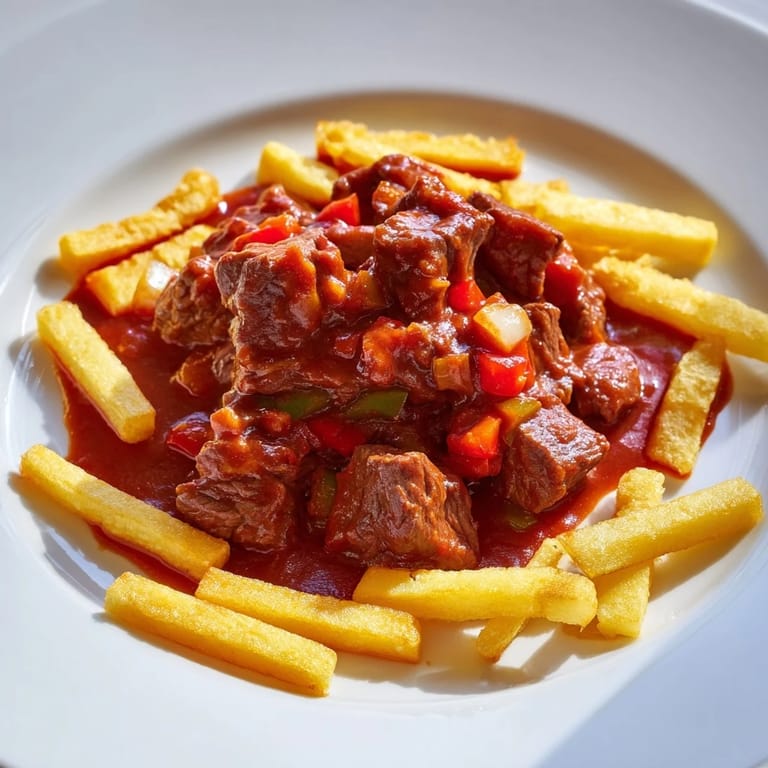
- Remove the bay leaf, taste the goulash one more time, adjust salt and pepper if needed, then serve in bowls crowned with those crispy potato strips that will soften slightly in the steam and stay just crunchy enough.
 Save
Save The moment that really lodged this dish in my heart was unexpected: my daughter asked for seconds, and then thirds, while telling me about her day. That's when I understood that good goulash isn't about impressing anyone—it's about creating the kind of warmth that makes people want to stay at your table longer.
Why Czech Cooks Have Always Known
There's a reason this dish has endured for centuries across Central Europe. It's practical—you brown meat, simmer it with simple spices, and time handles the rest. But it's also deeply satisfying in a way that feels almost old-fashioned, like it remembers something important about feeding people. The paprika isn't exotic or trendy; it's just the right spice for beef, working with marjoram and caraway to create a flavor that tastes both humble and refined.
The Potato Strip Secret
I spent years making goulash with soft egg noodles or bread, perfectly fine choices, but those crispy fried potato strips change everything. They're not just texture; they're contrast, and contrast is what makes food memorable. The moment they hit that hot oil and begin to crisp, you're no longer making a side dish—you're creating the final piece of something that wants to be celebrated.
Making It Your Own
Eva's kitchen taught me that recipes are starting points, not rules set in stone. Some people add a splash of red wine or a pinch of hot paprika for heat; others serve it with sour cream and fresh parsley, or alongside thick bread instead of potatoes. The beauty is that good goulash is forgiving enough to bend to your preferences while staying true to itself.
- If you like heat, add a teaspoon of hot paprika or a small pinch of chili flakes when you add the sweet paprika.
- A dollop of sour cream and fresh parsley stirred in just before serving adds richness and brightness simultaneously.
- This dish actually tastes better the next day, so don't hesitate to make it ahead and reheat it gently.
 Save
Save Make this when you want something that feels like a hug in a bowl, something that fills your kitchen with the smell of home. It's the kind of dish that reminds you why cooking matters.
Recipe FAQ
- → What cut of beef is best for this dish?
Beef chuck cut into cubes is ideal due to its marbling and tenderness after slow cooking.
- → How can I ensure the potato strips stay crispy?
Rinse the cut potatoes in cold water and dry thoroughly before frying to remove excess starch and prevent sogginess.
- → What spices give the sauce its distinctive flavor?
The sauce is flavored with sweet Hungarian paprika, caraway seeds, marjoram, garlic, and bay leaf for depth and aroma.
- → How long should the beef simmer?
Simmer the beef gently for about 1.5 to 2 hours until it becomes very tender and the sauce thickens.
- → Can this dish be made gluten-free?
Yes, by using gluten-free flour for thickening, this dish suits gluten-free diets without compromise on texture.