 Save
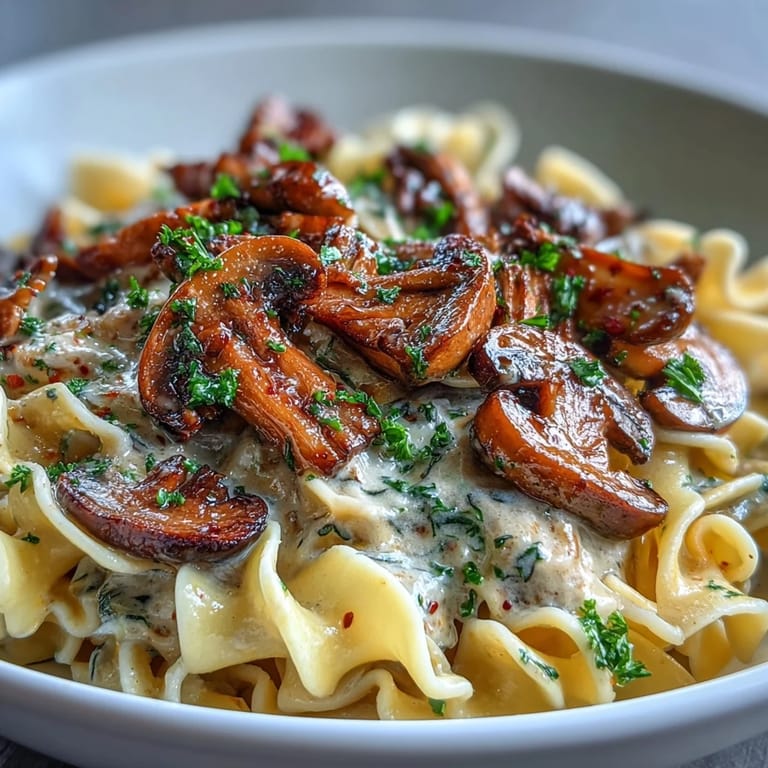
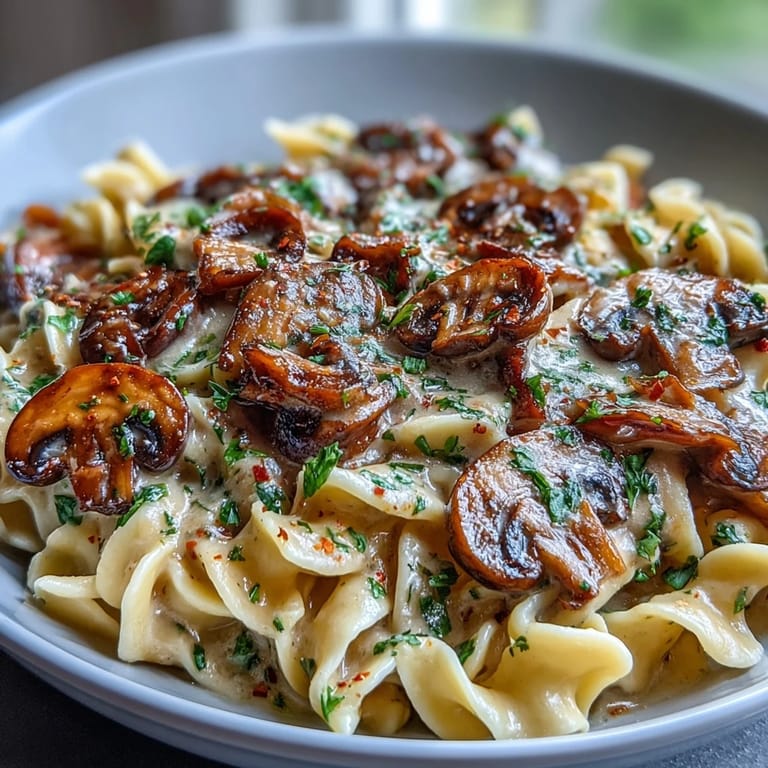
Save There's something about the way a kitchen fills with the smell of sautéed mushrooms that makes you slow down and pay attention. I discovered this stroganoff on a rainy Tuesday when I was craving something warm but didn't have much time to fuss with it. The miso paste was a last-minute addition, something I'd read about in passing, and it transformed what could have been ordinary into something that tasted like it had been simmering for hours. My partner walked in halfway through cooking and asked what smelled so good, and honestly, I wasn't sure how to answer except to say: umami.
I made this for friends who'd just moved into their new place, and we ate it straight from the skillet while standing in their empty kitchen, laughing about how their echoing walls made everything sound like we were dining in a cathedral. One friend asked for the recipe, and I realized I'd started writing it down on a napkin before I even finished plating. That's when I knew this one was keeper material.
Ingredients
- Fettuccine or wide egg noodles (350 g): The shape matters more than you'd think—wider noodles hold onto the creamy sauce better than thin pasta would, catching all those umami notes in every bite.
- Mixed mushrooms (500 g): Cremini, shiitake, and button mushrooms together give you variety in texture and earthiness; don't skip the slicing step because thicker pieces hold their shape better during cooking.
- Yellow onion (1 medium): The base of everything—chop it fine so it melts into the sauce rather than announcing itself in every spoonful.
- Garlic (2 cloves): Minced, not sliced, so it distributes evenly and won't overpower.
- Olive oil and unsalted butter (2 tbsp each): The combination gives you better heat control and deeper flavor than using just one.
- White miso paste (1 tbsp): This is the secret—it adds saltiness and umami complexity that makes people ask what's in your sauce.
- Soy sauce (1 tbsp): Use a good quality one; the cheap stuff tastes one-dimensional compared to what it does here.
- Dijon mustard (1 tsp): A tiny amount cuts through the richness and adds a subtle tang.
- Vegetable broth (150 ml): Low-sodium is your friend since the miso and soy sauce already bring saltiness.
- Sour cream or crème fraîche (200 ml): Don't use Greek yogurt as a substitute—it breaks down differently and can turn grainy when heated.
- Smoked paprika (1 tsp): Adds color and a whisper of smokiness that rounds out the umami.
- Black pepper (1/2 tsp plus more): Freshly ground, always, because pre-ground just tastes like dust at this point.
- Fresh parsley (2 tbsp): The brightness at the end matters—it's not just decoration.
Tired of Takeout? 🥡
Get 10 meals you can make faster than delivery arrives. Seriously.
One email. No spam. Unsubscribe anytime.
Instructions
- Get your pasta water ready:
- Fill a large pot with salted water and bring it to a rolling boil—this takes longer than you think, so do it first. Once the water is boiling, add your fettuccine and stir immediately to prevent sticking, then follow package timing but start checking a minute early for that perfect al dente texture.
- Start the mushroom base:
- While the pasta is going, warm your olive oil and butter in a large skillet over medium-high heat until the butter stops foaming and just starts to smell nutty. Add your finely chopped onion and let it cook for 3 to 4 minutes, stirring occasionally, until it turns translucent and soft.
- Coax out the garlic and mushrooms:
- Stir in your minced garlic and cook for just about a minute—you want to smell it, but you don't want it browning and turning bitter. Now add all your sliced mushrooms and let them sit undisturbed for a moment before stirring occasionally over the next 7 to 8 minutes; you're waiting for them to release their moisture and turn golden brown at the edges.
- Build the umami layer:
- Lower the heat to medium, then add your white miso paste, soy sauce, and Dijon mustard, stirring thoroughly so everything combines into a glossy coat over the mushrooms. The miso will start to break down and distribute its savory magic throughout.
- Deglaze and simmer:
- Pour in your vegetable broth and sprinkle in the smoked paprika, using a wooden spoon to scrape up any caramelized bits stuck to the bottom of the pan—those are liquid gold. Let this simmer gently for 2 to 3 minutes so the flavors meld.
- Temper in the cream:
- Reduce the heat to low, then add your sour cream slowly while stirring gently and continuously; if the heat is too high, it will break and separate and ruin everything. You're looking for a smooth, silky sauce that coats the back of a spoon.
- Bring it together:
- Drain your pasta and toss it into the skillet with the mushroom sauce, adding your reserved pasta water a splash at a time until the sauce reaches that perfect coating consistency—it should look glossy, not thick or soupy. Taste and adjust seasoning with black pepper and salt.
- Plate and finish:
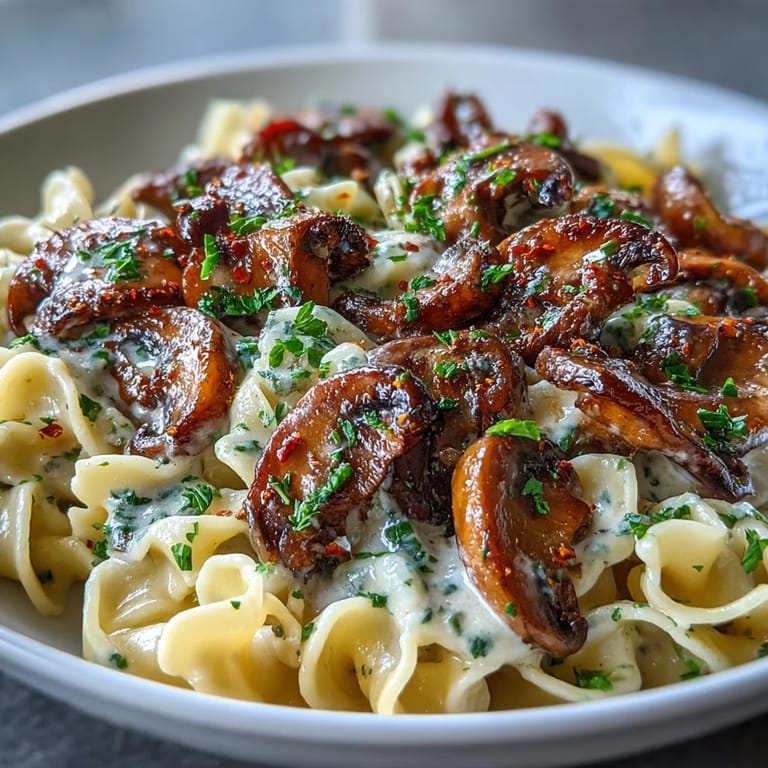
- Serve immediately while everything is still warm and the sauce is still clinging to the noodles, then shower each bowl with fresh parsley and a final grind of black pepper.
 Save
Save This dish became my go-to when I needed comfort but also wanted to feel like I'd made something worth celebrating. There's a generosity to serving stroganoff—it feels abundant without being fussy.
The Magic of Miso in Unexpected Places
Once you understand that miso paste is essentially umami in a jar, you start seeing it differently in your pantry. In this stroganoff, it's doing the work that traditionally might come from beef stock or Worcestershire sauce, creating a depth and savoriness that makes every forkful satisfying. The saltiness means you need less salt overall, and the fermented quality adds a subtle complexity that keeps evolving as you eat.
Mushroom Varieties Matter More Than You'd Expect
I learned this the hard way when I once made this with only button mushrooms because that's what the store had. It was fine, but it was also flat compared to when I use a mix. Shiitake brings an almost meaty intensity, cremini adds earthiness, and buttons provide a subtle sweetness and delicate texture that balances everything. If you can find oyster mushrooms, they become almost silky in the sauce.
Making It Work For Different Tables
This stroganoff is naturally vegetarian, which means it works for more people than many pasta dishes, but it's flexible enough to adapt. For vegan guests, swap the butter for olive oil and use a cashew cream or coconut cream instead of sour cream—it won't taste identical, but it will be genuinely delicious in its own way. You can also lean into the wine note from the original recipe by adding a splash of white wine with the broth for a subtly different character.
- A pinch of thyme or bay leaf simmered with the broth adds herbal notes without demanding attention.
- Fresh dill instead of parsley at the end gives it an almost Scandinavian turn.
- If you want to stretch this to feed more people, toss in a handful of sautéed spinach or peas without changing the core flavor.
 Save
Save This is the kind of dish that quietly becomes a favorite, the one you find yourself making when you want something that feels like a hug in a bowl. It proves that vegetarian cooking doesn't mean sacrificing richness or depth.
Recipe FAQ
- → Can I use different types of mushrooms?
Yes, you can use any combination of mushrooms such as cremini, shiitake, button, porcini, or oyster mushrooms. Mixing varieties adds depth and complexity to the umami flavor profile.
- → How do I make this dish vegan?
Simply substitute plant-based butter and dairy-free sour cream or cashew cream for the dairy ingredients. The miso and soy sauce already provide rich umami flavors that work perfectly in a vegan version.
- → What pasta works best for stroganoff?
Wide egg noodles or fettuccine are traditional choices as their broad surface area holds the creamy sauce well. You can also use pappardelle, tagliatelle, or even penne if preferred.
- → Can I prepare this ahead of time?
The sauce can be made ahead and refrigerated for up to 2 days. Cook the pasta fresh and reheat the sauce gently over low heat, adding pasta water to restore creaminess before combining.
- → Why shouldn't I boil the sauce after adding sour cream?
Boiling sour cream can cause it to curdle and separate, resulting in a broken sauce. Keep the heat low and stir gently to maintain a smooth, creamy texture throughout.
- → What can I serve alongside this dish?
A simple green salad with vinaigrette, roasted vegetables, or crusty bread complement the rich stroganoff beautifully. A crisp white wine like Sauvignon Blanc pairs exceptionally well.