 Save
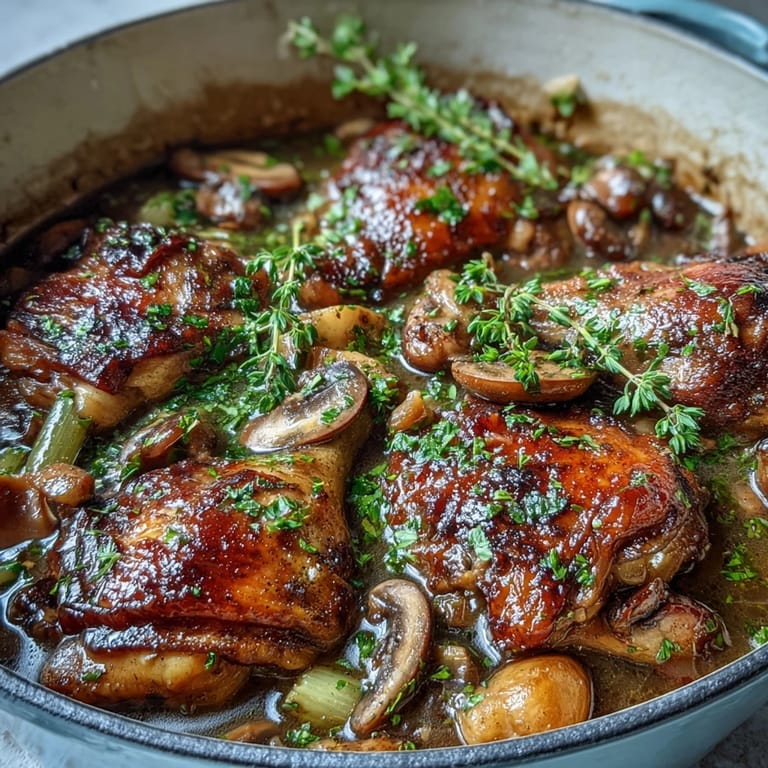
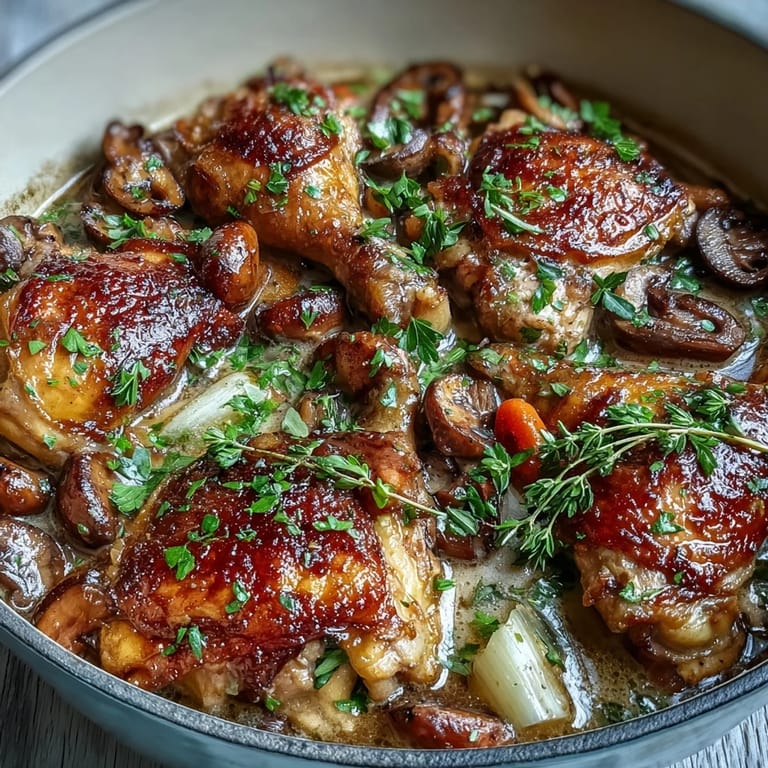
Save There's something about a pot of simmering rosé wine that fills a kitchen with such gentle elegance you almost forget you're cooking dinner. Years ago, a friend visiting from Lyon mentioned her grandmother's coq au vin, but whispered that the real secret was using rosé instead of red wine for something lighter, more approachable. She was right. This version became the dish I reach for when I want to feel a little fancy without spending the entire evening in the kitchen, and it never fails to make people pause mid-conversation to ask for the recipe.
I made this for my partner on an ordinary Tuesday night when we both needed something to believe in, and somehow the smell of mushrooms and herbs braising in that blush-colored wine turned the evening into something we still talk about. The kitchen steamed up, the lighting got soft, and we ended up eating at the table for two hours instead of the usual rushed thirty minutes. Small moments like that remind me why cooking matters.
Ingredients
- Bone-in, skin-on chicken thighs and drumsticks (1.5 kg): These cuts stay juicy and forgiving during the long braise, which is exactly what you want here; white meat would dry out.
- Dry rosé wine (500 ml): The heart of this dish—use something you'd actually drink, nothing cheap or aggressively sweet, or it'll taste off.
- Heavy cream (200 ml): Added near the end to create that silky, luxurious sauce without making it feel heavy.
- Cremini or button mushrooms (200 g): They absorb the wine and release their earthy depth into the braising liquid, transforming it completely.
- Carrots, onion, and leek: The holy trinity that builds flavor from the ground up; don't skip the leek, it adds something subtle and sweet.
- Tomato paste (2 tbsp): A small amount deepens the sauce without making it taste tomatoey; it's about building complexity.
- Fresh thyme and rosemary: These must be fresh, not dried—they perfume the whole pot and make the house smell like a French country kitchen.
- Garlic (2 cloves) and bay leaf: The supporting actors that tie everything together with subtle confidence.
- All-purpose flour (1 tbsp, optional): If your sauce seems thin at the end, this helps thicken it without overpowering anything.
Tired of Takeout? 🥡
Get 10 meals you can make faster than delivery arrives. Seriously.
One email. No spam. Unsubscribe anytime.
Instructions
- Prepare and season your chicken:
- Pat each piece completely dry with paper towels—this is what lets the skin actually brown instead of steam. Season generously with salt and pepper, then set aside while you gather your courage and your vegetables.
- Build a golden crust:
- Heat olive oil until it shimmers, then brown the chicken in batches skin-side down first, about five minutes per side. Don't crowd the pot or the steam will ruin everything; work in two batches if needed and let each piece rest on a plate while you finish the others.
- Soften the vegetables:
- In the same pot with all those beautiful browned bits clinging to the bottom, add your onions, carrots, and leek slices. Let them cook gently for four or five minutes until they start to soften and release their sweetness, then add the mushrooms and cook another few minutes until they begin to release their liquid.
- Build the flavor base:
- Stir in the minced garlic and let it bloom for just about a minute—you'll smell when it's ready. Add the tomato paste and cook it for another minute, stirring constantly, which caramelizes it slightly and removes any raw edge.
- Create a thickening layer (optional):
- If using flour, sprinkle it over the vegetables now and stir gently to coat everything; this helps thicken the final sauce without flour clumps appearing later.
- Deglaze and return to the pot:
- Pour in the rosé wine slowly, scraping your wooden spoon along the bottom of the pot to lift up all those golden, crusty bits that contain pure flavor. Return the browned chicken to the pot, nestling the pieces among the vegetables, then add the bay leaf and fresh herb sprigs.
- Braise low and slow:
- Bring everything to a gentle simmer, cover the pot, and lower the heat so it barely bubbles—you want a whisper of a simmer, not a rolling boil that will toughen the chicken. Cook covered for forty-five minutes until the chicken is fall-apart tender and the vegetables have surrendered completely to the wine.
- Finish with cream and elegance:
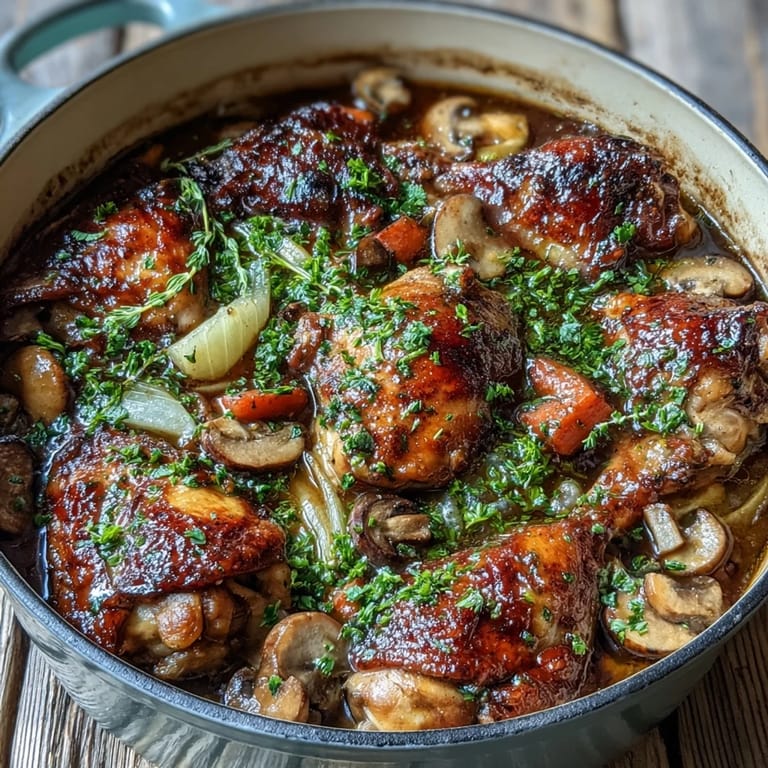
- Fish out the bay leaf and herb sprigs, then stir in the heavy cream and let everything simmer uncovered for five to ten minutes. The sauce will lighten in color and become glossy as the cream marries with the wine reduction, and the whole thing tastes suddenly like something much more sophisticated than you have any right to take credit for.
- Taste and adjust:
- This is non-negotiable—taste it, then season with more salt and pepper if needed. Sometimes it needs just a whisper more, sometimes it needs a firm hand; trust your palate.
 Save
Save There was a moment when my sister tasted this for the first time and her eyes went quiet in that particular way that means someone is experiencing actual joy. She asked if I'd ever considered cooking professionally, which made me laugh because I was just following my instincts and a friend's whispered advice from years ago, but somehow that's exactly how the best dishes happen.
Why Rosé Instead of Red
The traditional coq au vin uses a full-bodied Burgundy, which is magnificent but assertive. Rosé gives you all the wine-braising magic—the acidity, the tannins, the depth—but with a lighter hand and a more delicate flavor that lets the cream shine instead of fighting it. There's also something psychologically beautiful about a pink sauce that tastes this refined; it catches people off guard in the best way.
Timing and Temperature Matter
Everything hinges on keeping that braise at a gentle, barely-visible simmer for the entire forty-five minutes. A rolling boil will break down the chicken too aggressively and make the sauce taste harsh and thin. If your stove runs hot like mine does, use the smallest burner and place the pot slightly off the flame so only half of it gets direct heat—this sounds fussy, but it's the difference between transcendent and merely fine.
Serving Suggestions and Variations
This dish transforms depending on what you serve alongside it—buttered new potatoes turn it into pure comfort, crusty bread becomes essential for sauce-soaking, and rice lets the braising liquid do its work in a cleaner way. If you want more depth, a splash of cognac stirred in just before the cream makes everything feel older and wiser. For lighter meals, substitute half the heavy cream with crème fraîche or even Greek yogurt added at the very end, though the sauce won't be quite as glossy.
- Leftovers actually improve by the next day as flavors deepen and meld together.
- This freezes beautifully for up to three months if you store it in an airtight container.
- Reheat gently on the stovetop, never at a hard boil, so the cream doesn't separate.
 Save
Save This is the kind of dish that turns an ordinary evening into something you remember, the kind that makes people ask you how you learned to cook like this. The answer is always the same: someone shared a moment, a whisper of advice, and you listened.
Recipe FAQ
- → Can I use chicken breasts instead of thighs and drumsticks?
Yes, but thighs and drumsticks are recommended as they remain tender during the long braising process. If using breasts, reduce cooking time to 30-35 minutes to prevent drying out.
- → What type of rosé wine works best?
Choose a dry rosé wine with good acidity. Avoid sweet or overly fruity varieties. A Provence-style rosé or a dry Spanish rosado works beautifully in this dish.
- → Can I make this dish ahead of time?
Absolutely. The flavors deepen when made a day ahead. Prepare through step 7, cool, and refrigerate. Reheat gently and add the cream just before serving.
- → What can I substitute for heavy cream?
Crème fraîche adds tanginess, while half-and-half reduces the richness. For dairy-free, use full-fat coconut cream, though it will alter the traditional flavor profile.
- → How do I prevent the sauce from being too thin?
Use the optional flour coating on vegetables, or simmer uncovered longer to reduce the sauce. You can also remove the chicken and reduce the sauce over higher heat before adding cream.
- → Can I freeze leftovers?
Yes, this dish freezes well for up to 3 months. Cool completely before freezing. The cream sauce may separate slightly when thawed; whisk gently while reheating to restore smoothness.