 Save
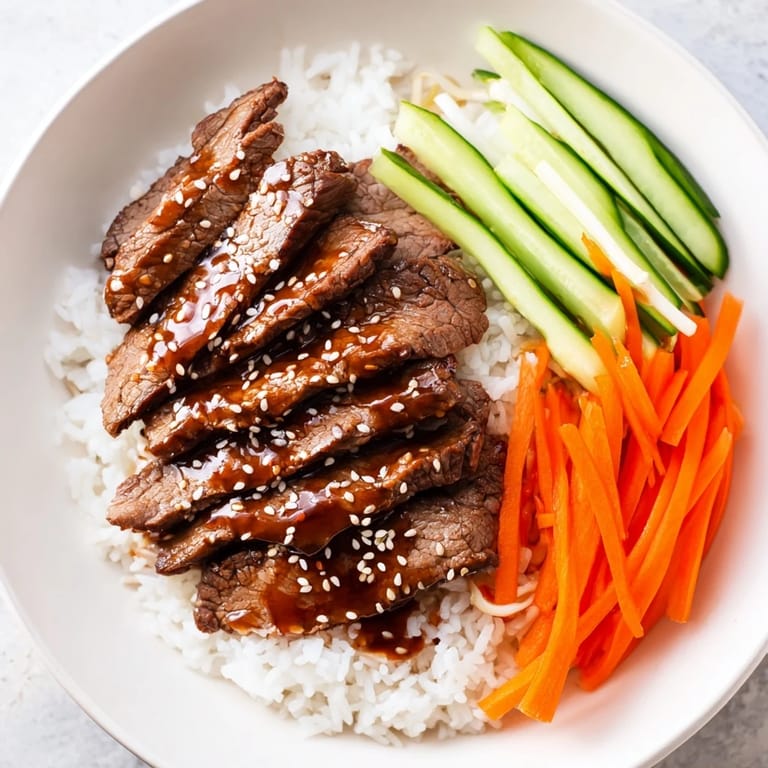
Save The first time I made bulgogi, my kitchen filled with this incredible sweet and savory aroma that had my roommate wandering in asking what smelled so good. I'd been craving Korean food but kept ordering it instead of trying to make it at home, thinking it would be too complicated. Turns out, the magic is mostly in a simple marinade and about fifteen minutes of your time. Now whenever I have thin-sliced beef on hand, this is the first thing I reach for.
I made this for a dinner party once and watched people's faces light up when they took the first bite—there's something about the combination of tender beef, cool vegetables, and warm rice that just works. Someone asked if I'd taken a Korean cooking class, and I laughed because the only thing I'd mastered was reading the recipe carefully and not overthinking it.
Ingredients
- Beef sirloin or ribeye, thinly sliced: The thinner you slice it, the faster it cooks and the better it absorbs the marinade—ask your butcher to do this or partially freeze the beef for easier slicing.
- Soy sauce: This is your umami base, so don't skimp, though you can use tamari if you need gluten-free.
- Brown sugar and Asian pear: These create that signature sweet edge that makes bulgogi addictive; the pear also has natural enzymes that tenderize the meat.
- Sesame oil: Just a tablespoon makes all the difference—it's potent, so resist the urge to add more.
- Ginger and garlic: Mince them fresh, and you'll taste the difference immediately.
- Gochujang: The optional spice element that transforms this from sweet to complex; start with less and adjust to your heat preference.
- Sesame seeds: Toast them yourself if you have time—the flavor is noticeably deeper than pre-toasted.
- Jasmine or short-grain rice: The starch helps catch all those delicious marinade drippings.
- Fresh vegetables for assembly: Keep them crisp and cool to contrast with the warm beef and rice.
Tired of Takeout? 🥡
Get 10 meals you can make faster than delivery arrives. Seriously.
One email. No spam. Unsubscribe anytime.
Instructions
- Mix your marinade:
- Combine soy sauce, brown sugar, sesame oil, rice vinegar, minced garlic, grated ginger, grated pear, and gochujang if using in a bowl and stir until the sugar dissolves. You want it to smell intensely savory and slightly sweet—that's when you know you've got it right.
- Marinate the beef:
- Toss your thinly sliced beef into the marinade and make sure every piece gets coated. Cover and let it sit for at least 15 minutes, though an hour will give you deeper, more tender results if you have the time.
- Cook the beef:
- Get your skillet or wok screaming hot over high heat, then add the beef in a single layer—work in batches if needed so the meat browns instead of steaming. You'll see it caramelize at the edges after just 2 to 3 minutes, which is exactly what you want.
- Assemble your bowls:
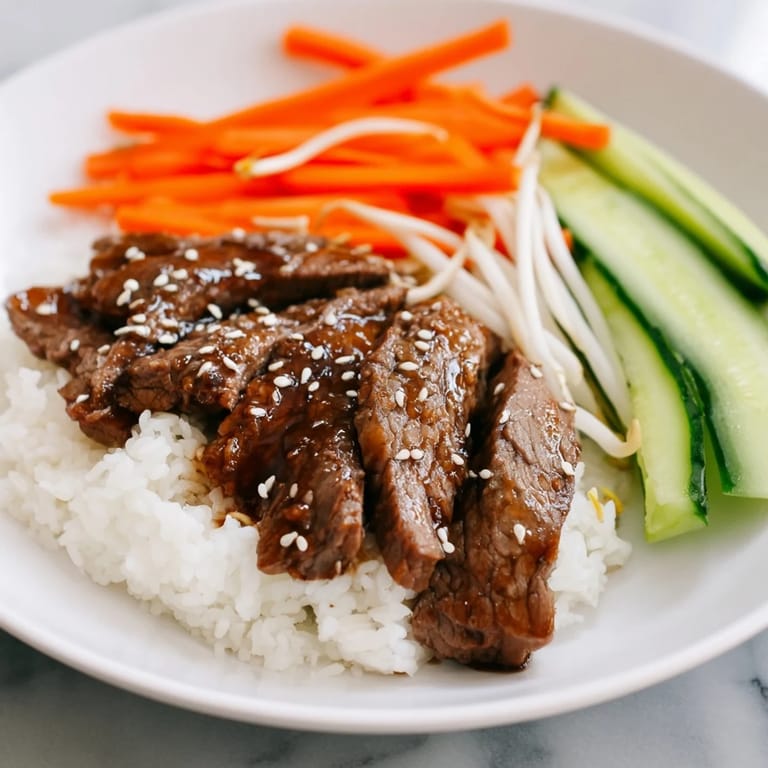
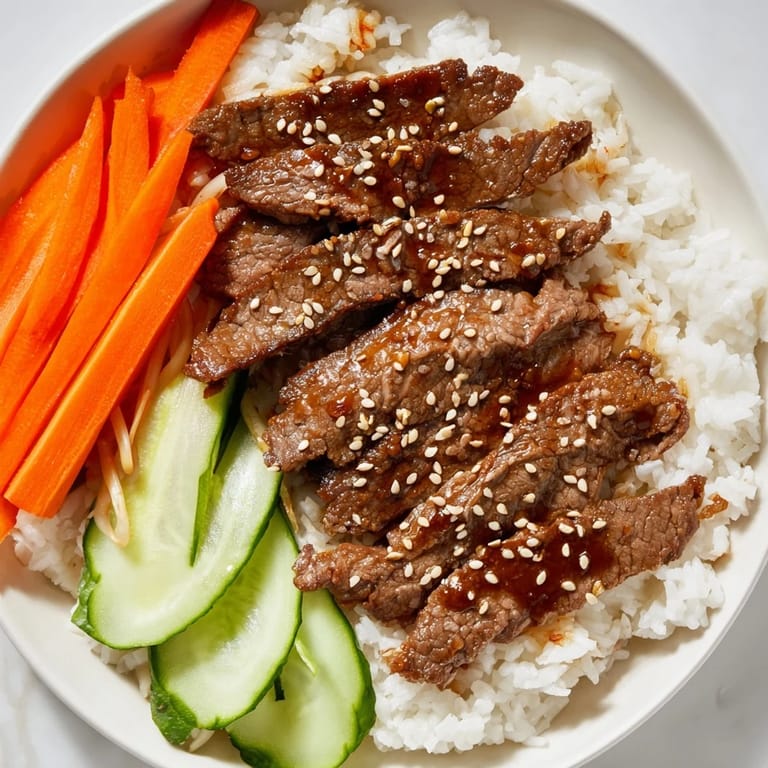
- Start with a generous scoop of warm rice, then arrange the cooked beef on top along with julienned carrots, sliced cucumber, blanched bean sprouts, and kimchi if you're using it. The warm and cool elements playing against each other is half the appeal.
- Finish and serve:
- Scatter extra scallions and toasted sesame seeds over the top and serve immediately while the rice is still warm and everything is fresh.
 Save
Save The best part about this dish is how it brings people together—there's something communal about everyone building their own bowl with exactly what they want. It stopped being just dinner and became the thing I make whenever I want to feel like I'm taking care of someone.
The Marinade Magic
The real secret to bulgogi is understanding that you're not just seasoning the beef—you're using fruit enzymes and umami to actually tenderize and transform it. The grated pear or apple breaks down the muscle fibers while brown sugar and soy sauce caramelize and create depth. I've experimented with substitutes, and while a splash of pineapple juice can work in a pinch, the pear's subtle sweetness hits that perfect balance between savory and indulgent that makes this dish crave-worthy.
Building Your Bowl Strategy
The assembly is where you get to be intentional about texture and temperature contrasts. I always serve the rice warm so it picks up the beef's flavors, while keeping the vegetables as cold and crisp as possible for that refreshing bite. Kimchi adds a funky, fermented edge that elevates the whole bowl, but even without it, the simplicity of fresh cucumber and carrots is satisfying.
Customizing to Your Taste
One of my favorite things about this recipe is how adaptable it is without losing its identity. I've added a fried egg on top for richness, stirred in extra gochujang for heat, and even swapped the rice for cauliflower rice when I was eating lower-carb. The foundation is solid enough that these changes only make it feel more personal to your kitchen.
- Try a drizzle of gochujang mayo on the side if you want creamy heat without changing the whole bowl.
- A squeeze of fresh lime juice right before eating brightens everything up.
- Toast extra sesame seeds and keep them on hand—they're the tiny detail that makes people ask for the recipe.
 Save
Save This dish reminds me why I started cooking in the first place: to create something delicious that makes the people around me happy. It's become my answer to 'what's for dinner' more times than I can count.
Recipe FAQ
- → What cut of beef works best for this dish?
Choose tender, quick-cooking cuts like sirloin or ribeye, thinly sliced for optimal texture and flavor absorption.
- → Can I adjust the spiciness of the dish?
Yes, adding or omitting gochujang allows you to control the heat level according to your preference.
- → What is the role of grated pear in the marinade?
Grated pear tenderizes the meat and adds a subtle natural sweetness to balance the savory marinade.
- → Are there alternatives to jasmine rice for the bowl?
You can substitute with short-grain white rice or a low-carb option like cauliflower rice for variety.
- → How can I enhance the dish's richness?
Adding a fried egg on top introduces extra richness and complements the flavors beautifully.