 Save
Save There's something about the sizzle of bacon that stops you mid-conversation. Years ago, I'd inherited a cast-iron skillet from my grandmother and spent weeks making heavy, creamy salads until a friend visiting from Paris laughed gently and said, why ruin good greens with mayo? That night, I learned that warm fat and vinegar could make something both comforting and bright, that wilted doesn't mean defeated. This salad became my answer to her quiet challenge.
I made this for a group of people who claimed they hated salad, and watched them go quiet as they ate. The bacon was crispy, the dressing pooled slightly on their plates, and nobody asked for bread. Sometimes the smallest dishes teach you the most about hospitality.
Ingredients
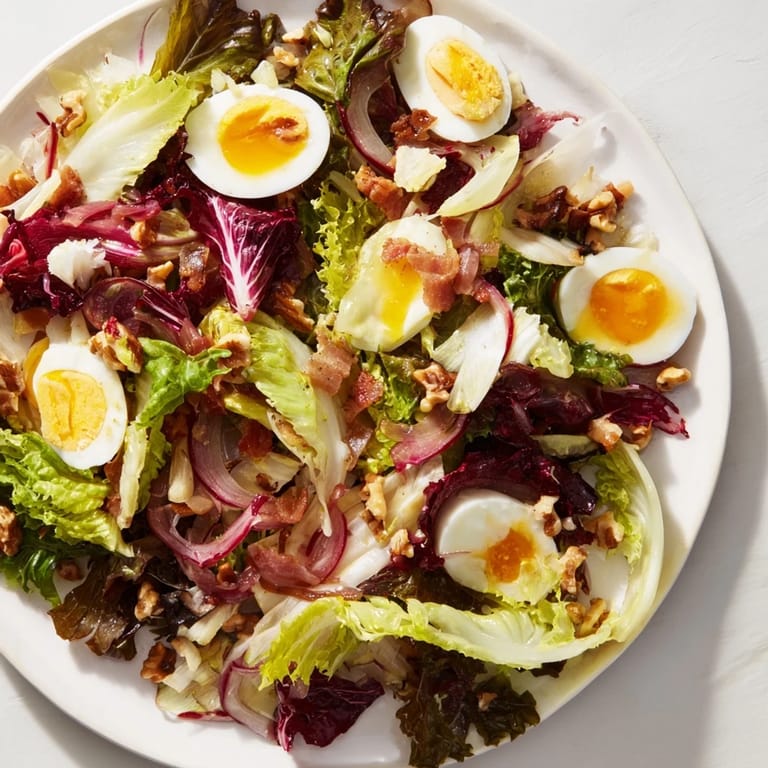
- Mixed bitter greens (4 cups): Escarole, frisée, dandelion, and radicchio are stronger personalities than iceberg—they don't collapse into nothing when warm liquid touches them, and their slight bite is exactly what the bacon dressing wants.
- Red onion (1 small): Slice it thin so it wilts into ribbons and adds sweetness and crunch at the same time.
- Thick-cut bacon (6 slices): Thick pieces render more slowly and stay crispy longer; thin bacon turns to ash in a blink.
- Red wine vinegar (2 tablespoons): The acid is what wakes up everything; use good vinegar because you taste every drop.
- Dijon mustard (1 tablespoon): This acts as both flavor and binder, helping the dressing hug the greens instead of just pooling at the bottom.
- Honey (1 teaspoon): A whisper of sweetness that doesn't announce itself, just balances the sharp and savory.
- Black pepper and salt: Freshly ground pepper matters here because you'll taste it in every bite.
- Extra-virgin olive oil (2 tablespoons): Added last so it doesn't break the emulsion; good olive oil finishes the dressing with body.
Tired of Takeout? 🥡
Get 10 meals you can make faster than delivery arrives. Seriously.
One email. No spam. Unsubscribe anytime.
Instructions
- Prep the greens with intention:
- Rinse and dry them completely—water left on the leaves will dilute the dressing and make them taste thin. Tear larger pieces into bite-size pieces so the warm dressing coats everything evenly, and slice the red onion thin so it softens alongside the greens.
- Render the bacon until it speaks:
- Over medium heat, let the bacon talk as it cooks—you'll hear it crackle when it's almost ready. About 7 to 9 minutes, the edges should be dark and crispy, never limp or chewy. Transfer to a paper towel-lined plate and let the fat stay behind; this is where the magic lives.
- Build the warm dressing:
- Lower the heat and add vinegar, mustard, honey, pepper, and salt directly into the warm bacon fat, scraping the bottom of the skillet where all the caramelized bits cling. These browned scraps are concentrated flavor; don't leave them behind. Whisk everything together until the mustard dissolves and the mixture looks cohesive.
- Add oil with patience:
- Pour the olive oil in slowly while whisking so the warm fat and vinegar emulsify instead of separating. This takes maybe a minute of gentle, steady whisking, and the dressing will suddenly thicken and turn glossy. You'll feel the difference under the whisk.
- The moment of wilt:
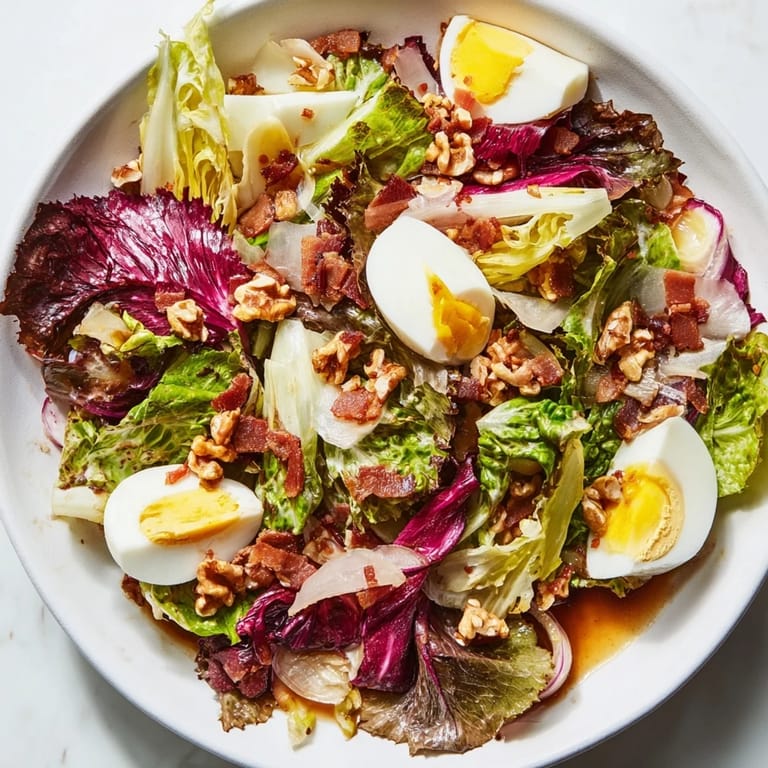
- Pour the hot dressing immediately over the greens and onions while it's still steaming, add the crisp bacon back, and toss well. The heat will soften the greens just slightly—they should still have some resistance, not surrender completely. Taste as you go; salad seasoning is personal.
- Finish and serve warm:
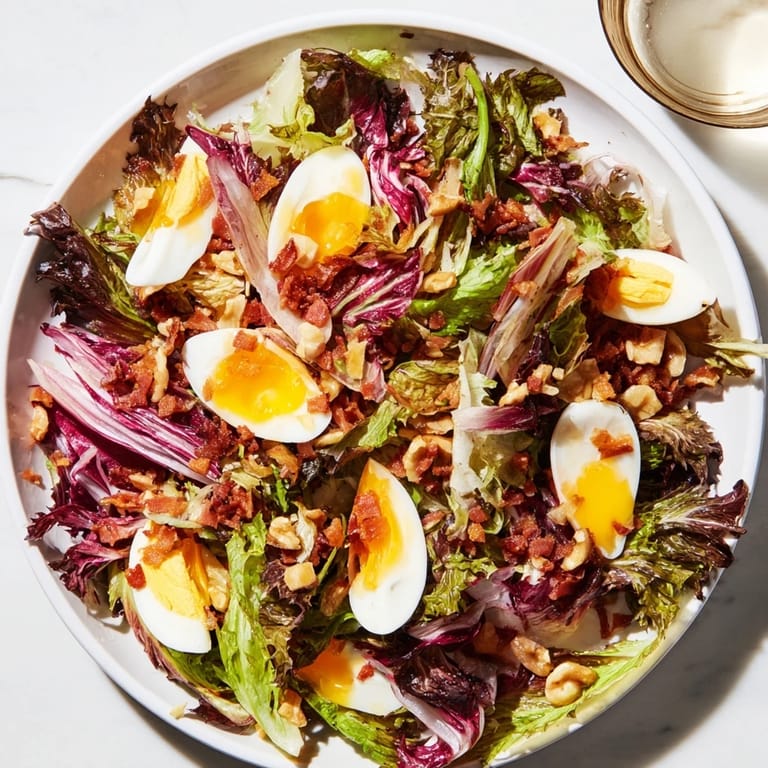
- Arrange portions on plates while everything is still warm, top with eggs and nuts if you're using them, and serve right away. Warm salad is a different creature than cold; it's comforting in a way that's hard to explain until you taste it.
 Save
Save My neighbor once asked why I was making salad as a main course instead of a side, and I realized in that moment that warm things and bitter things had shifted for me. Comfort doesn't always come from cream or butter; sometimes it lives in the exact temperature of fat and vinegar, in greens that haven't surrendered.
The Alchemy of Bitter and Warm
Bitter greens used to intimidate me until I understood that bitterness isn't a flaw—it's an invitation to pair with something rich. The rendered bacon fat and warm vinegar aren't trying to hide that bitterness; they're dancing with it, making it round and whole instead of sharp. This is why restaurants charge money for things that cost almost nothing to make at home.
When to Make This
This salad moves seasons well. In winter, it feels warm and grounding. In spring, when new bitter greens appear at the market, it tastes like something green and alive. The thick-cut bacon stays crispy even as the dressing cools, so you can make it for lunch leftovers, though honestly, it's best eaten warm and fresh, when the greens still have a little steam rising from them.
Variations and Small Rebellions
The bones of this salad are strong enough that you can shift things around without it falling apart. If you have maple syrup instead of honey, use it—the deeper molasses notes will make the dressing taste like autumn. Thin apple slices add something crisp and slightly sweet that plays beautifully with the bitter and savory. For a vegetarian version, skip the bacon entirely and sauté sliced mushrooms in olive oil until they brown and release their water; they won't give you the same smokiness, but they'll give you something equally satisfying.
- Add a soft cheese like chèvre or blue if you want creaminess without mayo.
- Poached eggs instead of hard-boiled will make the warm dressing run into the yolk like a sauce.
- If you're generous with the nuts, they become the textural backbone of the dish.
 Save
Save This salad taught me that sometimes the smallest meals hold the biggest lessons. Warm and bitter, simple and complete, it's proof that the best cooking doesn't need a long list or complicated timing—just attention and the right heat.
Recipe FAQ
- → What types of greens work best for this salad?
Bitter greens like escarole, frisée, dandelion, radicchio, and chicory provide the perfect mix of texture and flavor to balance the warm bacon dressing.
- → How does the warm bacon dressing affect the greens?
The hot dressing slightly wilts the bitter greens, softening their texture and melding the smoky, tangy flavors into the salad.
- → Can the dressing be made without bacon fat?
For a vegetarian alternative, skip the bacon and use extra olive oil instead, or sauté mushrooms to add umami richness.
- → What garnishes enhance this dish?
Hard-boiled eggs and toasted walnuts or pecans add creamy and crunchy contrasts, complementing the savory bacon flavors.
- → Is this salad suitable for gluten-free diets?
Yes, the ingredients are naturally gluten-free, but always check condiment labels to avoid hidden gluten.