 Save
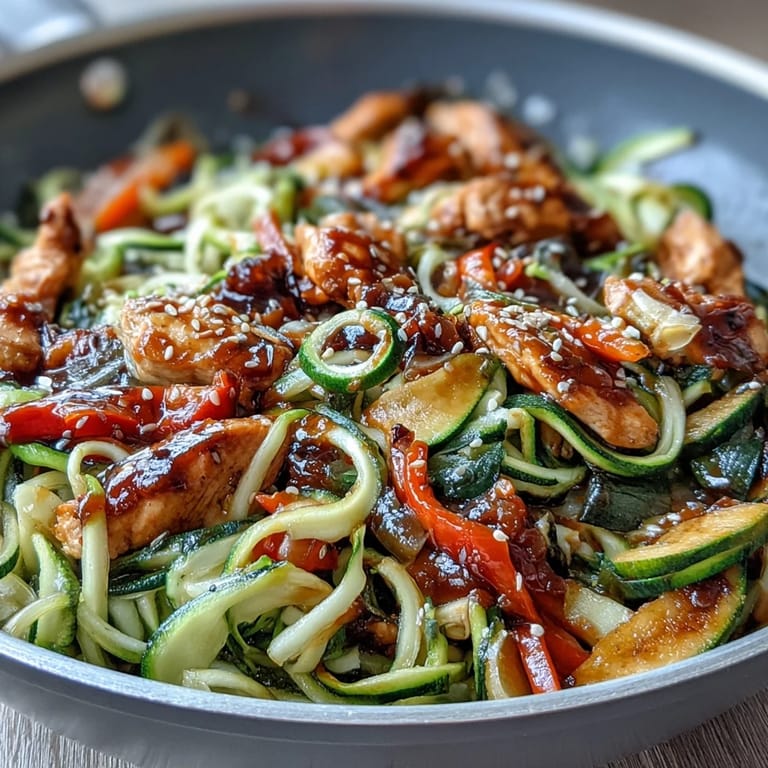
Save There's something about the sizzle of chicken hitting a hot wok that makes everything else stop—my kitchen fills with that unmistakable aroma of garlic and ginger, and suddenly a weeknight dinner feels like an occasion. I stumbled onto zucchini noodles almost by accident, hunting for ways to eat lighter without sacrificing the satisfying, take-out-quality meals I actually crave. This stir fry became my answer, the kind of dish that tastes indulgent but leaves you feeling energized instead of sluggish.
I made this for my sister on a Thursday evening when she mentioned wanting to eat healthier but couldn't face another salad, and watching her twirl those zucchini noodles on her fork while actually asking for the recipe felt like a small victory. There's something special about feeding someone food that tastes indulgent but aligns with what their body actually needs, and she's made it at least twice a week since.
Ingredients
- Boneless, skinless chicken breast, thinly sliced: Slice against the grain for maximum tenderness, and don't skip this step—it makes the difference between chewy and silky.
- Zucchini spiralized into noodles: Use medium zucchini that aren't waterlogged; oversized ones tend to be watery and will release liquid when cooked.
- Red bell pepper and carrots: The color isn't just pretty—red peppers bring sweetness and carrots add natural crunch that holds up beautifully during the quick cook time.
- Red onion, garlic, and fresh ginger: These three are non-negotiable; they're the aromatic backbone that makes people ask what smells so good.
- Low-sodium soy sauce or tamari: Low-sodium matters here because the sauce concentrates as it cooks, and you want control over the salt level.
- Sesame oil: Just a tablespoon goes a long way—it's potent, so resist the urge to pour more or you'll overpower everything else.
- Rice vinegar and honey: The vinegar cuts through the savory richness, while honey rounds out the sauce with a subtle sweetness that feels balanced, not cloying.
- Olive oil or neutral cooking oil: Use whatever has a high smoke point since you're cooking over medium-high heat.
Tired of Takeout? 🥡
Get 10 meals you can make faster than delivery arrives. Seriously.
One email. No spam. Unsubscribe anytime.
Instructions
- Build your sauce first:
- Whisk together soy sauce, sesame oil, rice vinegar, honey, cornstarch if using, and chili flakes in a small bowl, then set it within arm's reach of your stove. Having this ready means you won't scramble halfway through cooking when everything's happening at once.
- Sear the chicken until golden:
- Heat oil in a large skillet or wok over medium-high heat, then add chicken in a single layer and let it cook undisturbed for a minute or two before stirring—this creates those caramelized edges that taste incredible. Once it's cooked through and golden, about 4 to 5 minutes total, slide it onto a plate.
- Wake up the aromatics:
- In the same pan, add minced garlic, grated ginger, and sliced onion, and let them sizzle for exactly one minute until the kitchen smells like a Thai restaurant. This is the moment where your eyes might water a little from the ginger fumes, but that means it's working.
- Build texture with vegetables:
- Add the carrots and bell pepper, stirring frequently for 2 to 3 minutes until they're just beginning to soften but still have a slight snap to them. This timing is personal preference, but I like mine with a bit of resistance because soggy stir fry defeats the purpose.
- Add zucchini noodles with restraint:
- Toss in the spiralized zucchini and stir constantly for only 1 to 2 minutes—watch them like a hawk because they can go from crisp-tender to limp surprisingly fast. The noodles will release a bit of water, which is why you keep the heat high and the motion constant.
- Bring everything together:
- Return the chicken to the pan, pour in your sauce, and toss everything for 1 to 2 minutes, letting the sauce coat each vegetable and slight thicken from the cornstarch if you added it. Taste as you go and adjust seasonings because this is your moment to make it exactly how you want it.
- Finish and serve:
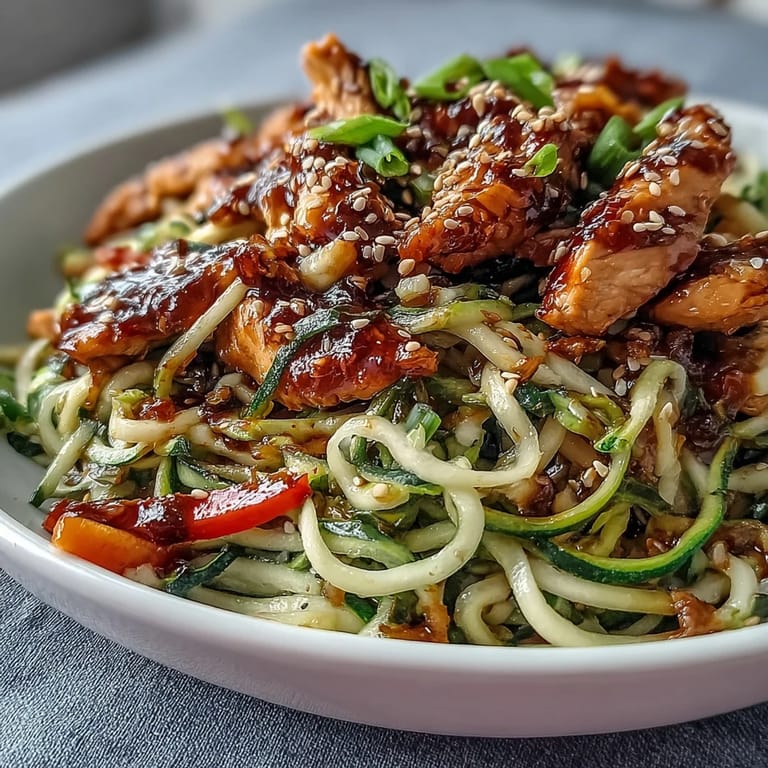
- Remove from heat immediately and top with sliced green onions while everything's still steaming. The residual heat will slightly soften them while keeping their fresh bite intact.
 Save
Save My favorite part of this dish is watching someone take their first bite and realizing it's low-carb, because they're usually too busy enjoying the flavors to notice what's missing. There's freedom in eating something this delicious that also makes you feel genuinely nourished afterward.
Why This Works as a Weeknight Staple
The magic of this stir fry lives in its speed and the fact that nothing requires fussy technique—you're not making stocks or waiting for things to braise, just quick, hot cooking that locks in flavor and texture. I've made it on nights when I had twenty minutes before plans, and it delivered every single time, which is the hallmark of a recipe worth keeping around. The best part is how satisfying it feels despite being genuinely healthy, which means you'll actually crave it instead of forcing yourself to eat it.
Customizing Your Bowl
Once you understand the basic ratio of protein, vegetables, and sauce, this dish becomes a canvas for whatever you have on hand or whatever you're hungry for that day. I've swapped in shrimp when I felt fancy, used tofu when cooking for vegetarian friends, and added whatever vegetables needed rescuing from my crisper drawer. The sauce stays consistent enough that variations feel intentional rather than improvised, which is exactly the kind of flexibility that keeps recipes from getting boring.
The Sauce is Everything
This sauce is balanced in a way that took me a few attempts to understand—it needs salty, sour, sweet, and spicy elements working in concert, none of them dominating the conversation. I learned this the hard way by over-salting the first version, which taught me to taste as I go and adjust individual components rather than dumping everything in at once. The beauty of whisking it beforehand is that you can tweak it while your chicken cooks, meaning you'll get it right before it ever touches your vegetables.
- The cornstarch is optional but transforms thin sauce into something that clings to the vegetables and noodles rather than pooling at the bottom of the pan.
- Start with less chili flakes than you think you need because heat intensifies as it sits, and you can always add more but you can't take it out.
- Taste the sauce straight from a spoon before it hits the hot pan so you understand its flavor profile and know exactly what adjustments to make.
 Save
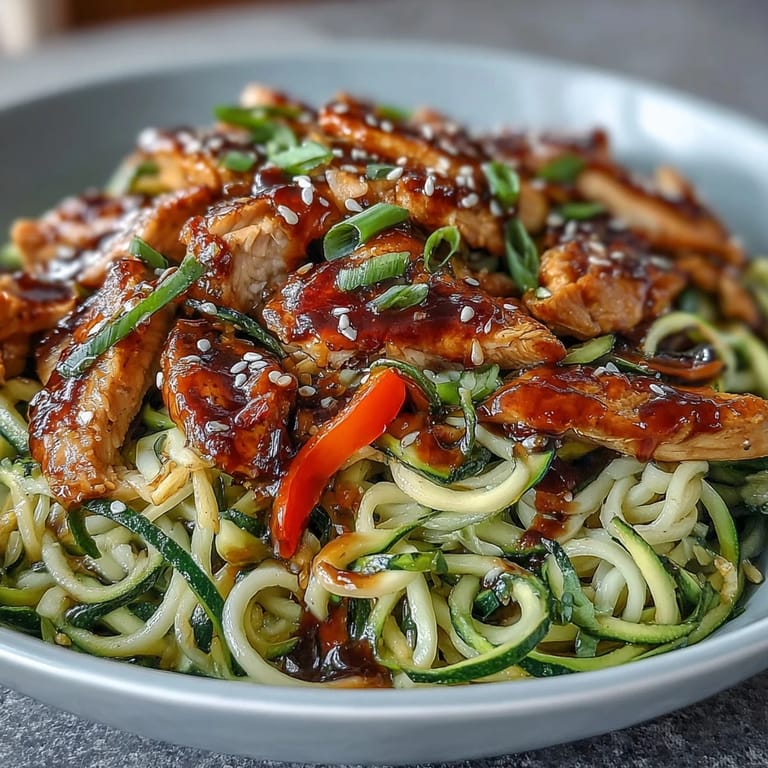
Save This is the kind of recipe that proves healthy eating doesn't mean compromise—it means knowing how to build real flavor in quick, efficient ways. Make it once and it becomes a trusted friend in your kitchen rotation.
Recipe FAQ
- → How do I prevent zucchini noodles from becoming soggy?
Stir-fry zucchini noodles briefly, just 1-2 minutes, to maintain their crisp texture and avoid excess moisture.
- → Can I use another protein instead of chicken?
Yes, tofu is a great alternative for a vegetarian-friendly option, offering similar texture and absorbing the sauce well.
- → What sauce substitutes work for gluten-free needs?
Tamari is an excellent gluten-free substitute for soy sauce, maintaining the savory flavor without gluten.
- → Is it necessary to use fresh ginger and garlic?
Fresh ginger and garlic add essential aroma and depth, enhancing the overall flavor of the dish significantly.
- → How can I add heat to this stir fry?
Incorporate chili flakes or fresh chili peppers during cooking for a subtle to medium spicy kick according to taste.
- → What oil is best for stir-frying chicken and vegetables?
Neutral oils like olive or vegetable oil work well due to their high smoke points and mild flavor.