 Save
Save The sizzle of sausage and the aroma of sautéing cabbage are my favorite kind of kitchen music after a long weekday. Sometimes, all I need is the sound of veggies hitting hot oil to turn my mood around, and this Cabbage and Sausage Skillet delivers exactly that comfort. One sticky summer evening, after returning from the market with a knobby cabbage and a ring of kielbasa, I found myself drawn to this rustic, quick-fix dinner. It’s the tang of mustard and the pop of caraway seeds that always surprise me, transforming humble ingredients into something you want to dig your fork into immediately. Maybe it’s the ease, or maybe it’s the smell—either way, this dish finds its way to my table more often than I expect.
I remember tossing this skillet together one winter when my friends dropped by unannounced on a Thursday. The laughter grew louder as the smell of frying sausage filled the kitchen, and soon everyone found themselves huddled around the stove, stealing bites before I’d even finished. That night, the cabbage took on a life of its own, uniting us over simple flavors and quick fixes. Even now, I can almost hear the clatter of forks and the scraping of the pan as someone insisted on seconds. There was nothing fussy about it—just shared warmth and a meal that stretched with every extra guest.
Ingredients
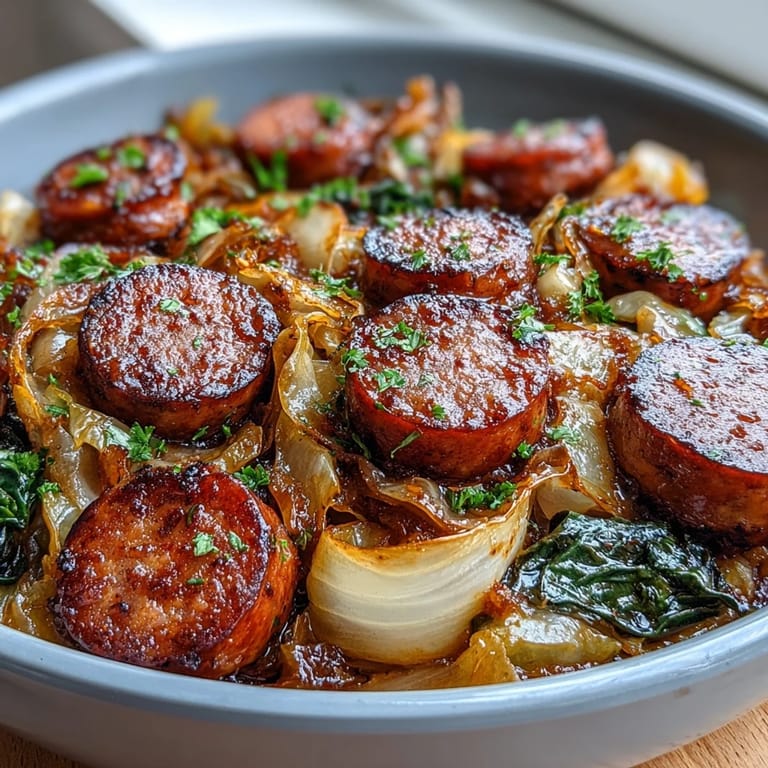
- Smoked sausage (kielbasa or andouille, sliced): The smoky, seasoned flavor turns every bite into something more special; browning it first is the key for little crispy edges.
- Green cabbage (cored and sliced): Don’t worry about slicing it perfectly—a little irregularity adds to the rustic charm and keeps things tender without getting soggy.
- Yellow onion (thinly sliced): Onion lays a subtle, sweet base that makes the finished dish extra comforting; make sure to slice it thin so it melts down easily.
- Garlic (minced): Two cloves do the trick, but if you love garlic, don’t be shy—I sometimes add an extra for a punchy aroma.
- Carrot (peeled and sliced): I like to slice the carrot on a diagonal for bigger pieces that keep their bite; it brings a touch of color and gentle sweetness.
- Olive oil: This keeps everything from sticking and lets the veggies caramelize just enough; if you’re out, a neutral oil works in a pinch.
- Whole grain mustard: This is the secret ingredient that brightens everything—whole seeds make for a pop in texture and flavor.
- Apple cider vinegar: Lifts the dish and balances richness; I once swapped white wine vinegar and it still brought the right spark.
- Caraway seeds (optional): Their anise-like flavor adds a subtle European touch—just a pinch changes the mood of the whole pan.
- Salt and freshly ground black pepper: Never underestimate a final sprinkle; season in layers as you go.
- Fresh parsley (chopped): Scatter it on last for freshness and a splash of green—it’s optional, but I always reach for it if I have some.
Tired of Takeout? 🥡
Get 10 meals you can make faster than delivery arrives. Seriously.
One email. No spam. Unsubscribe anytime.
Instructions
- Get the skillet hot:
- Add olive oil to a large skillet over medium-high heat—it should shimmer and glide easily before you start.
- Brown the sausage:
- Scatter in the sausage rounds and listen for that sizzle; flip occasionally until both sides show caramelized, golden spots, then scoop them out and set aside.
- Sauté the aromatics:
- Toss onion and carrot into the same pan (don’t clean it!) and stir, letting the veggies pick up any flavorful bits left behind for about three to four minutes.
- Infuse with garlic:
- Stir in your minced garlic for just a minute, watching it go fragrant but not brown.
- Cabbage joins in:
- Heap in the sliced cabbage and sprinkle over caraway if using; stir often as everything softens and some edges start to turn golden—patience gives the best flavor.
- Bring it all together:
- Return the sausage, then add the whole grain mustard and vinegar—mix well so the tangy steam puffs up and everything is coated.
- Simmer and meld:
- Turn the heat low, cover, and let it all nestle together for five to seven minutes, so the cabbage becomes silky and the flavors merge.
- Taste and finish:
- Season with salt and pepper—taste and tweak as needed—then, just before serving, shower with parsley for a fresh lift.
 Save
Save We set the skillet in the center of the table on a cold evening, and suddenly the meal became an excuse to sit a little longer, passing hunks of bread and chasing cabbage ribbons around our plates. It’s the sort of dish that makes a regular night feel special, just because you’re sharing it.
No-Fuss Meal Prep for Busy Nights
One of the best parts of this recipe is how forgiving it is on rushed evenings. I’ve chopped the veggies the night before or sliced sausage in the morning when I know dinner will be a last-minute scramble. Everything holds well in the fridge, and once the pan is hot, it’s only minutes until dinner. It helps knowing clean-up will be just one pan too.
Swapping Ingredients Without Stress
I’ve tried chicken sausages, red cabbage instead of green, and even snuck in a handful of spinach right at the end when leftovers linger in the fridge. The flavors shift a bit, but the spirit of the dish never changes: hearty, satisfying, and endlessly adaptable. There’s freedom in knowing you can play around based on what’s at hand.
Getting That Perfectly Caramelized Cabbage
What I learned: don’t crowd the pan or rush the cabbage. Giving everything some room lets the veggies brown instead of just steam, coaxing out their natural sweetness and building real depth of flavor. Every time the cabbage edges go toasty, I’m reminded of how easy it is to elevate something simple with a little patience and good timing.
- If your pan feels too full, let some water cook off before covering.
- Don’t forget to scrape up the browned bits at the bottom after browning sausage—they’re gold.
- Finish with parsley or even some lemon zest if you want a zingy lift.
 Save
Save I hope you’ll find yourself going back for seconds, just like my friends do. Sometimes the simplest dishes become the ones we crave the most.
Recipe FAQ
- → Can I use turkey or chicken sausage instead of smoked sausage?
Yes. Use turkey or chicken sausage for a lighter result; add a little extra oil when browning since leaner sausages release less fat. Watch for milder flavor and consider boosting seasoning or a pinch of smoked paprika.
- → How do I avoid soggy cabbage?
Keep the skillet hot and stir frequently so cabbage browns rather than stews. Slice the cabbage moderately thin, avoid overcrowding the pan, and remove the lid for the final minutes to encourage browning and moisture evaporation.
- → What sausages work best here?
Smoked kielbasa, andouille or similar smoked sausages give the best smoky depth. For heat, choose spicy varieties; for milder flavor, opt for classic smoked pork sausages or a cooked bratwurst-style link.
- → How can I make this dish gluten-free?
Use a certified gluten-free sausage and check the whole-grain mustard label for gluten-containing ingredients. Most fresh produce and basic condiments are naturally gluten-free, but processed sausages can carry hidden gluten.
- → How long will leftovers keep and how should I reheat them?
Store leftovers in an airtight container in the refrigerator for 3–4 days. Reheat gently in a skillet over medium heat with a splash of water or broth to loosen, or microwave in short bursts until warmed through.
- → Can I add potatoes to make the meal heartier?
Yes—parboil small potatoes or use leftover boiled potatoes cut into chunks and add them when returning the sausage to the pan so they warm through and pick up the browned flavors without overcooking the cabbage.