 Save
Save There's something about the first time someone handed me a snack board that made me realize I'd been overthinking lunch. My friend set down this sprawling arrangement of vegetables, cheeses, and dips on her kitchen counter, and I just stood there grabbing things in whatever order felt right—a cherry tomato, some cheese, a cracker, back to a snap pea. No rules, no plating stress, just good food arranged beautifully. That's when it clicked: this is what eating should feel like, especially when you're busy but still want something that feels intentional.
I made one of these for a work lunch event last spring, and it became the thing people kept coming back to all afternoon. Watching my coworkers build their own little combinations—pairing the gouda with cranberries, dipping snap peas in ranch like it was the most natural thing ever—made me understand that boards aren't just about feeding people. They're about giving people permission to enjoy food their own way, without someone else's rules.
Ingredients
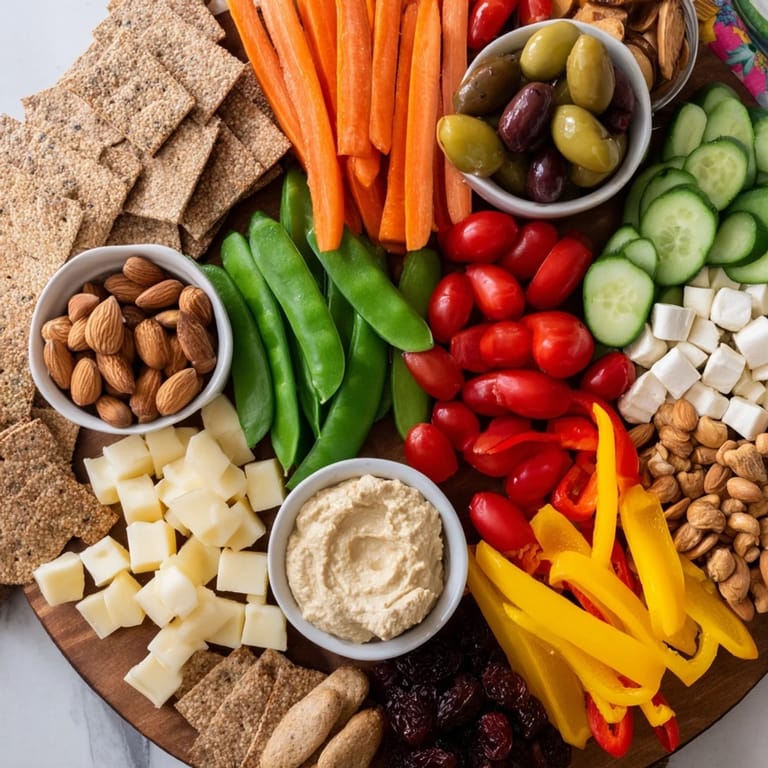
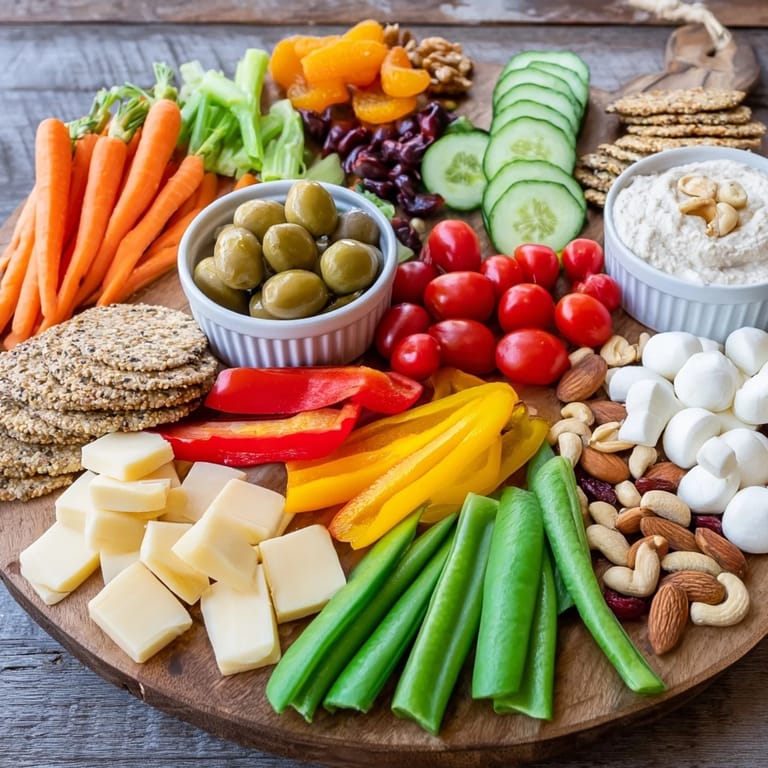
- Baby carrots: Sweet without being aggressively so, and they stay crisp longer than cut carrots because they haven't oxidized.
- Cucumber slices: The unsung hero of any board; they're refreshing and they help everything else taste better by comparison.
- Cherry tomatoes: Choose ones that are actually ripe and smell like tomato, not like the grocery store; the difference is everything.
- Bell pepper strips: Mixed colors aren't just pretty—red ones are sweeter, yellow ones are mellow, and green ones have a slight bite that keeps things interesting.
- Sugar snap peas: Eat these raw and you'll understand why people crave them; cooking them would be a crime.
- Hummus: The creamy anchor that makes the whole board feel sophisticated without requiring you to know what tahini is.
- Ranch dressing or Greek yogurt dip: Ranch is the comfort choice; Greek yogurt dip is the one you make when you want to feel less guilty about dipping.
- Cheddar cheese, cubed: The workhorse cheese that nobody argues about; it pairs with everything.
- Mozzarella balls (bocconcini): These little guys are fun to pop in your mouth and they taste milky and fresh if you get the good ones.
- Gouda or Swiss cheese, sliced: This is where you add a note of sophistication; the slight sweetness of gouda or the holes in Swiss make people pause and notice.
- Whole grain crackers: The texture matters here; choose ones with real seeds if you can, not the pale substitutes.
- Roasted nuts: Toast them yourself if you have time; the smell alone makes the whole board feel more deliberate.
- Olives: The salty, briny thing that reminds you this isn't just a snack, it's a moment.
- Dried fruit: Tart apricots and cranberries cut through the richness; figs are if you're feeling fancy.
Tired of Takeout? 🥡
Get 10 meals you can make faster than delivery arrives. Seriously.
One email. No spam. Unsubscribe anytime.
Instructions
- Prep everything like you mean it:
- Wash your vegetables and dry them thoroughly—wet vegetables make the board look sad and turn soggy fast. Slice your cucumbers and peppers while thinking about how you want them to look, not just how they'll taste.
- Create a base with vegetables:
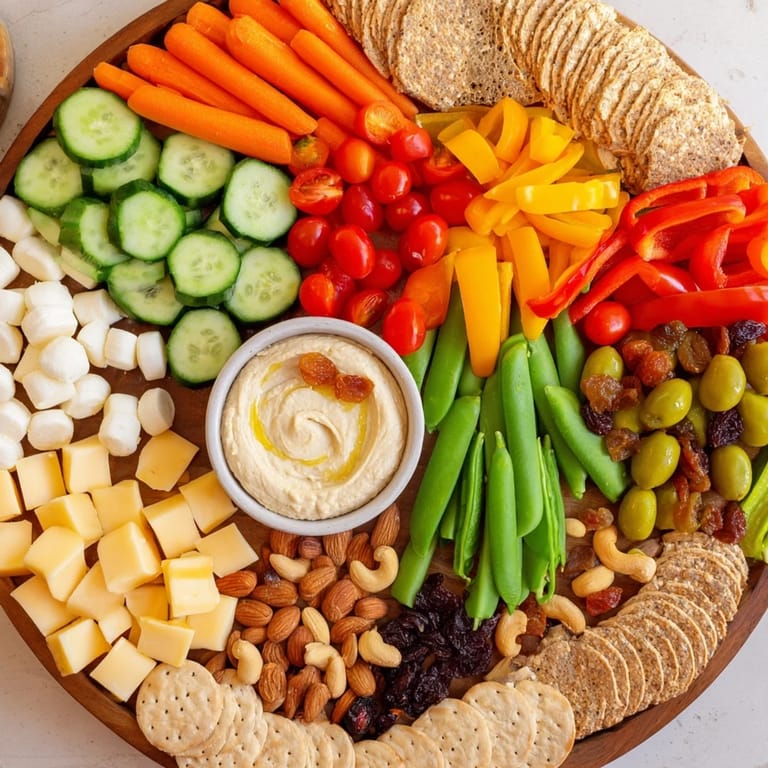
- Arrange your vegetables in loose sections across your board, leaving obvious gaps that beg to be filled. Think in terms of color and shape variety, so nobody's eye gets bored when they look down.
- Nestle in the dips:
- Put your dips in small bowls and position them where they won't tip over if someone reaches across, but where they're still impossible to miss. The dips are the connective tissue of the whole board.
- Cluster the cheeses:
- Group your different cheeses together in little neighborhoods rather than scattered randomly; this makes the board feel intentional and helps people see all their options at once. Let each type of cheese have its own little territory.
- Fill the gaps strategically:
- Distribute your crackers, nuts, olives, and dried fruit into the spaces you left, aiming for a balance where everything looks both full and not crowded. This is where the board goes from nice to actually beautiful.
- Serve or hold it:
- If you're serving immediately, you're good to go. If you need to wait, cover it loosely with plastic wrap and refrigerate; the vegetables will stay crisp and the board will look just as good when you uncover it.
 Save
Save The moment I realized boards were special wasn't about the food itself—it was watching someone I barely knew relax at the table because nobody had decided what they should eat. They just picked what they wanted, built their own bites, and suddenly felt like they belonged. That's the real magic of this.
The Art of Arrangement
There's a reason some boards feel chaotic while others feel luxurious, and it's not about having more stuff. It's about understanding negative space—those little gaps between ingredients that let your eye rest. Think of your board as a landscape where the vegetables are the hills, the cheeses are the villages, and the crackers are the roads connecting them. When you leave room to breathe, people feel invited to explore rather than overwhelmed by too many choices at once.
Customization is the Whole Point
The beauty of a snack board is that it's less a recipe and more a philosophy. If you love spicy things, add sliced jalapeños or a hot pepper dip. If you're avoiding certain foods, swap them for something you actually want to eat. Hard-boiled eggs, sliced deli meats, roasted chickpeas, marinated artichokes—all of these belong here if they appeal to you. The only rule is that everything should be something you'd genuinely choose to eat on its own, not something you're adding for decoration.
Making It Work for Different Diets
Boards are secretly democratic in a way that formal meals aren't. Vegetarians can skip the meats, vegans can bring their own cheeses, people with gluten issues can choose nuts and dried fruit instead of crackers. Everyone at the table is eating exactly what they want, and nobody feels like they're eating a modified version of someone else's meal. It's the kind of meal where accommodating different preferences feels natural instead of like work.
- For vegan boards, swap out cheese for cashew cheese or store-bought dairy-free options, and use hummus or tahini-based dips.
- Gluten-free crackers and seeds work beautifully as a crunchy substitute if you need to avoid wheat.
- Add protein with hard-boiled eggs, nuts, seeds, or roasted chickpeas if you're making this the main event rather than a snack.
 Save
Save This board is really just an excuse to sit down and eat without rushing, to pick and graze and enjoy food in whatever order feels right. Make it, share it, and watch what happens when you give people permission to feed themselves exactly how they want.
Recipe FAQ
- → What vegetables work best on this board?
Fresh, crunchy vegetables like baby carrots, cucumber slices, bell pepper strips, cherry tomatoes, and sugar snap peas offer variety and color.
- → Can I substitute the cheeses?
Yes, options like Swiss, gouda, or dairy-free alternatives can be used to suit dietary needs and preferences.
- → How should I serve the dips?
Place dips in small bowls arranged on the board for easy access and attractive presentation.
- → Are the crackers gluten-free?
You can choose whole grain gluten-free crackers to keep the board suitable for gluten-sensitive individuals.
- → What are some good drink pairings?
Light white wines, sparkling water, or iced tea complement the fresh and savory elements beautifully.
- → How long can leftovers be stored?
Cover and refrigerate leftovers promptly; best consumed within a day for optimal freshness.