 Save
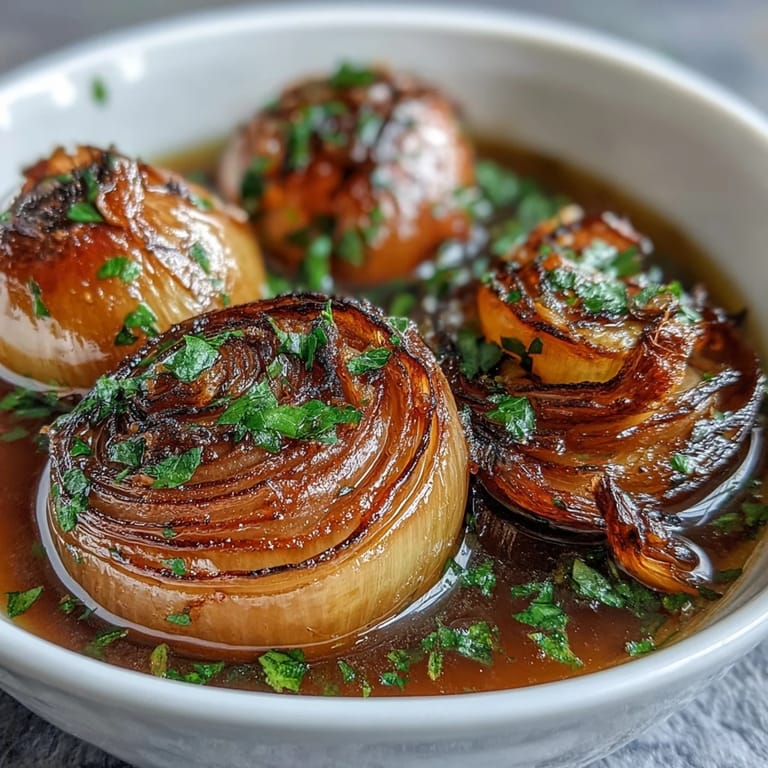
Save There's something almost meditative about watching whole onions soften in a buttery broth, their papery skins giving way to tender flesh that practically melts on your tongue. I stumbled onto this recipe on a quiet Sunday afternoon when I had a abundance of onions and absolutely no plan, just a pot and curiosity. The first time I sat down to eat it, I was struck by how such simple ingredients could create something so deeply comforting, each spoonful of broth tasting like pure umami. It became my go-to dish when I wanted something that felt like a hug without any fuss.
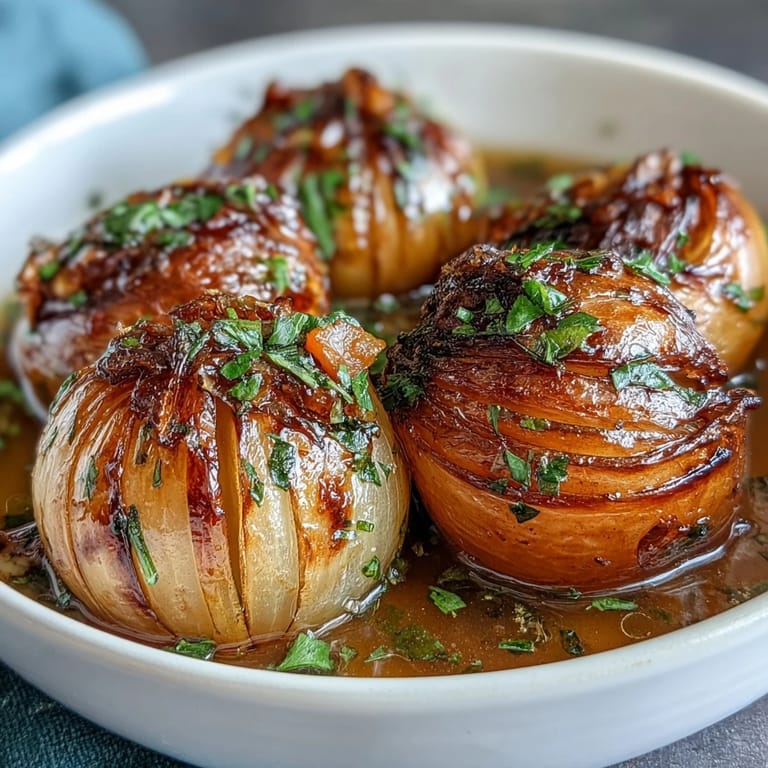
I made this for my dad one evening when he was feeling under the weather, and watching him slowly work through a bowl while we sat in comfortable silence taught me something about nourishment beyond nutrition. The onions had split open slightly, their sweetness mellowed by the bay leaf and thyme, and he asked for seconds without saying much of anything. That bowl became the entire conversation we needed that night.
Ingredients
- Small yellow onions, peeled: look for ones roughly the size of a golf ball so they cook evenly and stay whole; peeling them while they're raw is easier than you'd think if you blanch them first for 30 seconds.
- Garlic cloves, smashed: smashing them rather than mincing releases their essence into the butter without letting them brown and turn bitter.
- Vegetable broth: use something you'd actually drink on its own because the broth becomes the star; homemade is ideal but quality store-bought works beautifully.
- Unsalted butter: the fat carries all the flavors, so don't skip this for a oil substitute if you can help it.
- Bay leaf and thyme: these are quiet but essential, adding a gentle herbal note that prevents the broth from tasting one-dimensional.
- Black peppercorns, smoked paprika, and salt: the peppercorns stay whole so they perfume the broth without grittiness, while paprika adds a whisper of smoke that makes people ask what your secret ingredient is.
- Fresh parsley and chives: these wake everything up at the last moment, cutting through the richness with brightness.
Tired of Takeout? 🥡
Get 10 meals you can make faster than delivery arrives. Seriously.
One email. No spam. Unsubscribe anytime.
Instructions
- Build your aromatic base:
- Melt butter over medium heat and add your smashed garlic, letting it perfume the pot until it smells almost nutty. You'll know it's ready when you can smell it from across the kitchen but before it starts to color.
- Coat the onions:
- Roll each peeled onion through the buttery garlic for just a couple minutes, letting them pick up color and flavor. This little step makes a difference in the final richness.
- Pour in the broth and seasonings:
- Add your vegetable broth along with the bay leaf, thyme sprig, whole peppercorns, paprika, and salt all at once. The broth should come up to about three-quarters of the way up the onions.
- Bring to a gentle simmer:
- Let it bubble up to a boil first, then turn the heat down so it barely whispers; cover and let time do its magic. You're aiming for that moment where the onions are so tender a fork parts them without any resistance.
- Finish and serve:
- Remove the bay leaf and thyme sprig, taste the broth for salt, and ladle everything into bowls. Top with fresh parsley and chives, letting them float on top like little emerald confetti.
 Save
Save This dish somehow became the thing I make when someone needs food that feels personal, when a meal needs to say something without words. It's taught me that luxury doesn't require complexity, just attention and care.
The Ritual of Slow Cooking
There's something about waiting 30 minutes for a pot of onions to transform that changes how you experience eating. You can't rush this, and honestly, you won't want to once you taste what patience creates. The broth deepens in flavor as it simmers, the onions becoming almost custard-like in their tenderness, and somewhere in that process you remember why cooking matters.
Why Whole Onions Feel Different
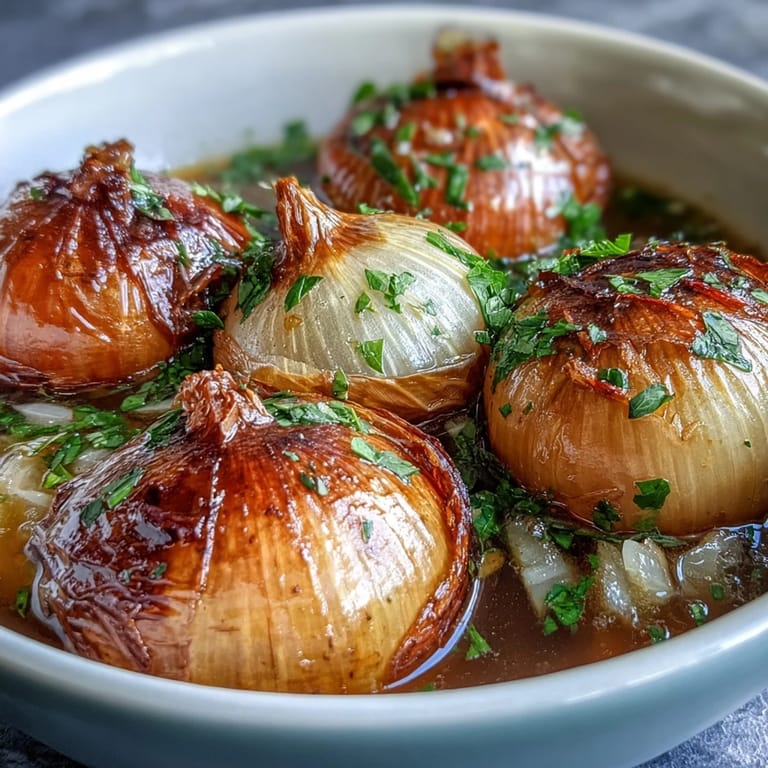
Serving whole onions instead of chopping them up first creates this beautiful moment where you engage with your food differently. You get to feel the texture change from the outer layers to the sweet, soft center, and there's something satisfying about that tactile experience that chopped onions can't quite deliver. It's one of the reasons this recipe has become almost meditative for people who cook and eat it.
Variations and Discoveries
I've learned that this recipe is generous and flexible, happy to accommodate whatever you're drawn to. Once you understand the technique, you can make it your own in ways that feel natural to your kitchen and your cravings.
- Add a splash of dry white wine: pour it in just after sautéing the onions and let it reduce by half for a deeper, more sophisticated broth.
- Throw in root vegetables: carrots, small potatoes, or celery roots work beautifully alongside the onions and need about the same cooking time.
- Use plant-based butter for a fully vegan version: the results are identical and nobody will know the difference unless you tell them.
 Save
Save Sometimes the best dishes are the ones that ask almost nothing of you except time and a willingness to sit with something simple until it becomes extraordinary. This is that recipe.
Recipe FAQ
- → How do I know when the onions are cooked?
Onions are tender when easily pierced with a knife but still hold their shape. Simmer for 25–30 minutes for the best texture.
- → Can I use other types of onions?
Small yellow onions work best for even cooking and sweetness, but pearl onions or shallots could be used for variation.
- → What enhances the broth's flavor?
Butter, garlic, bay leaf, thyme, smoked paprika, and peppercorns create a rich, fragrant broth that complements the onions beautifully.
- → Is it possible to make a vegan version?
Yes, substitute unsalted butter with plant-based alternatives and ensure the broth is vegetable-based without animal products.
- → How can I serve this dish for added enjoyment?
Serve hot with crusty bread to soak up the broth, and garnish with fresh parsley and chives for added freshness and texture.
- → Can I add other vegetables to the simmer?
Adding root vegetables like carrots or potatoes can enrich the dish and introduce more textures and flavors.