 Save
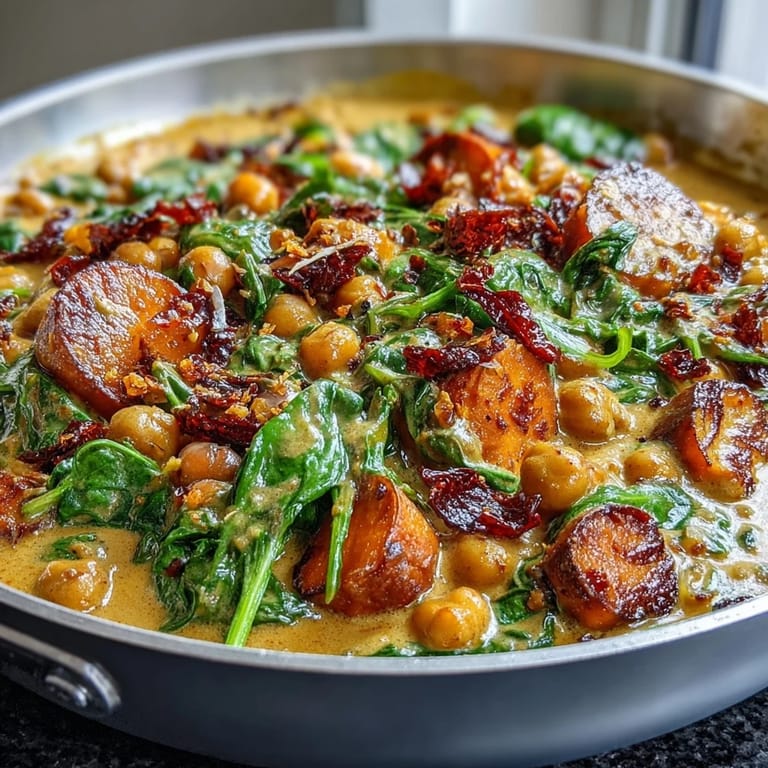
Save My sister called me on a Tuesday afternoon asking for something quick but impressive, and I found myself standing in my kitchen with a can of coconut milk, some sweet potatoes, and the sudden realization that the best meals don't need complicated techniques. This curry came together almost by accident—I was thinking of a way to make chickpeas feel special rather than like an afterthought, and one pan seemed like the only sensible choice when she mentioned she'd be eating solo. The house filled with that warm, spiced aroma that made me want to invite half the neighborhood over, but instead I just enjoyed knowing she'd have something genuinely nourishing waiting at home.
I made this for a friend who'd just moved into her first apartment, and watching her face when she realized she could actually cook something that tasted this good was worth every minute. She kept asking if there was some secret ingredient I wasn't telling her, which made me laugh because the real secret was just patience and good coconut milk. We sat on her kitchen counter sharing it straight from the pot, and suddenly her bare apartment felt like home.
Ingredients
- Sweet potato (1 large, peeled and cubed): Cut them into half-inch pieces so they soften evenly without turning mushy or leaving hard centers.
- Onion and garlic (1 medium yellow onion, 3 cloves garlic): The onion builds the flavor foundation, and garlic added after keeps its bright bite instead of turning bitter.
- Fresh ginger (1-inch piece, grated): It wakes up your palate and keeps the whole thing from feeling heavy, so don't skip it or use powdered.
- Fresh spinach (3 cups, roughly chopped): Add it at the very end so it stays bright and doesn't turn into a sad, dark heap.
- Chickpeas (1 can, drained and rinsed): Rinsing them removes that starchy liquid that makes canned chickpeas taste metallic.
- Coconut milk (1 can, full-fat): The full-fat version is non-negotiable—it's what makes this creamy and luxurious instead of thin.
- Vegetable broth (1/2 cup): This prevents the curry from becoming too coconut-heavy while keeping the flavors balanced.
- Fresh lime juice (1 tablespoon): It brightens everything and prevents the dish from tasting flat or one-dimensional.
- Curry powder, cumin, turmeric, and cayenne: These spices build layers—curry powder carries the base, cumin adds earthiness, turmeric brings warmth, and cayenne gives heat if you want it.
- Coconut oil or vegetable oil (1 tablespoon): Coconut oil adds subtle flavor, but vegetable oil works fine if that's what you have.
Tired of Takeout? 🥡
Get 10 meals you can make faster than delivery arrives. Seriously.
One email. No spam. Unsubscribe anytime.
Instructions
- Get your pan warm and toasted:
- Heat the coconut oil over medium heat until it shimmers slightly, then you're ready to go.
- Build the flavor base with onion:
- Add your chopped onion and let it sit for a minute before stirring—this helps it develop a little color and sweetness. Cook for about three to four minutes until it turns translucent and soft.
- Wake everything up with garlic and ginger:
- Stir in your minced garlic and grated ginger and cook for just one minute—you want to smell that fragrance bloom but not let it burn. This is the moment the whole kitchen smells like something special is happening.
- Toast the spices into the vegetables:
- Add your sweet potato cubes, curry powder, cumin, turmeric, cayenne if you're using it, salt, and pepper all at once. Stir everything together so the spices coat the vegetables evenly and toast for about a minute.
- Add your liquids and let it simmer:
- Pour in the coconut milk and vegetable broth, stir well to combine, and bring everything to a gentle simmer. Cover the skillet and let it cook for twelve to fifteen minutes, stirring occasionally, until you can easily pierce a sweet potato piece with a fork.
- Bring in the chickpeas:
- Add your drained chickpeas and cook for another five minutes so they warm through and absorb some of the flavors around them.
- Finish with spinach and brightness:
- Stir in your chopped spinach and cook for just two to three minutes until it wilts down. Remove from heat and squeeze in your fresh lime juice, then taste and adjust salt or spices as you see fit.
- Serve and celebrate:
- Transfer everything to a bowl, top with cilantro and a lime wedge if you have them, and serve alongside rice or naan.
 Save
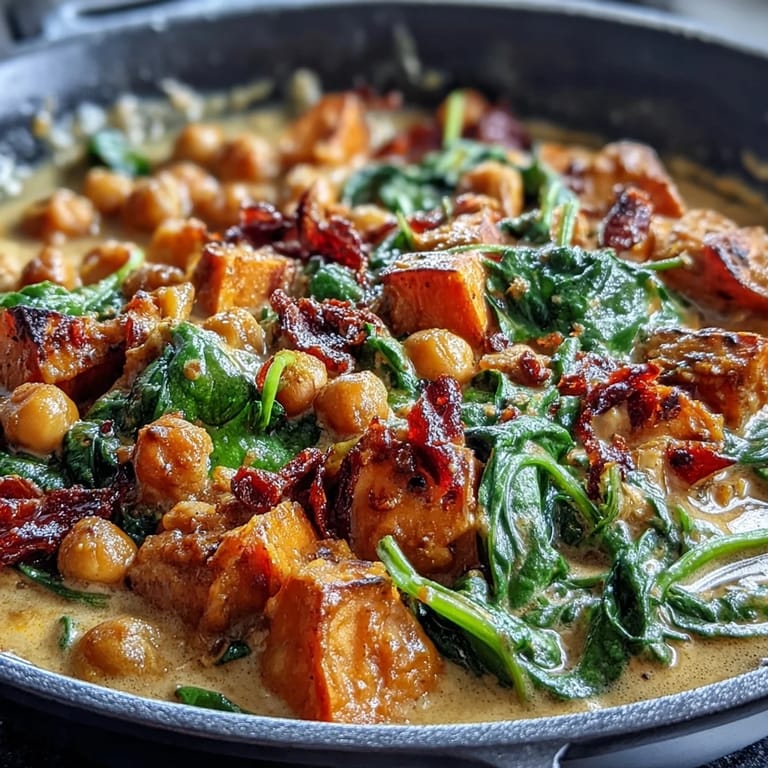
Save There's something about serving food that makes people slow down and actually taste what they're eating, and this curry does that naturally. Every spoonful feels intentional because you're noticing the sweetness of the potato, the richness of the coconut, the gentle heat building in the back of your throat.
When to Make This
This is the dinner you make on a Wednesday when you're tired but still want something that feels nourishing and real. It's also the meal you pull out when someone vegetarian is coming over and you want to prove that meatless doesn't mean boring. I make it when the weather shifts to autumn and I want something warm without being heavy, or when I'm cooking for someone who's trying to eat more plants and needs convincing it's worth it.
How to Customize It
The beauty of this curry is that it handles substitutions gracefully without falling apart. If you have kale instead of spinach, add it a minute earlier so it has time to soften. Tofu or tempeh cubed and added with the chickpeas will give you extra protein if you're looking for something more filling. You can adjust the spice level by reducing the curry powder if you like things mild or adding more cayenne if heat is what you're after, though I'd add it gradually so you don't overshoot.
Storage and Leftovers
This curry tastes even better the next day once the flavors have had time to get to know each other, so it's genuinely worth making extra. Store it in an airtight container in the refrigerator for up to four days, and reheat gently on the stovetop with a splash of water or broth if it's thickened too much. You can also freeze it for up to three months, though the spinach will lose some texture when thawed.
- Leftover curry and cold rice make an excellent lunch bowl the next day with a squeeze of fresh lime.
- If the sauce thickens too much when reheating, just thin it with vegetable broth or coconut milk to get back to that creamy consistency.
- Serve it over rice, naan, quinoa, or even roasted vegetables for a completely different meal the second time around.
 Save
Save Food this good deserves to be eaten slowly with people who appreciate it, or quietly by yourself on a night when you need a little comfort. Either way, you've made something nourishing and real with your own hands, and that matters.
Recipe FAQ
- → What spices enhance the curry’s flavor?
Mild curry powder, cumin, turmeric, and optional cayenne pepper combine to create a warm, fragrant base.
- → Can I substitute any vegetables?
Kale or Swiss chard can replace spinach, and tofu or tempeh can add extra protein if desired.
- → How long does it take to cook the dish?
Preparation takes about 15 minutes, with 30 minutes cooking time, totaling approximately 45 minutes.
- → Is this dish gluten-free?
Yes, it naturally contains no gluten or dairy components.
- → What are good serving suggestions?
Serve hot alongside basmati rice or quinoa for a complete meal.
- → How can the spiciness be adjusted?
Adjust heat by varying the amount of cayenne pepper or mild curry powder used.