 Save
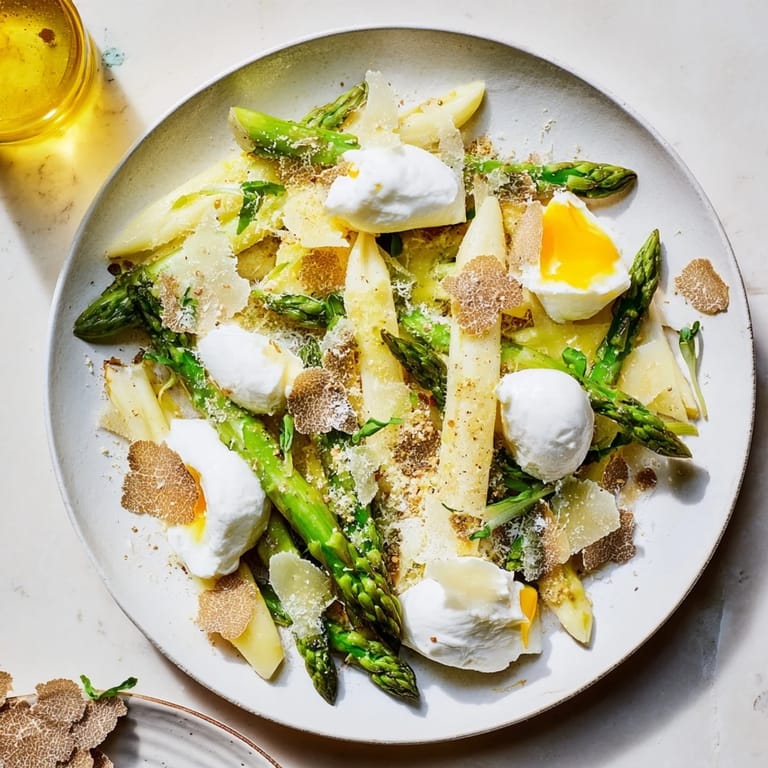
Save I discovered white asparagus at a small market in Brussels, where a vendor's hands were stained dark from handling them all morning. She mentioned they're grown under soil to keep them pale and delicate, which fascinated me—how something so prized could be essentially hidden from the sun. That evening, I paired them with cheeses I'd collected, and when I shaved truffle across the plate, the kitchen suddenly smelled like a forest floor after rain. It was the first time I understood that a dish could be both simple and luxurious, quiet and deeply flavorful.
I made this for my partner one April evening when we'd both had overwhelming days, and neither of us felt like complicated cooking. We sat at the kitchen counter with the plate between us, passing a fork back and forth, and suddenly the chaos of the day just melted away. Sometimes the most refined meals are the ones that remind you why you cook together in the first place.
Ingredients
- White asparagus, 500 g trimmed and peeled: The star of the plate—buy them as thin as possible, as they're more tender and cook faster. Peel away the tough outer skin with a vegetable peeler, starting just below the tip.
- Burrata or buffalo mozzarella, 75 g drained: Look for burrata that's been refrigerated, not sitting at room temperature, so it tears into creamy pockets rather than melting into nothing. If you can't find burrata, fresh mozzarella works beautifully too.
- Aged Comté cheese, 75 g thinly shaved: Comté has a nutty, caramelized quality that balances the delicate asparagus. Use a cheese slicer or vegetable peeler to create thin, curled ribbons.
- Parmigiano-Reggiano, 50 g finely grated: This adds umami depth; don't skip it even though it's just a garnish. Always grate it fresh—pre-grated loses its assertiveness.
- Fresh black truffle, 15 g or truffle paste 1–2 tbsp: Fresh truffle is a splurge, but a little goes so far that one truffle lasts through several plates. Truffle paste is more affordable and, honestly, delivers just as much flavor satisfaction.
- Extra-virgin olive oil, 2 tbsp: Use something you actually love tasting, because it's a main player here. Cold-pressed, peppery oils work wonderfully.
- Fresh lemon juice, 1 tbsp: The acid wakes everything up and prevents the dish from tasting flat or heavy.
- Flaky sea salt and white pepper: White pepper's subtlety won't distract from the delicate flavors the way black pepper can.
- Microgreens or chervil for garnish: These are optional but worth including—they add a whisper of color and freshness that makes the plate sing.
Tired of Takeout? 🥡
Get 10 meals you can make faster than delivery arrives. Seriously.
One email. No spam. Unsubscribe anytime.
Instructions
- Prepare the asparagus:
- Bring a large pot of salted water to a bare simmer—too vigorous and the delicate spears will lose their texture. Cook for 8 to 10 minutes, watching carefully until they bend slightly when you lift one with a fork but still have resistance. Immediately transfer to an ice bath to stop them cooking.
- Arrange the foundation:
- Slice each cooled asparagus spear in half lengthwise so you have long, thin pieces. Lay them on chilled serving plates in a relaxed, slightly overlapping pattern—this isn't about perfection, but presence.
- Layer the cheeses:
- Tear burrata into rough, generous pieces and scatter over the asparagus. Use a vegetable peeler to create thin, curling ribbons of Comté, letting them fall naturally. Finish with a light snow of grated Parmigiano-Reggiano.
- Add the truffle:
- If using fresh truffle, draw a truffle slicer across it at a low angle to create thin, delicate stripes over the cheese and asparagus. If using paste, drizzle very fine lines across the plate with a small spoon, creating deliberate stripes that catch the light.
- Create the dressing:
- Whisk together olive oil, lemon juice, and sea salt in a small bowl until the salt dissolves slightly. Grind in white pepper to taste—just a whisper, nothing more.
- Finish and serve:
- Drizzle the dressing evenly across the plate, letting it pool slightly around the asparagus. If using microgreens or chervil, scatter them now as a final flourish. Serve immediately, while the cheeses are still cool and the flavors haven't begun to blur together.
 Save
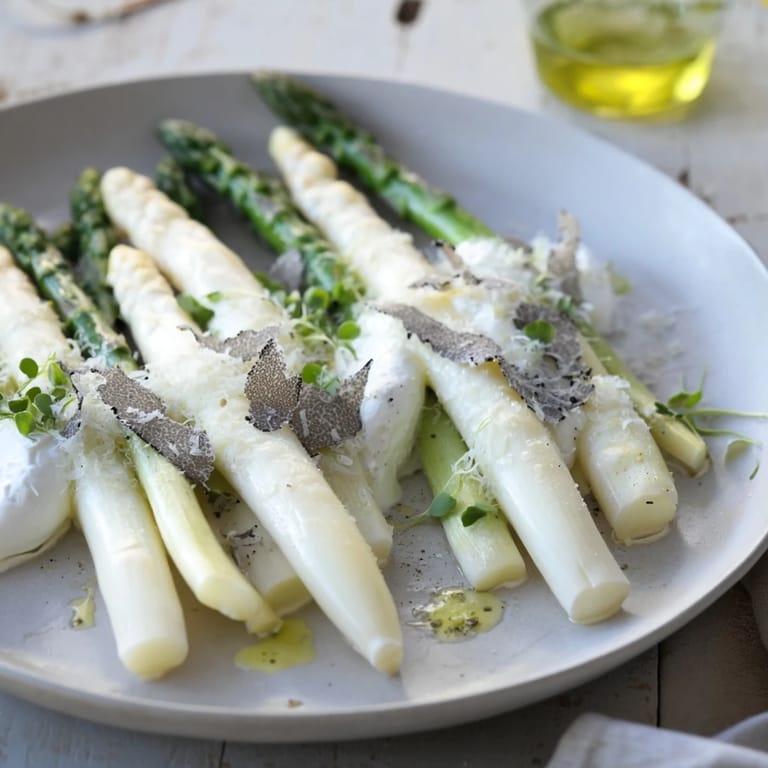
Save The first time I served this, a guest closed her eyes after the first bite and didn't open them for what felt like an eternity. When she did, she just said, 'Where did you find this?' It taught me that sometimes elegance isn't about complexity—it's about letting each ingredient speak without fighting for attention.
The Story of White Asparagus
White asparagus isn't a different variety—it's the same plant, just grown in darkness under mounded soil. This blanching process keeps the plant from developing chlorophyll, which is why it stays ivory and pale. The flavor reflects this gentleness: sweeter, more delicate, almost buttery compared to its green cousin. Once I understood this, I stopped trying to cook white asparagus like green and started treating it like the luxury ingredient it is.
Timing and Temperature Matter
This dish lives in the space between hot and cold, and that balance is crucial. The asparagus should be cool but not fridge-cold, the cheeses creamy but not runny, the truffle at room temperature so its aroma blooms on the plate. I learned this the hard way by serving everything straight from the refrigerator and wondering why it tasted muted. These days, I pull components out 10 minutes before plating, letting them find their natural temperature. The difference is remarkable.
Wine and Cheese Pairing
A dry white wine with acidity and minerality will echo the lemon in the dressing and complement the earthiness of the truffle. I've had success with Sancerre's grassy notes cutting through the cheese richness, or Grüner Veltliner's herbal backbone balancing the asparagus sweetness. The pairing isn't just about flavor compatibility—it's about creating a conversation between the glass and the plate that feels intentional and thoughtful.
- If you can't find Comté, Gruyère or a mild, creamy goat cheese works beautifully as a substitute without losing elegance.
- A few drops of truffle oil whisked into the dressing adds extra depth if you're using truffle paste instead of fresh truffle.
- Make sure to serve on chilled plates so the cheeses don't warm too quickly and lose their structure.
 Save
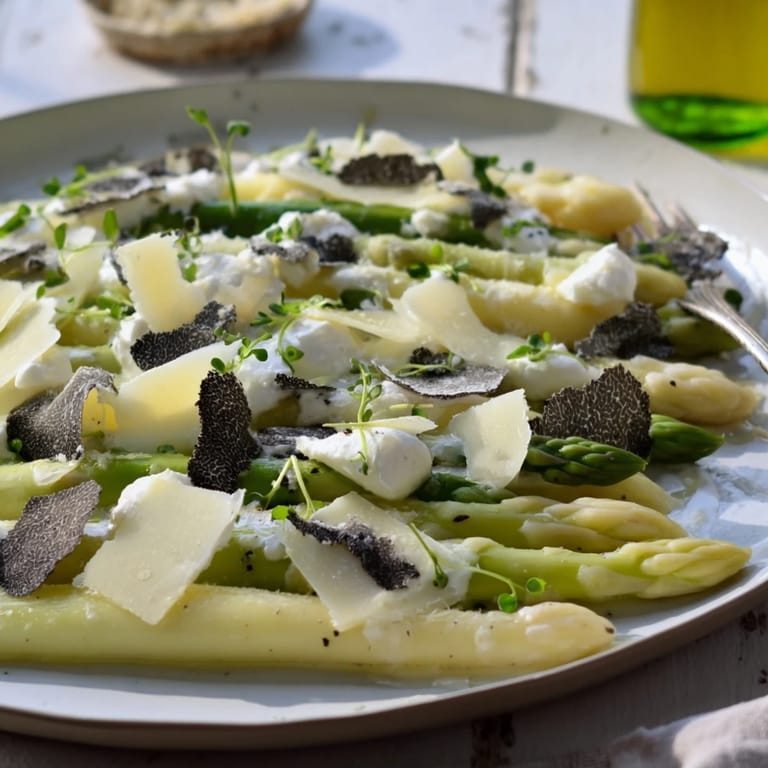
Save This is the kind of dish that proves you don't need a crowded recipe to create something memorable. Sometimes the most beautiful plates are the simplest ones, where every ingredient shines because nothing is competing for space.
Recipe FAQ
- → How should I cook the white asparagus for best texture?
Simmer the peeled white asparagus in salted water for 8–10 minutes until tender but still firm, then cool immediately in an ice bath to preserve crispness.
- → Can I substitute the cheeses if unavailable?
Yes, you can replace Comté with Gruyère or a mild goat cheese while maintaining the dish’s creamy and nutty character.
- → What is the best way to add black truffle if fresh is unavailable?
Use high-quality truffle paste drizzled in fine lines over the dish to impart similar aromatic notes.
- → How does the dressing complement the dish?
The olive oil and lemon juice dressing with sea salt and white pepper brightens and balances the rich cheeses and earthy asparagus flavors.
- → Is this dish suitable for specific diets?
Yes, it fits vegetarian and gluten-free diets but contains dairy, so check cheese rennet for strict vegetarians.