 Save
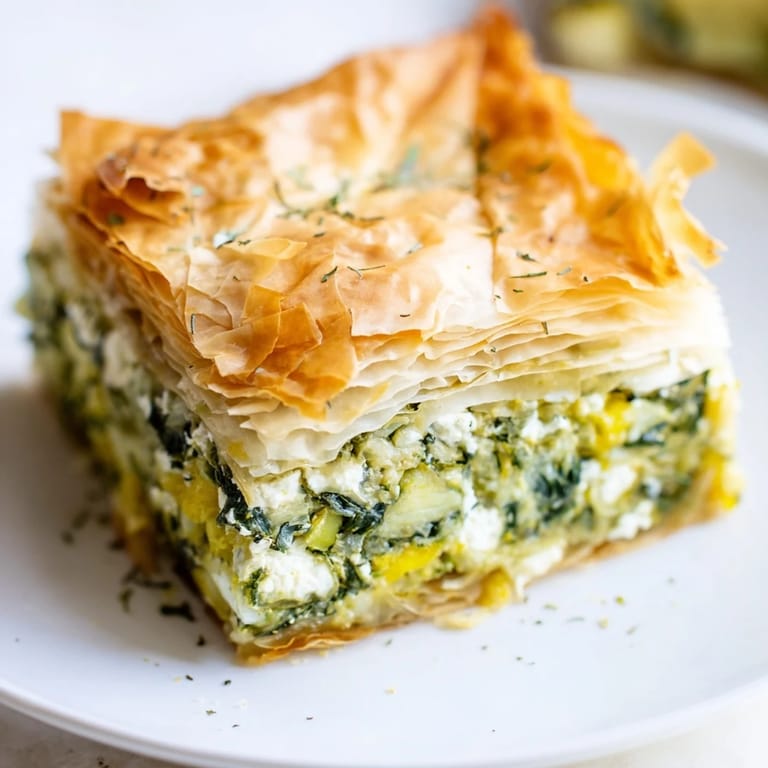
Save My first spanakopita came together almost by accident on a rainy Sunday when my neighbor dropped off a bundle of fresh spinach from her garden and I had a box of phyllo sitting in my freezer. I wasn't following any recipe at first—just layering and brushing, layering and brushing, letting the repetitive motions calm my mind. When it came out of the oven golden and crackling, the whole kitchen smelled like toasted butter and fresh herbs, and I realized I'd stumbled onto something that felt both simple and a little bit magical.
I made this for my book club once, thinking it would be a simple appetizer to set out between chapters, and instead everyone abandoned their discussion to hover around the cooling spanakopita. One friend went back for thirds and admitted she'd been intimidated by phyllo her whole life—this recipe proved her it wasn't some impossible technique, just patience and a pastry brush.
Ingredients
- Fresh spinach (2 lbs): Use fresh if you can get it—the texture is noticeably better, though frozen works perfectly fine if you squeeze out every drop of water or your filling will be soggy.
- Yellow onion and scallions: The onion cooks down to sweet softness while the scallions stay bright; together they're the flavor foundation.
- Fresh dill (3 tbsp): This is non-negotiable if you can find it—dried dill loses something essential, though it'll work in a pinch.
- Fresh parsley: A small handful adds color and freshness that makes everything taste more alive.
- Feta cheese (8 oz): The salty, tangy heart of the whole thing; buy good feta if you can, it matters.
- Ricotta or cottage cheese (optional): Adds creaminess and makes the filling less likely to dry out, especially if you're baking it ahead.
- Eggs (2 large): They bind everything together and help the filling set without being rubbery.
- Nutmeg and black pepper: Just whispers of these, but they round out the flavor in a way people can't quite put their finger on.
- Phyllo dough (1 lb): Must be thawed properly or it'll crack and tear; take it out of the fridge the night before or let it sit on the counter while you prep the filling.
- Olive oil or melted butter: For brushing between layers—this is what creates the crispy, golden magic.
Tired of Takeout? 🥡
Get 10 meals you can make faster than delivery arrives. Seriously.
One email. No spam. Unsubscribe anytime.
Instructions
- Get your oven ready and prep your pan:
- Heat the oven to 350°F and lightly grease your 9x13-inch dish—this prevents sticking without making everything greasy.
- Soften the aromatics:
- Heat 2 tablespoons of olive oil in a large skillet and let your chopped onion and scallions get soft and a little golden, about 5 minutes; this builds the flavor base.
- Wilt the spinach:
- Add your spinach in batches if using fresh, letting each addition cook down before adding more, until everything is wilted and the liquid has mostly evaporated; this takes longer than you'd expect but it's worth waiting for.
- Cool and combine:
- Let the spinach cool slightly, then squeeze out any remaining moisture with your hands or in a clean kitchen towel—this step prevents a watery filling. Toss everything together in a large bowl with the dill, parsley, crumbled feta, ricotta if using, beaten eggs, pepper, nutmeg, and salt.
- Layer the phyllo base:
- Lay one sheet of phyllo in your dish, letting edges hang over the sides, then brush it lightly with oil or melted butter; repeat with 6-7 more sheets, brushing each one. The phyllo will tear—it always does—and that's okay, just keep going.
- Spread the filling:
- Pour your spinach mixture evenly over the phyllo base, spreading it to the edges with a spatula or the back of a spoon.
- Top it off:
- Layer the remaining phyllo sheets one by one, brushing each with oil or butter, then tuck the overhanging edges in toward the center so they crisp up instead of burning.
- Score for serving:
- Using a sharp knife, score the top into squares or diamonds without cutting all the way through the filling—this makes serving easier and looks intentional.
- Bake until golden:
- Bake for 35-40 minutes until the top is deep golden and the whole thing smells incredible; let it cool for 10 minutes before serving so it holds together.
 Save
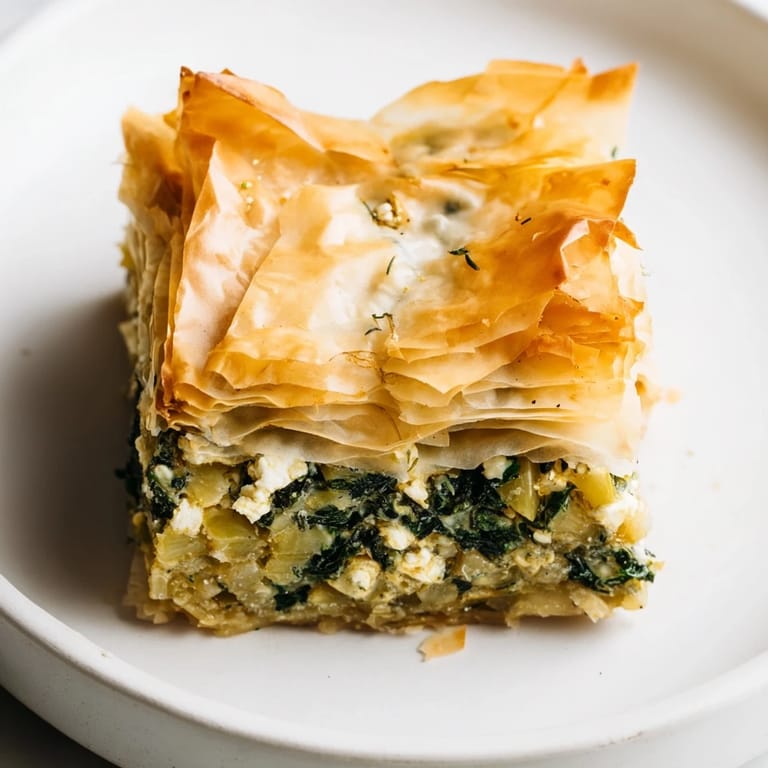
Save There's a moment when you pull spanakopita from the oven and the whole thing is crackling and steaming, and you realize that something so impressive and delicious came together in your own kitchen with ingredients that were probably already hiding in your pantry and fridge. That feeling never gets old.
Fresh vs. Frozen Spinach
I learned the hard way that frozen spinach isn't inferior—it's just different. Fresh spinach tastes brighter and feels less dense, but frozen spinach is drained spinach, which actually works in spanakopita's favor since you're trying to avoid moisture. If you use frozen, thaw it completely and squeeze it dry in a clean kitchen towel until it stops releasing water; this takes longer than you'd think, but it's the difference between a perfectly crispy pastry and one that steams from the inside out.
The Phyllo Technique
Phyllo intimidates a lot of people, but it's really just thin sheets that need gentle handling and consistent brushing with oil or butter. The key is not overthinking it—small tears are fine, overlapping is fine, imperfect layering is fine. What matters is that every sheet gets brushed so that each layer crisps up individually. I used to watch my mother-in-law make this, and her sheets were never perfectly neat, but somehow it always came out golden and shattered beautifully under the fork.
Serving and Storage
Spanakopita is one of those rare dishes that tastes almost as good cold as it does warm, which makes it perfect for meal prep or potlucks. I've served it straight from the oven to a crowd of hungry people, and I've pulled it from the fridge hours later and it's still held its magic. Store leftovers covered in the fridge for up to 3 days, or freeze the unbaked spanakopita for up to a month—just add a few extra minutes to the baking time if baking from frozen.
- Pair it with a crisp white wine like Assyrtiko or Sauvignon Blanc for a simple, elegant meal.
- A squeeze of fresh lemon juice over the top right before serving adds brightness that surprises people.
- Make double and freeze half unbaked—you'll thank yourself when you need an impressive appetizer in a hurry.
 Save
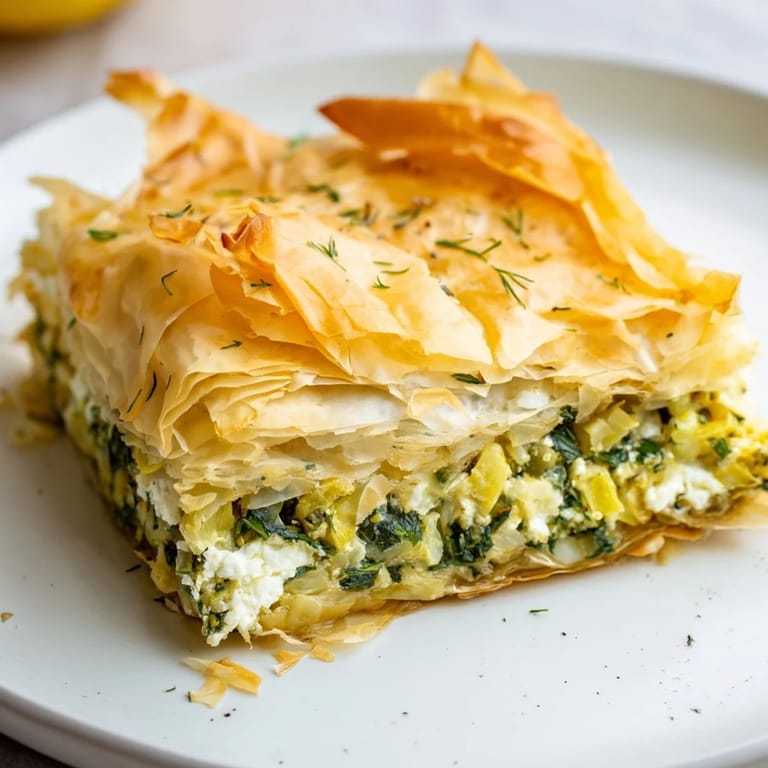
Save This recipe has become my go-to when I want to impress someone without stress, or when I want to make something that feels both special and comforting. Every time it comes out of the oven, I'm still a little surprised by how good it is.
Recipe FAQ
- → Can fresh spinach be replaced with frozen spinach?
Yes, frozen spinach works well but should be thawed and thoroughly drained to avoid excess moisture in the filling.
- → What type of cheese works best in this dish?
Feta cheese is traditional for its salty tang, complemented by optional ricotta for creaminess and a balanced texture.
- → How should the phyllo dough be handled to prevent tearing?
Keep phyllo covered with a damp cloth while assembling to maintain moisture and brush each sheet lightly with oil or butter for flexibility.
- → Can other greens be used instead of spinach?
Yes, chard or a mix of leafy greens can substitute spinach for a different but equally flavorful filling.
- → What is the best way to serve this dish?
Allow it to cool slightly after baking to set, then slice and serve warm. It pairs nicely with crisp white wines like Assyrtiko or Sauvignon Blanc.
- → How can I reduce the oil content?
Use less oil or substitute with melted butter sparingly when brushing phyllo layers for a lighter outcome.