 Save
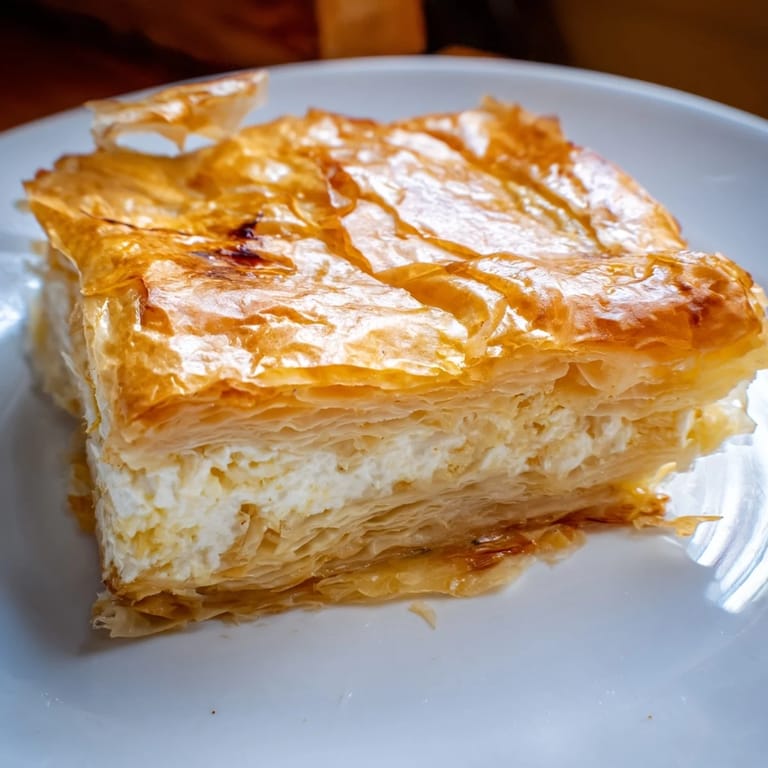
Save The first time I understood what banitsa meant to a Bulgarian kitchen, I was standing in my neighbor Vera's apartment on a Saturday morning, the air thick with butter and the sound of phyllo sheets crackling like tissue paper under her practiced hands. She didn't measure anything, just layered and filled with the confidence of someone who'd made this dish a hundred times before breakfast. Watching her move—the swift brush strokes, the way she knew exactly when the feta mixture had enough body—I realized this wasn't just a pastry. It was a conversation between tradition and instinct, built one golden layer at a time.
I made this for my book club once, thinking I was being ambitious, and ended up with people asking for seconds before I'd even cleared the first plate. One friend who swore she didn't eat breakfast showed up at 8 a.m. the next week asking if I'd bring it again. That's when I knew banitsa wasn't just filling—it was the kind of food that changes how people think about your cooking.
Ingredients
- Feta cheese, 400 g crumbled: This is your main flavor player, so use something you'd actually want to eat on its own. Don't grab the driest block in the case; slightly creamier feta makes the filling richer and less likely to dry out during baking.
- Plain yogurt, 250 ml: This adds moisture and a subtle tang that stops the filling from tasting one-dimensional. Full-fat yogurt is your friend here.
- Eggs, 4 large: These bind everything together and create that custard-like texture that makes banitsa so satisfying. Room temperature eggs mix more smoothly into the yogurt mixture.
- Unsalted butter, 60 g melted: This is what makes phyllo sing, so don't skimp on quality. Brush each layer like you're painting something precious.
- Whole milk, 50 ml: A little milk loosens the filling just enough so it flows between the layers without being watery. Think of it as the voice of reason in the mixture.
- Phyllo dough, 1 package (about 400 g) thawed: Thaw this in the refrigerator overnight, never at room temperature, or it'll crack before you can even unfold it. Keep it covered with a damp towel while you work so it doesn't turn into papery shards.
- Salt and freshly ground black pepper: Season generously but taste as you go. The feta brings saltiness too, so you might need less than you think.
Tired of Takeout? 🥡
Get 10 meals you can make faster than delivery arrives. Seriously.
One email. No spam. Unsubscribe anytime.
Instructions
- Set your stage:
- Preheat the oven to 180°C and butter your baking dish like you're preparing something sacred. This step matters more than it sounds because a buttered dish prevents sticking and adds flavor to the bottom layers.
- Make the filling magic:
- Whisk eggs with yogurt, milk, salt, and pepper until the mixture is completely smooth and no streaks of egg white remain. Fold in the crumbled feta gently—you're looking to combine, not to beat all the air out or crush the cheese into a paste.
- Prepare your phyllo:
- Unroll the phyllo and lay out a damp kitchen towel nearby like a protective blanket. Phyllo dries out in minutes, so this isn't just a suggestion; it's the difference between workable sheets and shattered dreams.
- Build the first layer:
- Place one phyllo sheet in the dish and brush it with butter, using enough to coat but not so much that it pools. Repeat this four times, creating a buttery foundation that will eventually turn golden and crisp.
- Add the first filling:
- Spread about a quarter of your cheese mixture over the phyllo layers, distributing it evenly right to the edges. The filling will seem wet, but trust it—the phyllo will absorb some moisture as it bakes.
- Keep layering:
- Add 3 to 4 more buttered phyllo sheets, then another quarter of the filling. Repeat this pattern until your filling is gone, finishing with 3 to 4 final phyllo sheets buttered on top so they can turn golden.
- Cut before baking:
- Using a sharp knife, cut the banitsa into squares or diamond shapes all the way through. This prevents the phyllo from shattering unpredictably when you try to cut it after baking.
- Final butter kiss:
- Drizzle any remaining melted butter over the top, letting it seep into the cuts you just made. This is what transforms the top from pale to glorious.
- Bake to golden:
- Slide it into the oven for 30 to 35 minutes until the top is deeply golden and you can hear the phyllo crackling slightly when you open the oven door. The kitchen will smell like butter and something almost too good to be real.
- Rest and serve:
- Let it cool for 10 minutes so the filling sets slightly and everything stays together when you cut into it. Serve warm or at room temperature, though warm is when it's at its most irresistible.
 Save
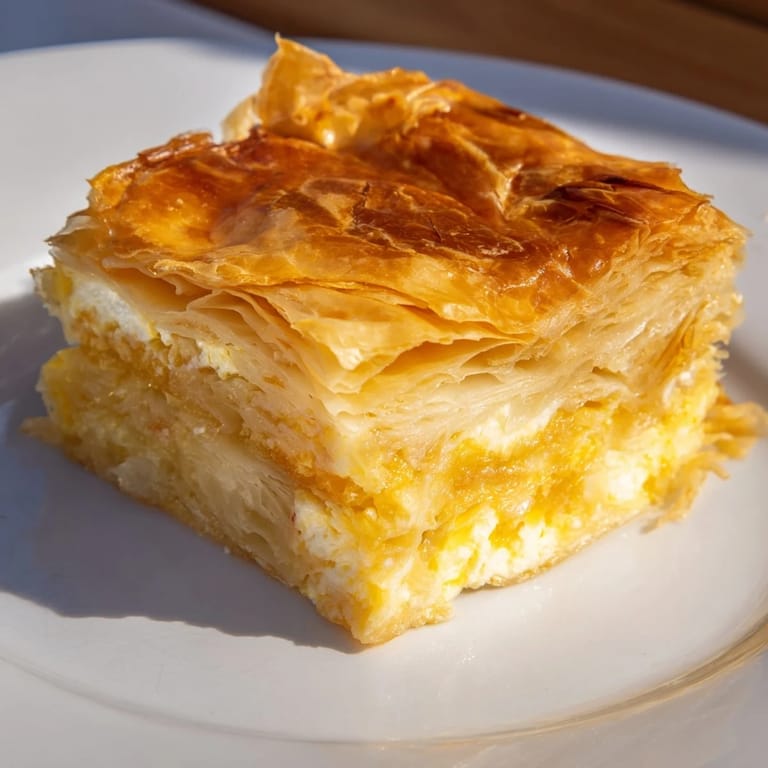
Save There's a moment, usually around 25 minutes into baking, when the smell hits you all at once—butter and toasted pastry and something savory underneath that makes you stand in front of the oven and just breathe it in. That's when banitsa stops being a recipe and becomes something that feels like home, even if you've never made it before.
The Phyllo Truth
Phyllo has a reputation for being finicky, but honestly, it's more forgiving than people think. The key is not fighting it. If a sheet tears, you patch it. If a few flakes break off at the edges, they don't matter because the whole thing will shatter slightly anyway when you bite into it, and that's part of the charm. I learned this the hard way by being too precious with my first few attempts, treating phyllo like spun glass. Now I work with it like a friend who's a little unpredictable but always comes through in the end.
Flavor and Flexibility
This recipe is Bulgarian tradition, but it's also a template. Some people swear by adding fresh dill or parsley to the cheese mixture—and they're right, those herbs lift the whole thing. I've seen versions with spinach folded in, with a touch of nutmeg in the filling, with half the feta replaced by ricotta for a gentler flavor. The core stays the same: phyllo, butter, eggs, cheese. Everything else is just you making it your own. The yogurt component is what makes this specifically Bulgarian, by the way; if you skip it or replace it with milk, you lose that subtle tang that makes people pause and ask what you did differently.
When to Make It and How to Serve It
Banitsa is patient. You can make it the night before, cover it, and bake it in the morning. You can serve it warm, room temperature, or even cold, though cold is when it's least magical. Pair it with a glass of cold ayran—that tangy Bulgarian yogurt drink—or just some fresh tomatoes and cucumbers on the side. The sharpness of raw vegetables or cold yogurt is what you need to cut through the richness of the butter and cheese. Some people drink strong coffee with it, some drink tea. Honestly, banitsa tastes good with almost anything because it's generous and a little bit rich and never apologetic about it.
- A simple tomato-cucumber salad with a squeeze of lemon is the classic pairing and tastes perfect.
- Cold ayran is tradition, but even plain yogurt with a pinch of salt works when you can't find ayran.
- This is breakfast food, but it's equally good for a light dinner or a picnic the next day, which means you can make a big pan and not regret it.
 Save
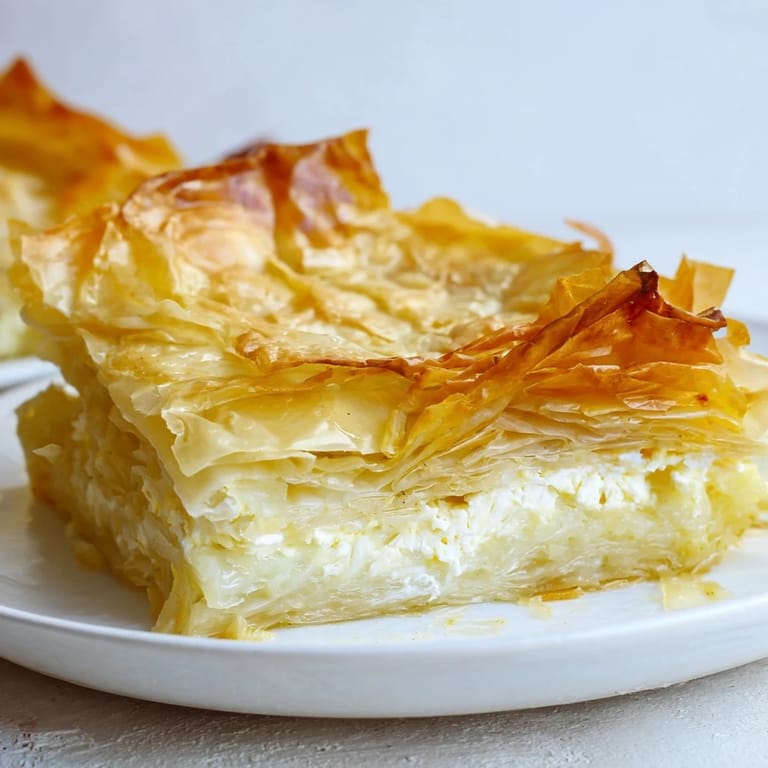
Save Make this once and it becomes part of how you think about cooking. Not because it's difficult, but because it's beautiful and generous and tastes like someone took time to build something thoughtful.
Recipe FAQ
- → What makes the pastry layers flaky?
Using thin phyllo dough sheets brushed with melted butter between layers creates the distinctive flaky texture after baking.
- → Can I use a different cheese instead of feta?
Yes, Bulgarian sirene or ricotta can be used for a milder flavor while maintaining the creamy texture of the filling.
- → How do I prevent phyllo dough from drying out during assembly?
Keep the phyllo sheets covered with a damp towel until layering to maintain moisture and prevent tearing.
- → What herbs complement Bulgarian banitsa well?
Fresh dill or parsley stirred into the filling add a fragrant herbal note that enhances the overall flavor.
- → Is this dish suitable for vegetarians?
Yes, it contains dairy and eggs but no meat, making it suitable for vegetarian diets.