 Save
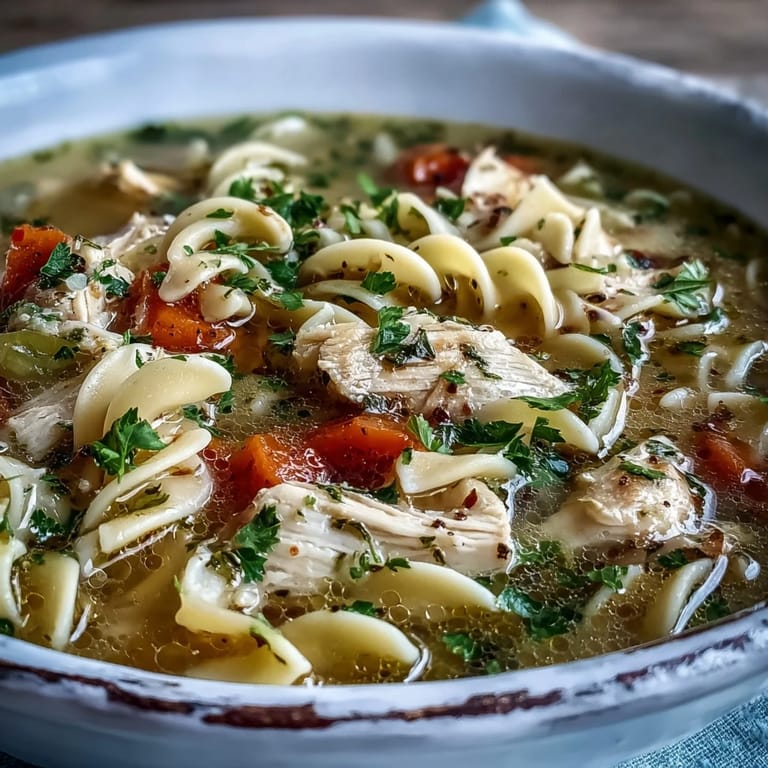
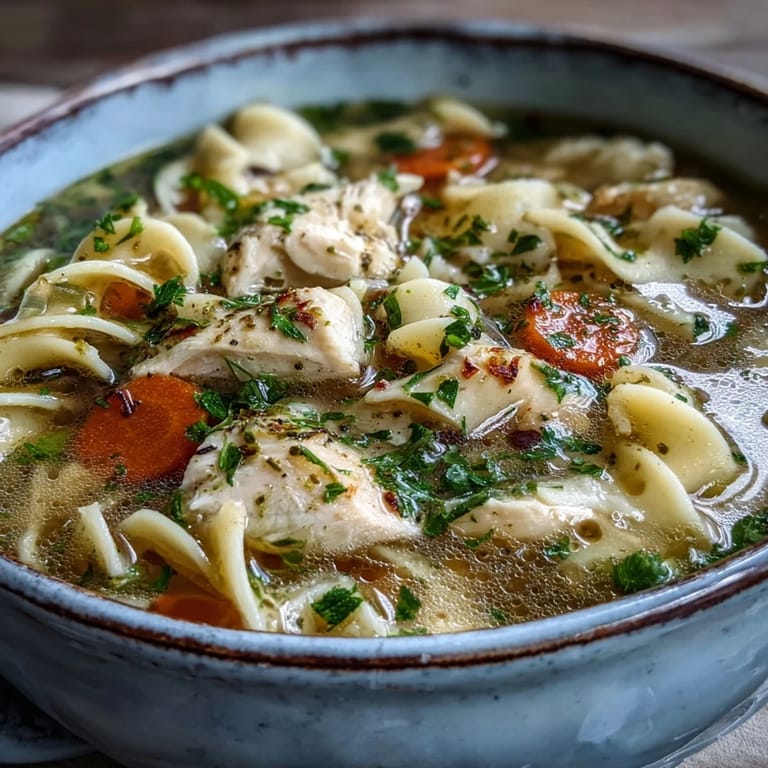
Save There's something about the smell of chicken broth simmering on the stove that instantly makes everything feel manageable. Years ago, I'd watch my grandmother toss vegetables into a pot without measuring anything, and the soup would somehow turn out perfect every single time. I finally stopped trying to replicate her intuition and just started cooking it my own way—and that's when this version became my go-to. It's the kind of meal that works whether you're nursing a cold, feeding unexpected guests, or just craving something warm that doesn't demand much from you.
I made this soup for my roommate during her first week at a new job, and watching her face light up when she tasted it taught me that comfort food isn't about fancy ingredients—it's about showing up for someone. She still texts me photos of the pot whenever she makes it now.
Ingredients
- Chicken breasts: Boneless and skinless save time, though bone-in thighs create richer broth if you're willing to shred them afterward.
- Onion, carrots, celery: This trio is the backbone of any good soup—the aromatics that build flavor from the first minute the oil hits the pan.
- Garlic: Two cloves keeps it subtle; add more if you want the broth to whisper garlic rather than shout it.
- Chicken broth: Low-sodium lets you control the salt level and prevents the soup from tasting aggressively seasoned by the end.
- Egg noodles: They soften without dissolving and absorb broth like tiny flavor sponges—cook them in the pot so they pick up everything around them.
- Bay leaf, thyme, parsley: Dried herbs work here because they have time to wake up in the simmering liquid.
- Olive oil: Two tablespoons is enough to soften the vegetables without making the broth feel slick.
Tired of Takeout? 🥡
Get 10 meals you can make faster than delivery arrives. Seriously.
One email. No spam. Unsubscribe anytime.
Instructions
- Build your base:
- Heat olive oil in a large pot over medium heat, then add onion, carrots, and celery. You want to hear them sizzle gently as they soften for 4–5 minutes, releasing their sweetness into the oil.
- Wake up the garlic:
- Stir in minced garlic and cook for about 1 minute until the kitchen smells undeniably good. This is when you know you're on the right track.
- Introduce the chicken:
- Add diced chicken and stir it around for 3–4 minutes, breaking it up as it cooks. You're looking for the outside to turn opaque, not necessarily cooked all the way through—it'll finish in the broth.
- Pour in the broth:
- Add your chicken broth along with bay leaf, thyme, parsley, salt, and pepper. Bring the pot to a gentle boil, watching for the surface to shimmer and small bubbles to rise.
- Let it simmer:
- Reduce heat and let everything simmer for 10 minutes so the flavors start marrying together and the chicken cooks through.
- Add the noodles:
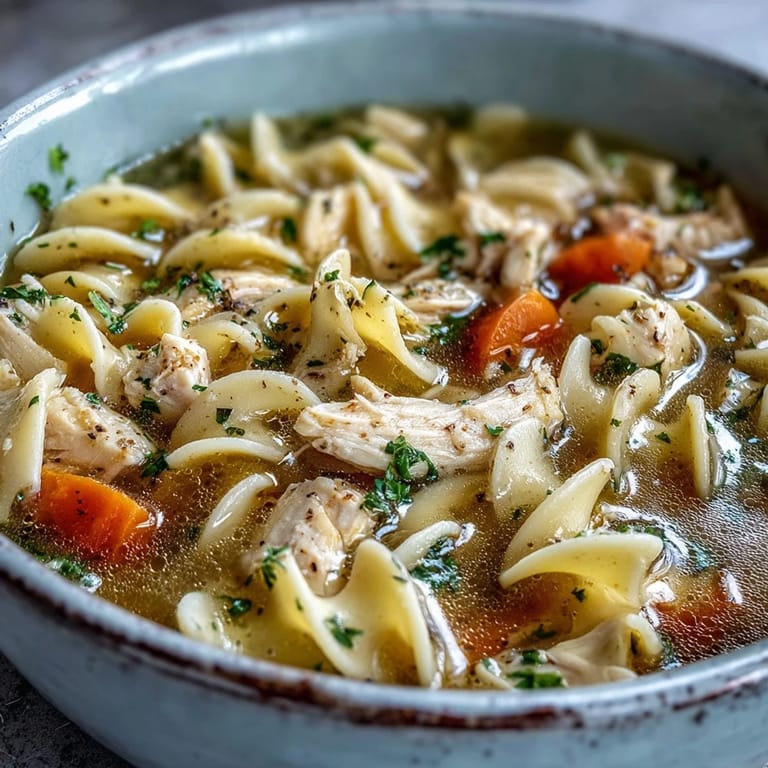
- Scatter in egg noodles and simmer for 8–10 minutes, stirring occasionally so they don't clump. Taste a noodle when you think they're done—there should be just a tiny bit of resistance when you bite it.
- Final adjustments:
- Remove the bay leaf, taste the broth, and add more salt, pepper, or herbs if it needs anything. This is your moment to make it taste exactly how you want it.
- Serve:
- Ladle into bowls and scatter fresh parsley on top for color and a little brightness.
 Save
Save My friend's kid asked for thirds last time I made this, which might be the first time I've seen a seven-year-old genuinely excited about vegetables hiding in broth. That's when I knew it wasn't just a recipe—it was something that actually nourishes people.
When You Want to Go Richer
If you have a bit more time and want deeper flavor, use bone-in chicken thighs instead of breasts. Let them simmer in the broth for the full 10 minutes so the bones release gelatin, then shred the meat and return it to the pot. The soup feels more luxurious this way, like you've been cooking all afternoon instead of 40 minutes.
Make It Brighter
Sometimes a soup needs just one more thing to feel complete, and that thing is usually acid. A squeeze of fresh lemon juice at the end lifts everything—the herbs pop, the broth feels lighter, and suddenly it tastes like you knew exactly what you were doing all along.
Storage and Variations
This soup keeps for three days in the fridge and freezes beautifully for up to three months, though the noodles will soften further when thawed. If you're making it ahead, consider cooking the noodles separately and stirring them in just before serving so they stay tender rather than turning to mush.
- Use gluten-free noodles if you need to keep it safe for those dietary restrictions, and they'll cook in the same time.
- A splash of white wine like Sauvignon Blanc swirled into each bowl adds sophistication without changing the fundamental comfort of the dish.
- Crusty bread for dunking transforms this from a side-dish soup into a complete, satisfying meal.
 Save
Save This is the kind of recipe that gets better as you make it, because you learn what adjustments make it taste like home. Make it once by the rules, then make it however you want after that.
Recipe FAQ
- → Can I make this ahead of time?
Absolutely. The flavors actually develop and deepen overnight. Store in the refrigerator for up to 3 days, adding a splash of broth when reheating as the noodles will absorb some liquid.
- → What type of noodles work best?
Egg noodles are traditional for their tender texture, but you can use any short pasta like rotini, fusilli, or even broken spaghetti. Gluten-free options work perfectly too.
- → Can I use rotisserie chicken?
Yes. Shred about 2 cups of rotisserie chicken and add it during the last 5 minutes of simmering just to heat through. This cuts prep time significantly.
- → How can I make this more nutritious?
Add spinach or kale in the last 2 minutes of cooking, toss in extra vegetables like green beans or peas, or use bone broth for added protein and collagen benefits.
- → Does this freeze well?
The soup freezes beautifully for up to 3 months. Consider freezing without noodles, adding fresh pasta when reheating to prevent them from becoming mushy.