 Save
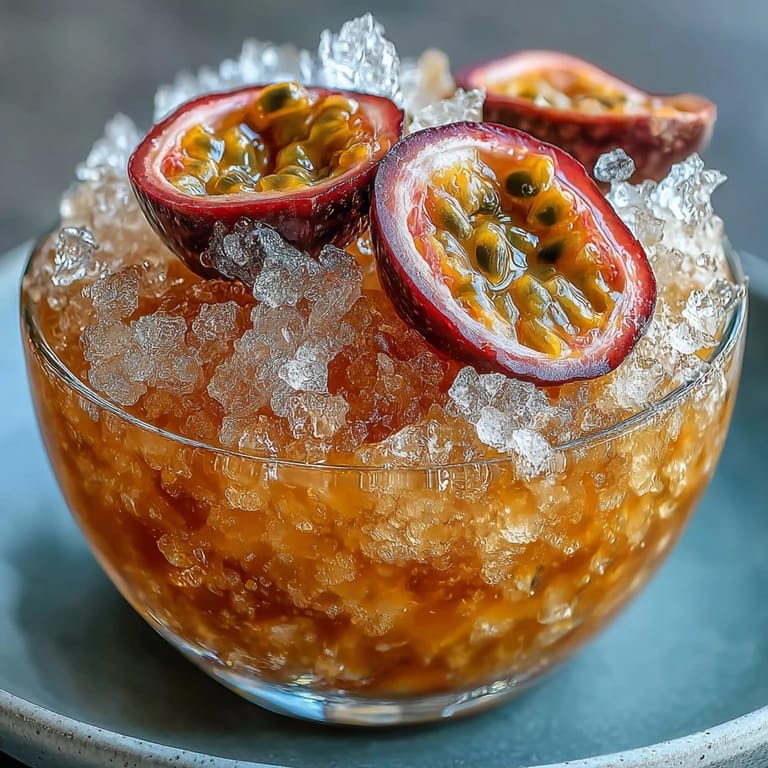
Save There's something about the first spoonful of granita that stops time. Years ago, I was visiting a small coastal town during an unbearably hot July, and a neighbor served this icy passionfruit creation straight from her freezer, the crystals catching the afternoon light like edible jewels. I'd never considered that you could make something so elegant without any fancy equipment, just patience and a fork. That dessert changed how I think about summer cooking entirely.
I made this for a dinner party once when someone unexpectedly became my plus-one, and we were short on dessert ideas. As the main course finished, I quietly scraped the granita one final time and served it in chilled coupes I'd found in the back of the cabinet. Watching my guests taste it—that moment of genuine surprise and delight—reminded me that the best dishes don't need to be complicated, just thoughtfully made.
Ingredients
- Passionfruit pulp: Use fresh passionfruits if you can find them; the flavor is incomparably brighter and the seeds add wonderful texture and visual interest, though you can strain them out for a smoother result.
- Granulated sugar: This dissolves cleanly into the mixture and won't leave any gritty texture in your final granita.
- Cold water: Start with cold water to help the sugar dissolve faster and to prevent the mixture from warming up before it hits the freezer.
- Fresh lime juice: The acidity brightens the passionfruit's natural tartness and prevents the sweetness from becoming one-dimensional.
Tired of Takeout? 🥡
Get 10 meals you can make faster than delivery arrives. Seriously.
One email. No spam. Unsubscribe anytime.
Instructions
- Dissolve the sweetness:
- Pour your passionfruit pulp, sugar, water, and lime juice into a bowl and stir until the sugar completely disappears into the liquid—this takes about a minute of gentle stirring, and you'll know you're done when there are no grainy bits hiding at the bottom.
- Set up for freezing:
- Transfer the mixture into a shallow metal or glass dish; the shallowness is key because it allows the mixture to freeze more evenly and gives you better access for scraping.
- First freeze and first scrape:
- After 45 minutes in the freezer, the edges will be beginning to crystallize while the center is still soft. Using a fork, scrape and rake from the edges toward the center, breaking up those ice crystals into smaller, fluffier pieces.
- Build the texture:
- Return the dish to the freezer and repeat the scraping process every 30 minutes for about 3 hours total, each time working from the frozen edges inward. You'll notice the texture becoming increasingly fluffy and granular, less like a solid block and more like frozen sugar crystals.
- Finish and serve:
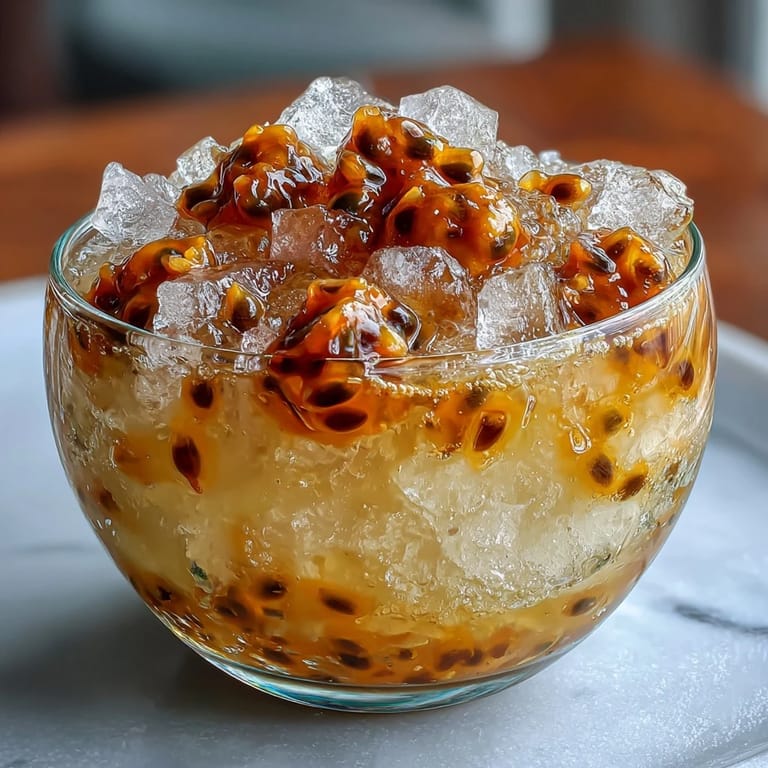
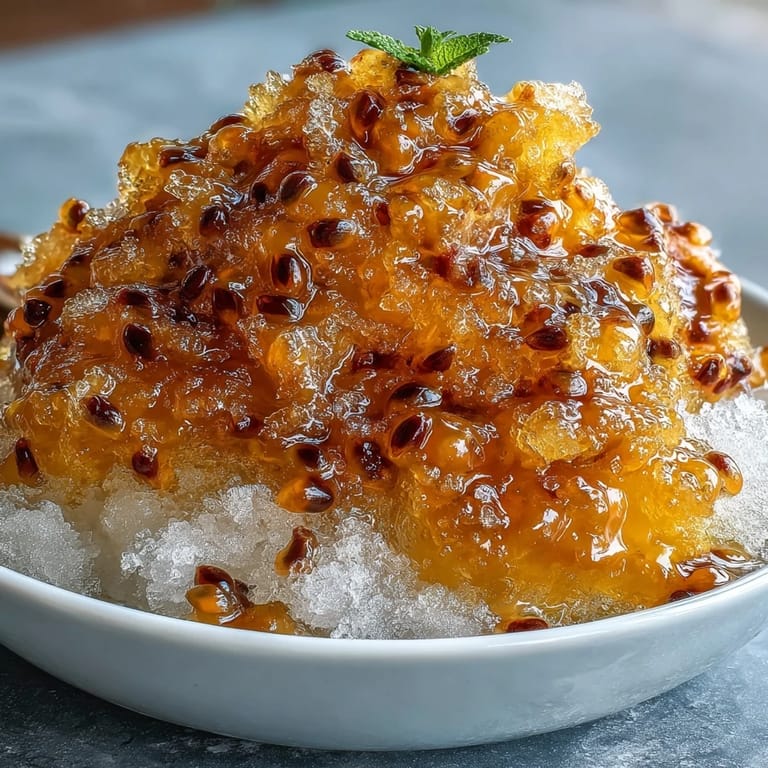
- When the granita is completely frozen but still has that light, icy texture, scoop it into chilled glasses or bowls and serve immediately, garnished with fresh passionfruit seeds or mint if you'd like.
 Save
Save My favorite moment with this dessert happened when I served it to my grandmother, who spent most of her life in Italy and had exacting standards about authentic food. She took one bite, closed her eyes, and said it reminded her of summers she'd nearly forgotten. Food that sparks memory like that feels almost sacred.
The Magic of the Shallow Dish
The pan you choose matters more than you'd think. A shallow dish—ideally a metal baking pan about half an inch deep—freezes evenly and allows the ice crystals to form in that perfect, delicate way rather than creating thick, heavy layers. I learned this the hard way using a deep bowl and ending up with what felt more like a frozen block than granita, so now I'm specific about my pans.
Playing with Flavor
The lime juice is there for a reason, but once you understand the balance, you can play. I've added a touch more lime for extra tartness when the passionfruits felt especially sweet, swapped in lemon juice when I couldn't find good limes, and even experimented with a splash of rum or elderflower liqueur for evening entertaining. The base is forgiving enough to welcome your instincts.
Serving and Pairing
Granita is best served ice-cold in chilled glasses or bowls, ideally eaten immediately after your final scrape so the texture is at its most delicate and crystalline. It pairs beautifully with lighter desserts, fresh fruit, or simply on its own, though a dollop of coconut whipped cream adds a luxurious creaminess if you want something more indulgent.
- Chill your serving dishes in the freezer for at least 15 minutes before plating to keep the granita from melting too quickly.
- Garnish with fresh passionfruit seeds or mint leaves to add visual drama and a hint of freshness.
- If you're serving with wine, Moscato d'Asti or Prosecco complement the tropical tartness beautifully.
 Save
Save This granita has become my answer to the question of what to make when you want something beautiful and delicious but don't want to spend hours in the kitchen. It's one of those rare desserts that feels both special and simple.
Recipe FAQ
- → What is the best way to achieve the flaky texture?
Scraping the freezing mixture every 30 minutes breaks up ice crystals, resulting in the granita's signature fluffy, crystalline layers.
- → Can I substitute lime juice with another citrus?
Yes, lemon juice can be used instead of lime for a slightly different citrus note without affecting texture.
- → Is it possible to remove the passionfruit seeds?
Straining the pulp removes seeds, creating a smoother texture while including seeds adds crunch and visual interest.
- → How long should the granita freeze before serving?
It needs about 4 hours, with intermittent scraping every 30 minutes, to freeze thoroughly and develop its light flaky consistency.
- → What can be served alongside this icy fruit dish?
Pairing with chill Moscato d’Asti or Prosecco complements the tangy sweetness, and coconut whipped cream adds creamy contrast.